On Palm Beach County’s beaches, humans aren’t the only sentient creatures coming out of their shells to enjoy our temperate climate. For locals, strolling Boca Raton’s beaches after hours and spotting a giant leatherback turtle nesting just offshore is a rite of passage. For tourists, it’s a signature amenity in what is now the officially designated Sea Turtle Capital of Florida.
Palm Beach County earned the honor this past spring, in recognition of a nation-topping 2 million hatchlings born here each year. Most of them are loggerheads, the most prolific breeders among the turtles of the Palm Beaches. In 2025, our county led the state with 25,614 tracked loggerhead nests, according to data from the Florida Fish and Wildlife Conservation Commission (FWC). You can also track nest numbers in Boca Raton here.
Scientists have yet to pinpoint why sea turtles prefer to nest on one beach over another, though our proximity to the Gulf Stream current—which turtles use to navigate the ocean—could be a factor. Sea turtles tend to return every summer to the same spots, like snowbirds in reverse. Perhaps they’ve found that, like humans in search of the good life, once they discover Boca Raton, they tend to stay.
Given that we are smack-dab in the middle of sea turtle nesting season (March 1 to Oct. 31), there’s no better time for an après-dinner turtle spotting session.
Release Date
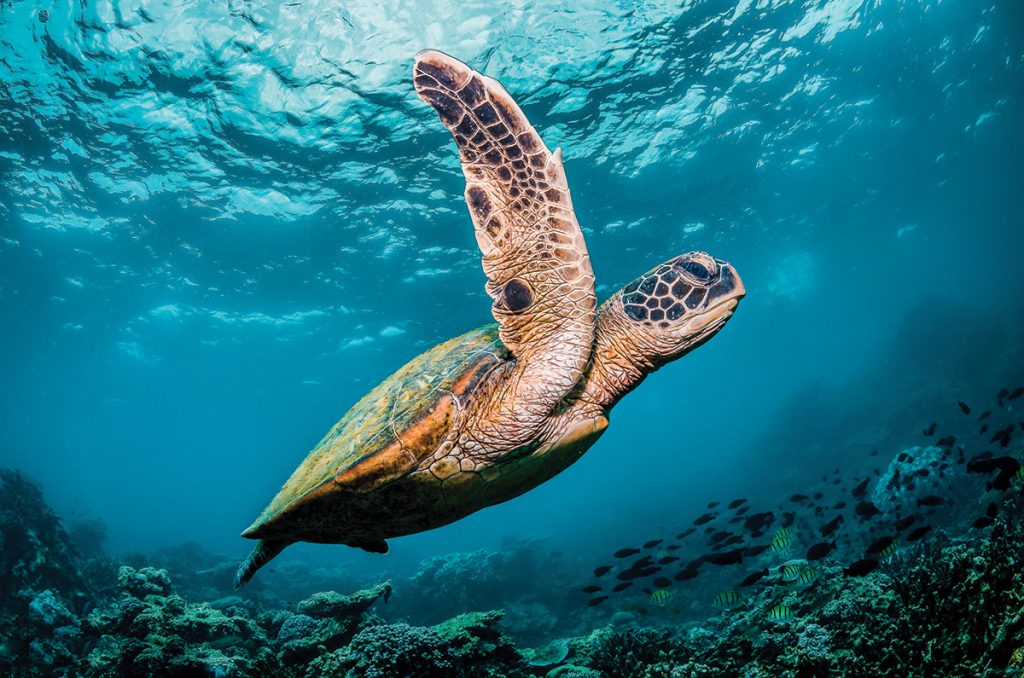
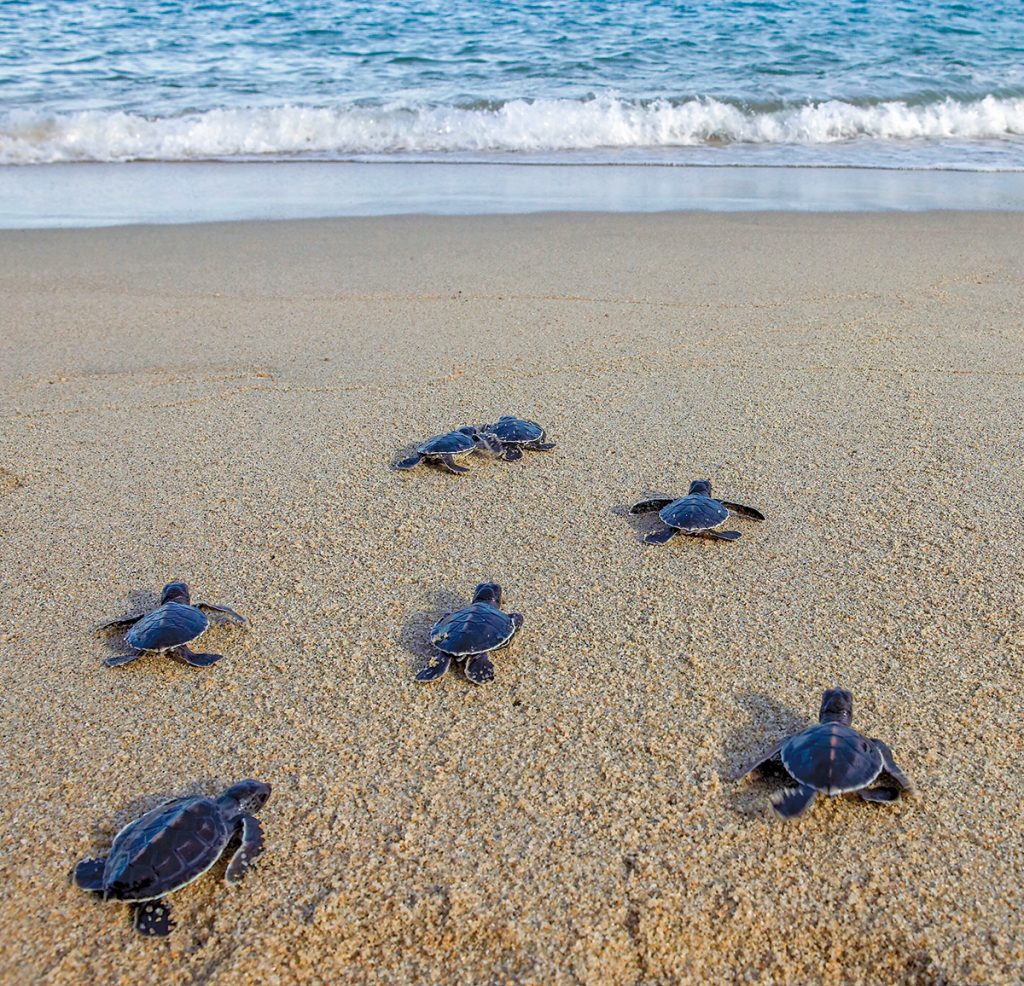
Gumbo Limbo Nature Center—located on North Ocean Boulevard directly across the street from the beachfront where countless turtles nest—remains Boca Raton’s central resource for sea turtle advocacy. While Gumbo Limbo’s 2026 schedule for Turtle Walks ended July 2, there is still time to participate in its Hatchling Release program. On select dates from July 13-Aug. 27, participants can observe newborn turtles, released by Gumbo Limbo staff, as they scurry off into the ocean for the first time.
Shell Shock
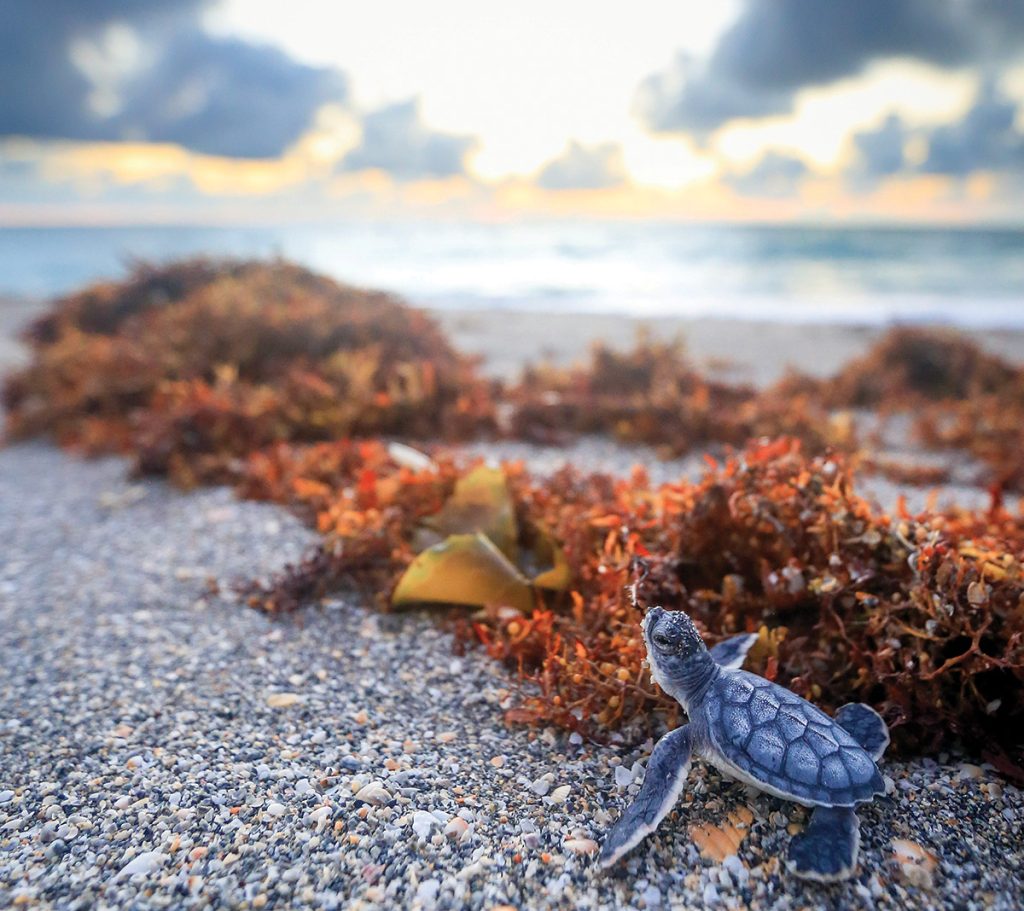
All species of sea turtles globally are either threatened or endangered, as pollution, artificial lighting, and boat collisions affect turtle mortality. According to Juno Beach’s Loggerhead Marinelife Center, which researches and cares for sea turtles, unintended boat strikes of sea turtles have tripled in Florida since 1980—the majority occurring during nesting season. The center advises boaters to “go slow for those below” and travel at a minimum speed when cruising the 45-mile Sea Turtle Protection Zone, encompassing all of Palm Beach County, during nesting season.
Ensuring our beaches are free of pollutants such as plastics is also key to the species’ survival. Up to 1,000 sea turtles die each year from entanglement in plastics—an average of more than one turtle every nine hours—according to the State of the World’s Sea Turtles, a program from the nonprofit Oceanic Society.
Gumbo Limbo hosts group beach cleanups of 10 to 25 participants; to schedule a cleanup, call Jillian Taylor at 561/544-8612 or email jtaylor@bocaraton-fl.gov. Other organizations that organize cleanups include Boca Save Our Beaches and Ocean Blue Project.
Florida’s Wild Backyard
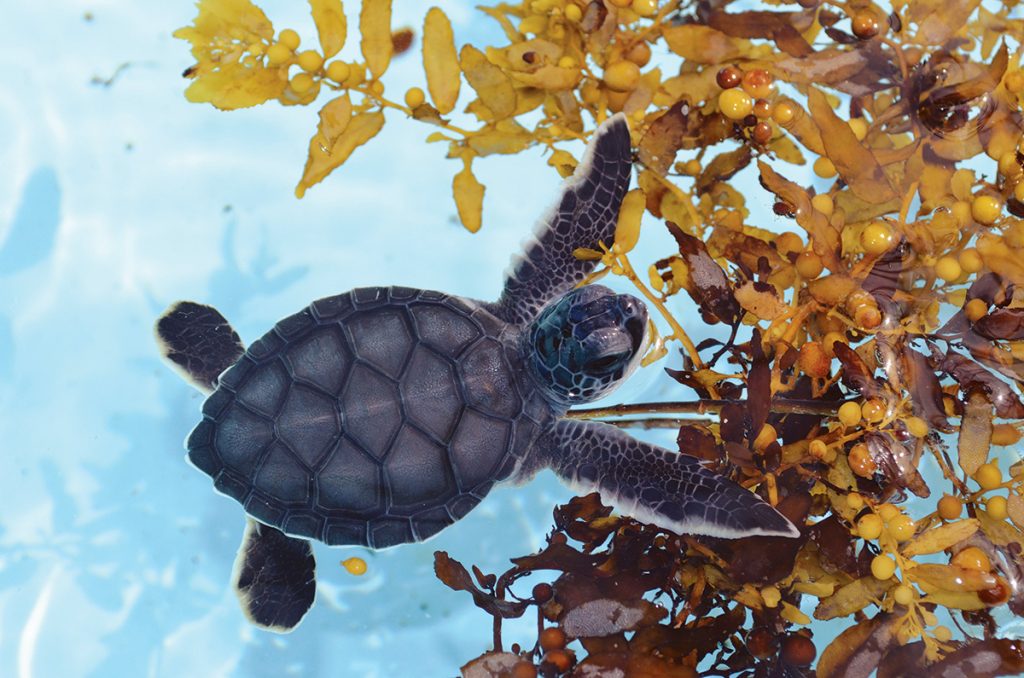
Speaking of Gumbo Limbo Nature Center, while environmental advocates mourned the loss of the institution’s sea turtle rehabilitation center last summer, the space that housed it is going to good use. The former rehab facility is now home to “Florida’s Wild Backyard,” a new permanent exhibition in keeping with the center’s educational mission. Leveraging the space’s existing seawater supply and tanks, the attraction explores the region’s ecosystems and the various native reptiles, plants, and aquatic species that inhabit them, including snakes, gopher tortoises, box turtles, and various marine animals. Participants can also partake in an interactive scavenger hunt to help identify invasive species and discover threats to local ecosystems.
Know Your Turtles
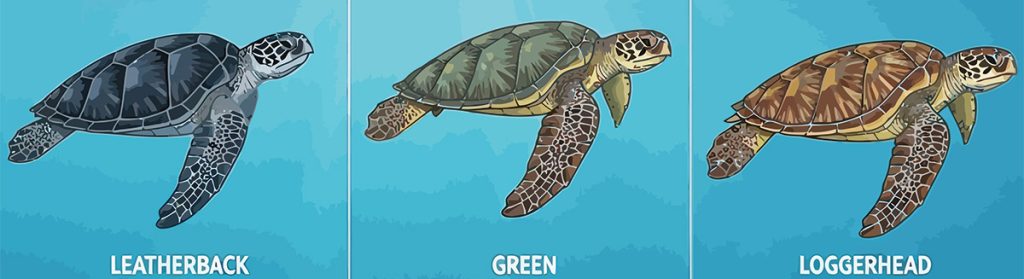
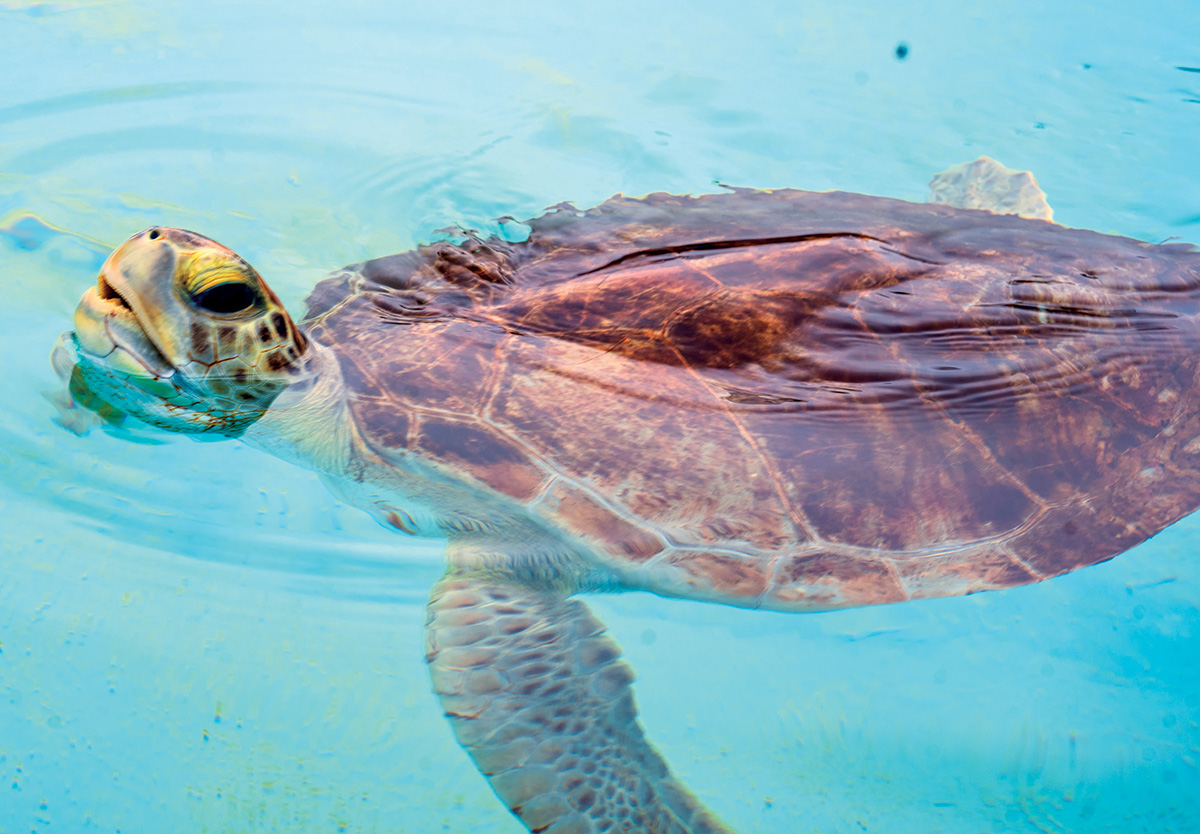
Loggerhead: Named for its large and blocky head, this is the most common sea turtle in Florida, recognizable for its broad and ruddy brown carapace. It swims slower than its turtle counterparts, and falls prey to sharks more often, but its strength in numbers is unparalleled in the region.
Green turtle: Christened for its green body fat, this turtle is less bulky than the loggerhead, with a more streamlined body and a smaller head. Despite the color in their name, these turtles’ upper shells are more of an olive brown, and they usually rest in rock ledges and coral reefs. In 2025, the FWC tracked 13,202 green turtle nests in the county, about half the total of loggerheads.
Leatherback: Unlike their turtle brethren, these unique creatures forgo the usual scaly shell for the firm, leathery skin that gives them their name. Leatherbacks can grow exceedingly larger than either the loggerhead (with an average weight of 275 pounds) or the green (350 pounds, give or take), with the heaviest on record reaching 2,000 pounds! The FWC tracked only 493 nests in Palm Beach County last year.
This story is from the July/August 2026 issue of Boca magazine. For more like this, click here to subscribe to the magazine.