
The Big H
While Republican presidential candidates savage each other, Delray Beach shows why those candidates should be talking about a problem that is savaging communities.
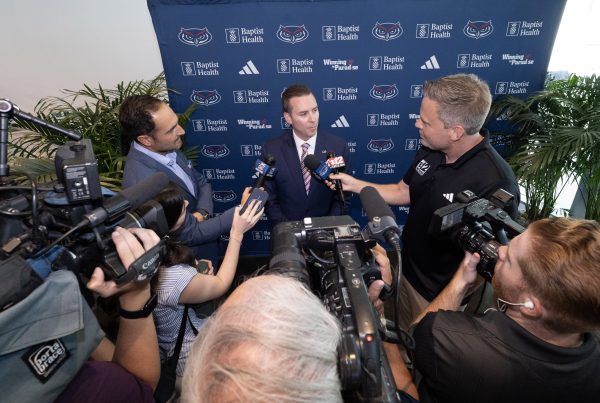
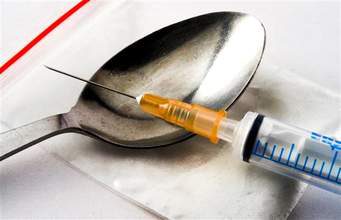
At a news conference on Tuesday, the city announced that 32 police supervisors will begin carrying kits of naloxone, the drug that can reverse what otherwise would be a lethal overdose of heroin. The Delray Beach Fire-Rescue Department has been using the drug—77 times this year—but sometimes police officers get to a victim first. Naloxone can keep someone alive long enough for first responders to get the person to a hospital.
Suzanne Spencer, director of the Delray Beach Drug Task Force, said her organization obtained a grant that will pay for 200 “kits” of naloxone, which is marketed under the trade name Narcan. Delray Beach is only the second agency in the state to use the drug—after the Sarasota County Sheriff’s Office—but it joins many others around the country. In just the last week, police in Harrisburg, Pa., reversed three overdoses. They saved the life of one man by giving him four doses of the antidote in nasal spray form. That’s what Delray Beach will use.
According to Police Chief Jeffrey Goldman, there have been roughly 50 heroin overdoses in Delray Beach this year. Two factors explain the dangerous trend.
First, Delray is home to an unknown but large number of sober houses, known formally as recovery residences, where people live after receiving treatment for drug and/or alcohol addiction. Heroin dealers prey on the vulnerable. Second, as Spencer says, heroin use is becoming more “mainstream.” It’s not confined to back alleys.
For the middle-class, say Spencer and others who fight drug abuse, heroin has replaced the prescription painkillers that became a scourge in the last decade. Like oxycodone, heroin is an opiate. Addicts have traded one high for another. Heroin dealers have replaced the pain clinics that law enforcement shut down. Heroin likely is responsible for spikes in HIV cases in Broward and Miami-Dade counties. Spencer worries that the same will happen in Palm Beach County, along with more cases of hepatitis.
Though the Food and Drug Administration approved the nasal spray version only three months ago, naloxone has been part of the anti-drug abuse effort for two decades-plus. It has been controversial. Opponents, including officials in the George W. Bush administration, worried that easily accessible naloxone would give addicts no reason to seek treatment. Supporters argue that saving lives is the priority. Accidental drug overdoses now kill more Americans each year than car accidents.
Delray Beach Mayor Cary Glickstein supports Goldman’s decision. “I was happy to learn,” he said an email, “that they are using whatever tools are made available to them to stem the problem, which is becoming a national crisis, and they are spending their time speaking with and working with other law enforcement and our drug task force partners.”
A Boca Raton Police Department spokeswoman said, “We have evaluated (using naloxone), but we did not have a significant number of overdose cases to warrant the expense.” The department will “revisit” the issue if the number of cases spikes.
Among those who have run for president, only Jeb Bush has addressed the topic of drug abuse—with a story about his daughter’s addiction. The resurgence of heroin affects many parts of the country, but since Donald Trump and Marco Rubio have such strong Florida ties, you’d like to hear their thoughts on the problem, rather than exchanges about spray tans and small hands.
Specifically, you’d like to hear Trump, Rubio—and Hillary Clinton—say they would seek to change the 1999 federal finding that has prevented cities and counties from regulating sober houses. On April 5, U.S. Rep. Lois Frankel, D-West Palm Beach, is supposed to address the Delray Beach City Commission. Frankel, though, does not supervise the departments of Justice and Housing and Urban Development that issued the finding. It classified those in recovery as disabled, and forbid any attempts to regulate where they live.
Ironically, this inability to regulate probably hurts those in recovery. It treats good and bad sober house operators equally. Meanwhile, drug overdose deaths went from between 12 and 14 per 1,000 residents in Palm Beach County 13 years ago to more than 20 per 1,000 in 2014.
Asked if heroin overdoses happen with those who live in sober houses, Glickstein said, “We know that many do, but (it’s) difficult to track and officially report because of an irresponsible lack of regulation that would help us reduce human suffering, abuses and fatalities by lessening what has become easy targets for scavenger dealers peddling this poison.”
Chabad changes on the docket
If Chabad East Boca loses its development approval, the congregation may not be able to build its preferred synagogue/exhibit hall on East Palmetto Park Road.
The Boca Raton City Council approved the project last summer, but lawsuits in federal and state court seek to overturn that appeal. Construction has not started on the site of the former La Vielle Maison restaurant.
Meanwhile, the city’s planning and zoning board at its meeting tonight will consider changes to Boca’s Code of Ordinances that would affect the property where Chabad East Boca wants to build. Among other things, the changes would remove the allowance for extra height in B-1-zoned areas, where only a residential street separates permitted commercial development from single-family homes. The chabad site is zoned B-1.
Last July, the council agreed that the chabad could exceed the 30-foot height limit for the location by 10 feet, to accommodate infrastructure for the exhibit hall. The code allows the added height if a project meets certain conditions. After the contentious meeting, Mayor Susan Haynie proposed that the city study changes to such areas where, the mayor acknowledged, there isn’t much buffer to protect residents.
Haynie told me Wednesday that she and other council members were surprised by that aspect of the code. “I have no idea where it came from.” The proposal before the planning and zoning board, Haynie said, would “close that height loophole.” It also would forbid extra height in areas with similar zoning.
Planning and zoning board members, however, will have to consider whether the changes would amount to an illegal “taking” of value from the property. The council would have final say in any code changes.
If the litigation or any other factor delays Chabad East Boca past the current life of the development approval— two years—and the council doesn’t extend the approval, the congregation would have to reapply. But if the city had changed the zoning, the project couldn’t have the extra height that the congregation said was necessary.
All Aboard update
We haven’t discussed All Aboard Florida lately, but Mayor Haynie also told me Monday that the company has notified the city that it soon will be unloading equipment for adding a second track in the Florida East Coast Railway corridor. The track is necessary to accommodate the 32 daily Miami-Orlando Brightline passenger trains that All Aboard Florida plan to start running next year.
Before that happens, Boca Raton, Delray Beach, Palm Beach County and other cities along the corridor want to establish a “quiet zone,” so the trains don’t have to blow those loud horns. That will mean adding safety improvements at all grade crossings to prevent cars from driving around barricades.
Haynie said the city had hoped to complete the accompanying legal documents for the quiet zone by now, but the work has been delayed. The documents cover such issues as maintenance and liability, and each city has unique issues to work out.
In Boca’s case, one reason for the delay is that the city operates its traffic signals. The only other municipality in the county to do so is the town of Palm Beach. “We do it better,” Haynie said. Which makes for extra work regarding traffic signals at grade crossings.
Atlantic Crossing review
As predicted here Tuesday, the latest version of Atlantic Crossing will go before Delray Beach’s Site Plan Review and Appearance Board at a special meeting on Monday.
In January, the board rejected a previous version because a city traffic consultant concluded that an access road out of the project to Federal Highway would cause more traffic problems than it solved. The new version resolves those issues to the consultant’s satisfaction.
Procedurally, however, the board must review the new site plan. My guess is that the board will recommend approval, after which someone will appeal. The city commission will make the final decision.
About the Author
Randy Schultz was born in Hartford, Conn., and graduated from the University of Tennessee in 1974. He has lived in South Florida since then, and in Boca Raton since 1985. Schultz spent nearly 40 years in daily journalism at the Miami Herald and Palm Beach Post, most recently as editorial page editor at the Post. His wife, Shelley, is director of The Learning Network at Pine Crest School. His son, an attorney, and daughter-in-law and three grandchildren also live in Boca Raton. His daughter is a veterinarian who lives in Baltimore.