‘Tis the season for the suffering woman. Of the lead actresses angling for Oscars this year, overcoming tribulation is a prerequisite for many, from Helen Mirren’s Jewish World War II refugee in “Woman in Gold” to Julianne Moore’s twin battles against cancer and the New Jersey legal system in “Freeheld” to Brie Larson’s harrowing abduction ordeal in “Room.”

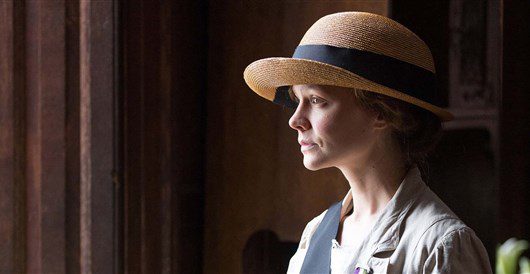
“Suffragette,” which opens in theaters today, is the latest Oscar-season narrative of an oppressed woman, set during the voting-rights movement in London circa 1912. Carey Mulligan plays Maude Watts, a fictional laundress swept into her city’s very real suffrage battle. She shares a tenement-style hovel with her husband and child while working backbreaking hours under a lecherous employer for a fraction of her male counterparts’ wages.
It’s a grueling life but it’s the only she knows, and at first she distances herself from the term “suffragette,” with its baggage of radical, brick-throwing feminists. Much of the film documents her inner struggle to embrace her activist role, which comes at the price of her home, her family, her job and her health. Gradually accepting that change only comes from revolution, she is a composite for the countless working-class women who turned a fringe cause into a national shift in policy and perception. The arc of history may eventually bend toward justice, but in getting there, it nearly breaks.

Directed by Sarah Gavron (most known for 2007’s “Brick Lane”), “Suffragette” can have the feel of a homework assignment, eschewing entertainment for institutional grimness. It is a work of such single-minded seriousness that it can be blinded by its myopia, looking neither inward nor outward: Every scene channels the angst and distress of the suppressed, at the expense of both global context and local color. By contrast, “Selma,” with which “Suffragette” shares some similarities, contains plenty of both.
Gavron’s unswerving passion, however, also lends the film its chugging strength as a piece of intestinally gripping historical fiction. It’s infused with harrowing details and the sort of righteous rage that cuts across gender, race and culture. Mulligan, who proved with this year’s “Far From the Madding Crowd” that she’s fully prepared to get her hands dirty for art, creates another vessel of earthen authenticity, discovering the flesh-and-blood pulse hidden underneath her history-book archetype.