“What’s wrong with this picture?”
We’ve all thought, and probably spoken, this idiom many times—perhaps in a literal sense, when we view an image that appears to deviate from our expectations. If mainstream tastes are an indicator, most of us tend to appreciate art when everything is in its right place, when the world as we know it is ordered properly, when the figure in the painting is at natural scale, when the verse leads into the chorus just so.
When a work of art breaks from these traditions, it naturally gives us pause—especially in photography, a medium predicated on offering an unvarnished picture of reality. But every commercial medium needs its avant-garde to explore frontiers, and so it is with photography. “Blur/Obscure/Distort: Photography and Perception,” on display at the Norton Museum of Art through August, showcases the work of rebels who have tweaked or outright upended the camera’s conventions, prompting us to question its foundation as the neutral arbiter of the real world.
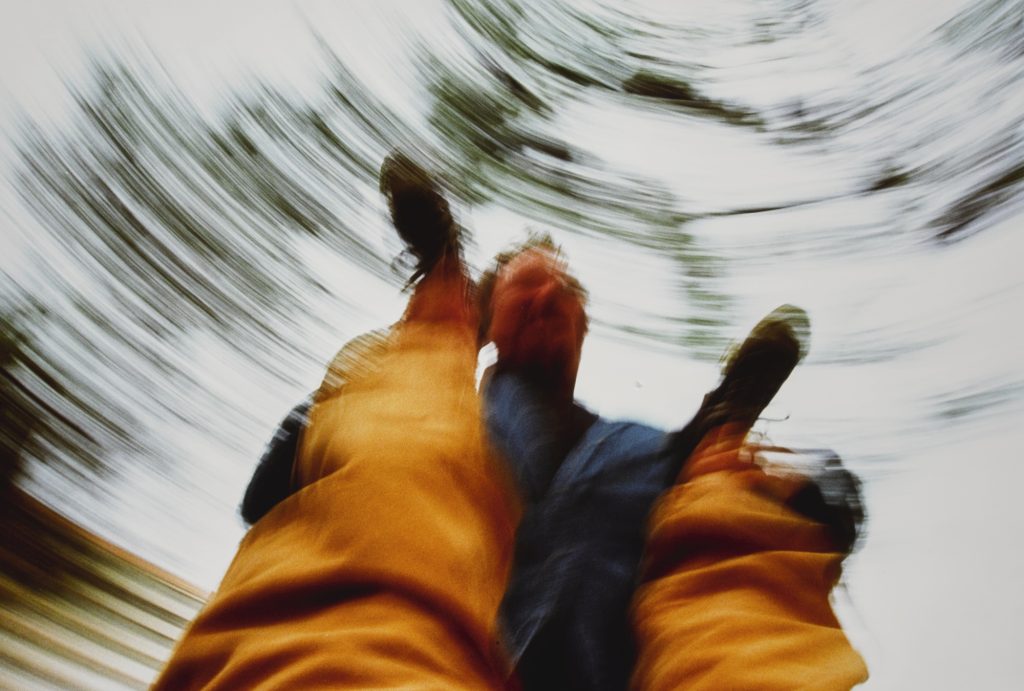
In the “Blur” category, familiar to everyone who’s taken a shaky iPhone image and probably deleted it seconds later, we have pieces like Martin Kersels’ “Whirling Melinda,” an appropriately dizzying image of a man clutching the legs of a disembodied partner while on a thrill ride, the world moving at a dervish pace behind them, the blur encompassing both setting and subject. In the American photojournalist Christopher Morris’ “Presidential Palace, Grozny,” captured amid the bombed-out Russian city during the First Chechen War, the soldier in the image is more or less clear, but his environment is a surreal blur—a reflection on how the chaos of warfare alters landscapes, transforming buildings into rubble in real time.
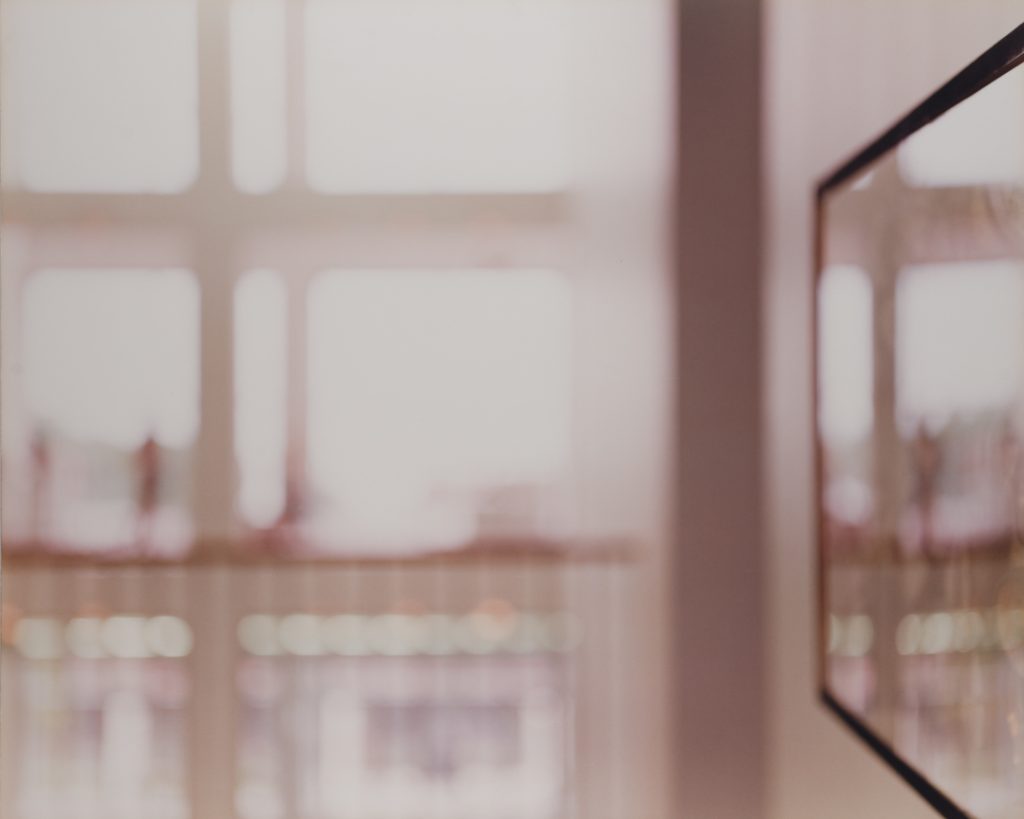
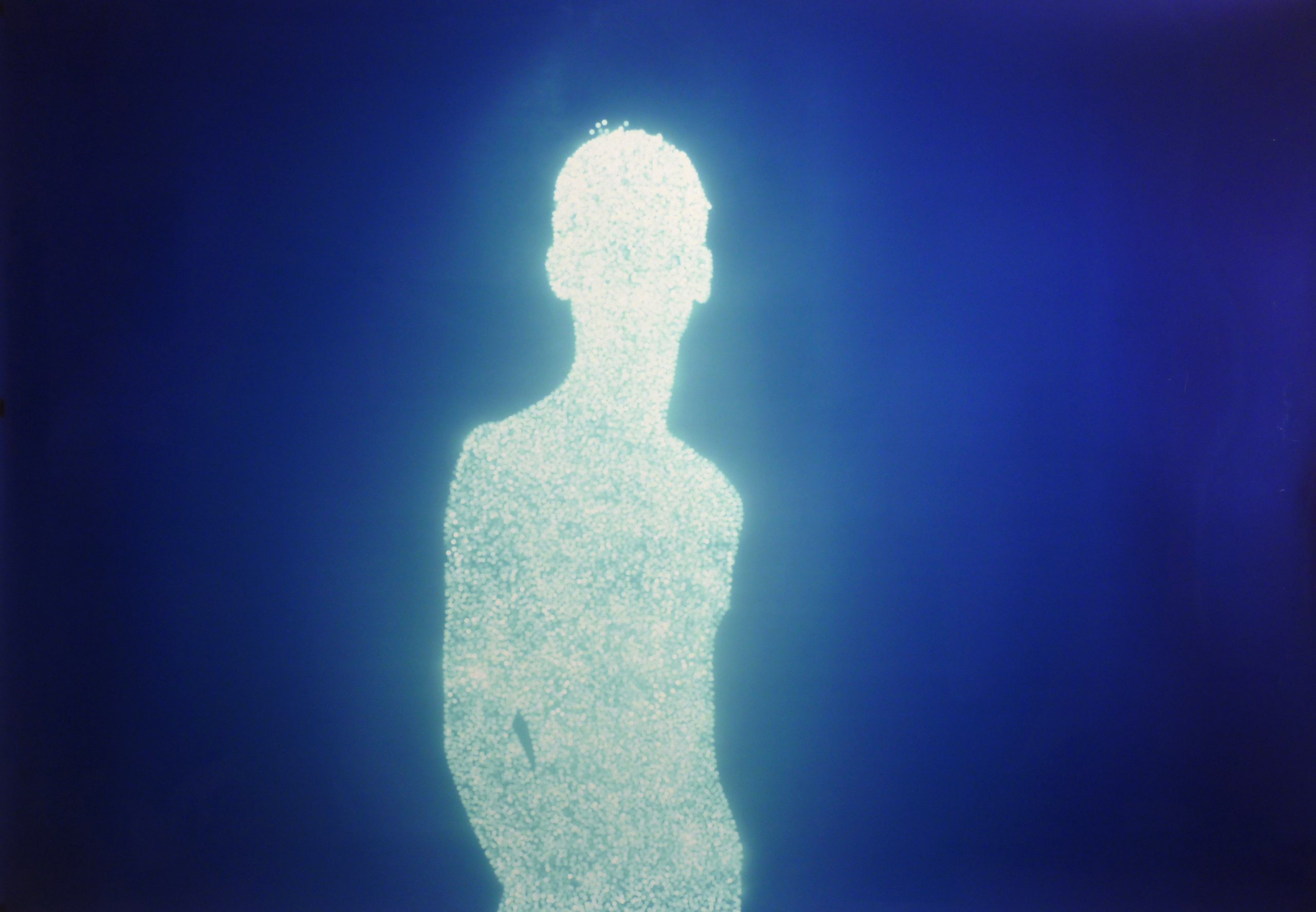
As for the “obscurist” photographers, we have works such as Uta Barth’s “Ground #77,” in which a once-crystal-clear image of an interior has been soft-focused until it is no longer recognizable. Is it a terminal? A hotel lobby? An art gallery? In Barth’s hazy image, reality resembles a dreamy bardo, a way station between worlds. In Mark Mann’s unnerving “Median Family,” the artist borrowed an image of a freeway, pixelated the contents, and placed a similarly repurposed family of four in its median, amplifying an eerie sense of existential displacement; the spectator is as lost and un-grounded as the picture’s inhabitants.
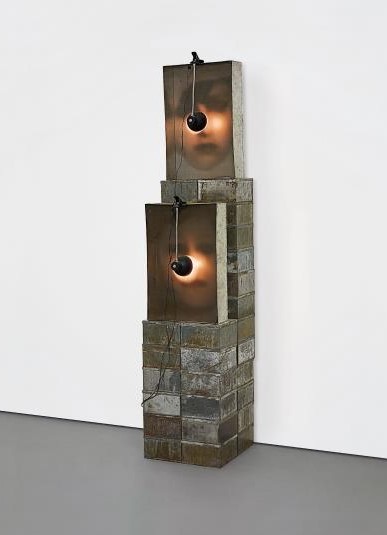
Taking a more humorous approach, the aptly named Bill Witt’s deadpan “Self-portrait in Fun House Mirrors” plays with the camera’s reflective and obscurist qualities, showing us a woman’s legs cut off at the waist by a reflective obstruction, in which Witt himself appears capturing this amusing moment in time. But perhaps the most extraordinary contribution to “Blur/Obscure/Distort” is the piece with the most physical presence, Christian Boltanski’s “La Reliquaire,” a towering, photo-based installation in which electric lamps illuminate gelatin silver prints of gauzy portraits faintly visible, all positioned atop rusted biscuit tins. It’s as if these faces are forever embalmed in amber—a haunting memorial that stands as a totem to collective memory and the ubiquity of loss.
The “distorters” of the exhibition run a similar tonal gamut, from Benn Mitchell’s carnivalesque image of faces comically contorted when bounced off the surface of a patent leather hatbox, to Richard Mosse’s stunning and singular “Girl From the North Country,” an unpeopled landscape of the Eastern Congo during a time of war. Mosse photographed the image using the now-discontinued Kodak Aerochrome film, developed for purposes of surveillance and military reconnaissance. The film changes the colors of the natural world—all the better to identify figures that would otherwise blend into their surroundings—and Mosse’s vision of this godforsaken African land becomes an alien landscape of blazing reds, pinks and purples.
As difficult as it might be to put aside the ethics of Mosse’s technique, medium and presence, “Girl From the North Country” (I don’t get the Bob Dylan reference either!) is a bravura example of the exhibit’s chief goal, to disrupt and expand our definition of what photography is and does, until we just might believe our lyin’ eyes.
“Blur/Obscure/Distort” runs through Aug. 24 at Norton Museum of Art, 1450 S. Dixie Highway, West Palm Beach. For information, call 561/832-5196 or visit norton.org.
For more of Boca magazine’s arts and entertainment coverage, click here.