Our latest recommendations from Books & Books founder Mitchell Kaplan include a Dave Barry swamp romp, a feminist reading of a Cervantes heroine, and the latest missive from South Florida’s most relentless gun-control activist.
POPULAR FICTION
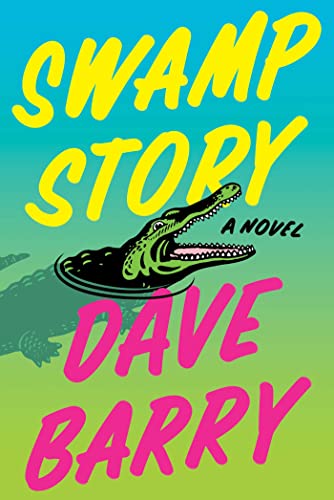
Barry, self-described “actual Florida Man,” returns with his first novel in 10 years, and it picks up where his previous tomes left off: It’s another rollicking caper whose heroes and villains, archetypes and inventions will feel awfully familiar for those of us toiling in the Dumbshine State. Three narratives converge in Barry’s site-specific satire. Unhappily married to a preening wannabe reality-TV celebrity in a tiny cabin in the Everglades, Jesse Braddock discovers a hidden treasure that might just offer a way out from her swampy prison. Her story coincides with that of Ken Bortle of Bortle Brothers Bait and Beer (Barry is no slouch when it comes to creative alliteration), who, for attention, connives a mythical cryptid, the so-called Everglades Melon Monster, with a drunken ex-newspaperman portraying the creature, which quickly becomes a TikTok sensation. And finally, because it’s Florida, a presidential aspirant arrives in the Glades to launch his campaign. We have no evidence that an invasive python makes a cameo in Swamp Story, but if it does, we can only hope that it eats one of these characters.
LITERARY FICTION
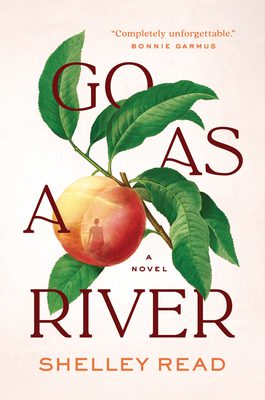
Shelley Read’s striking, vividly descriptive debut novel is inspired by the real-life destruction, in the 1960s, of the small Colorado town of Iola. One of its residents, Victoria Nash, is only 17 but is burdened with the responsibility of running her family’s peach farm, despite being the “sole surviving female in a family of troubled men.” One day, she meets another potentially troubled man, Wilson Moon, an indigenous drifter displaced from his reservation. Eventually, with the nearby Gunnison River sure to overrun Iola, Victoria is forced to flee the soon-to-be-submerged town and rough it in Colorado’s harsh wilderness, brought to life in Read’s tactile and engrossing prose. Go as a River is an impeccably researched bildungsroman from a writer ideally suited to its environs; a fifth-generation Coloradan, Read spent nearly three decades as a senior lecturer at Western Colorado University, where she helped establish its Environment and Sustainability major.
Dulcinea by Ana Veciana-Suarez
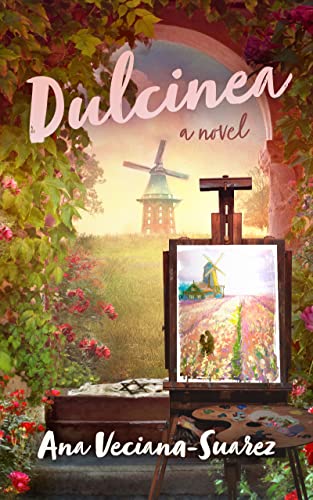
A close reading of Miguel de Cervantes and a scholarly immersion in the politics and social strata of 16th century Spain undergird Veciana-Suarez’s imaginative novel, which places a modern feminist spin on its titular literary character. Dolça Llull Prat, a curious, impetuous, artistic and well-read daughter of a wealthy merchant, meets one Miguel de Cervantes, a distant relative, and instantly becomes smitten with the strapping writer, despite her looming nuptials to another man in an arranged marriage. Dolça and Miguel begin an affair nonetheless, but their passionate union is threatened when Miguel publishes his masterpiece El Quixote, whose simple-minded love interest Dulcinea is based on the smarter, multidimensional Dolça. Veciana-Suarez’s sweeping work alternates between two time periods—the late 1500s and early 1600s—as it admirably fleshes out an inner life for one of literature’s most famous damsels. It marks the third novel for the author, an award-winning journalist and Miami resident.
The Covenant of Water by Abraham Verghese
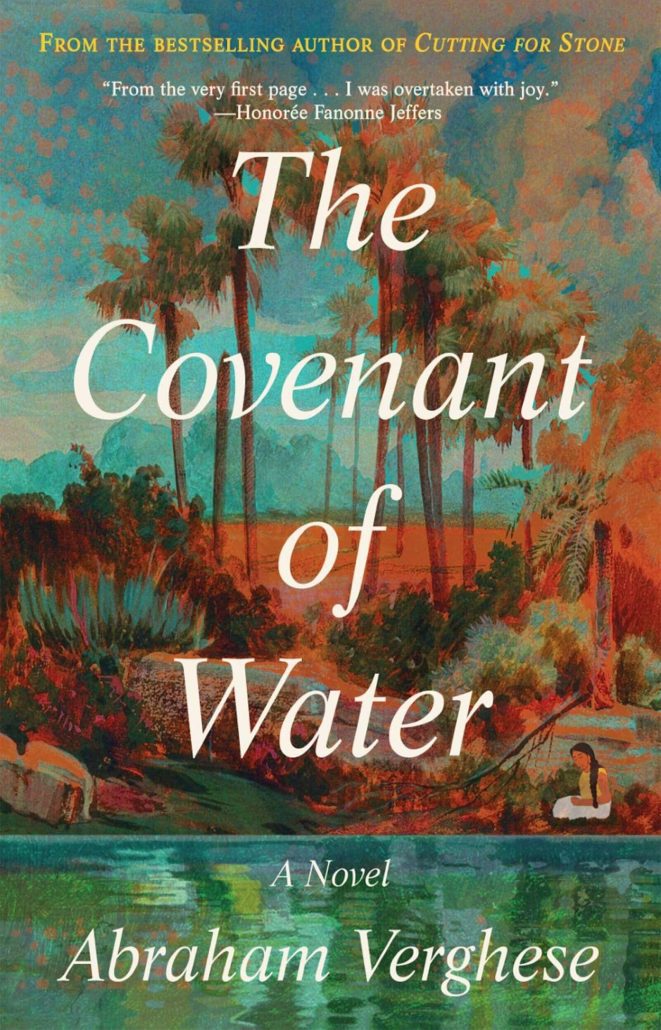
Physicians who double as writers can be tremendous communicators when they merge their passions, and Abraham Verghese is an exemplar of this convergence. He wrote two memoirs in the 1990s, and in 2008 he penned the epic novel Cutting for Stone, partially about the grueling health care system in his native Ethiopia, which would spend 107 weeks on the Times best-seller list, sell 1.5 million copies in the U.S., and make it on President Obama’s reading queue. The Covenant of Water is the author’s follow-up, some 15 years later, and early reviews suggest it is worth the wait. Medicine—particularly the sort of medical mystery that captures the attention of elite physicians—is central to the story, set in Kerala, India, from 1900 to 1977, in which a bizarre affliction affects a family each generation: At least one person fatally drowns, in a region in which water is ubiquitous. Struggle, loss, joy and triumph spill across the 736 pages of Verghese’s luminous prose.
NONFICTION
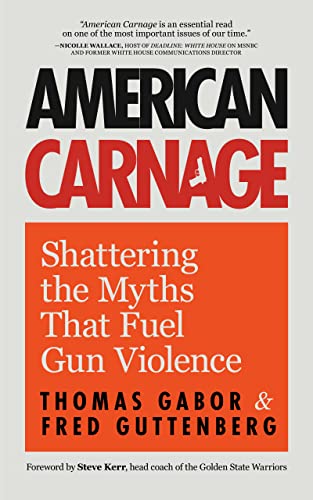
American Carnage: Shattering the Myths that Fuel Gun Violence by Fred Guttenberg and Thomas Gabor
After losing his daughter Jaime in the shooting at Marjory Stoneman Douglas High School, Parkland father Fred Guttenberg has become a relentless activist for the reduction and prevention of gun violence in America. If his moving memoir Find the Helpers was a personal account of his transformation in the aftermath of a tragedy, American Carnage is a more scholarly argument, and he’s brought the receipts. Writing with Thomas Gabor, an international gun policy consultant, Guttenberg debunks many of the myths and misinformation campaigns spread by gun lobbies and parroted in their friendly media, from “an armed society is a safer society” to “guns don’t kill people; people kill people.” Backed by hard data and a passion for change, American Carnage may not be the most ideal beach read, but it’s the sort of the book that belongs, highlighted and dog-eared, in the library of any gun-safety advocate in government.
For more of Boca magazine’s arts and entertainment coverage, click here.