


ForBoca files suit
It sounds like Archstone 2.0.
On Friday, the ForBoca group filed a lawsuit against Boca Raton, claiming that the waterfront ordinance voters approved in November amounted to an illegal rezoning of the Wildflower property. In essence, the lawsuit asks a court to declare the ordinance—which restricted all city-owned property along the Intracoastal Waterway to four public uses—invalid. That would allow the city to resume negotiations on a lease with Hillstone Restaurant Group.
One similarity with Archstone, now called Palmetto Promenade, is that after the city council approved the mixed-use project in 2012, opponents wanted the city to hold a referendum. An appeals court eventually ruled that the city couldn’t hold referendums on development orders.
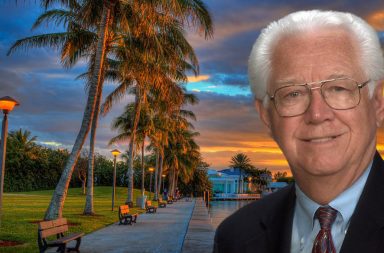
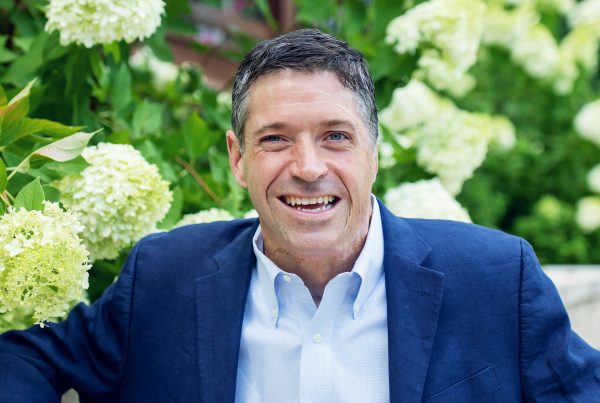
Another similarity is that attorney Gerald Richman represented Archstone and now represents ForBoca. The group formed as a counterweight to BocaWatch, which organized to fight Archstone. ForBoca’s chairman is Mike Arts (pictured), the former director of the Greater Boca Raton Chamber of Commerce who also served on the city council.
ForBoca and BocaWatch lobbed attacks at each other from their websites during the campaign on the ordinance, which BocaWatch favored and ForBoca opposed. ForBoca contributed $65,000 to the campaign against the ordinance. Hillstone contributed $50,000, and the law firm representing Hillstone contributed $20,000.
Unlike Archstone, there was no “development order” for the Wildflower property. But Richman contends that the law applies equally to the restaurant proposal. He told me that the ordinance “tied the city’s hands” and “swept up” the site with the other four pieces of city-owned Intracoastal land—Red Reef, Spanish River, Rutherford and Silver Palm parks—to which the ordinance applies.
None of those properties is zoned for commercial use. The Wildflower site, however, is zoned commercial. Most of it had been for decades, when the Wildflower club occupied the site. Last July, the council rezoned the other portion of the property from residential to commercial, to accommodate the restaurant. So what seemed to be merely a procedural move could turn out to be important.
There is irony in that ForBoca names the city as the defendant. All city council members except Scott Singer opposed the ordinance. When I spoke with him, Richman acknowledged that the city is “caught in the middle.”
It will be interesting, though, to see whether ForBoca contends that City Attorney Diana Grub Frieser should have determined that the ordinance is misleading and recommended that the council not place it on the ballot. It also will be interesting to see if the city argues that ForBoca doesn’t have standing to bring the lawsuit. ForBoca contends that part of its mission is to protect private property rights.
Arts did not want to comment, but the lawsuit probably is about more than the Wildflower. If the ordinance stands, Boca Raton will have set a precedent of allowing a referendum to overturn a council-approved deal with a private company. Investments Limited, Boca Raton’s largest owner of downtown commercial property, contributed $10,000 to the anti-ordinance campaign.
You can expect supporters of the ordinance to claim that the lawsuit seeks to overturn “the will of the people.” Voters passed it by a 2-to-1 margin. The ordinance, however, was deceptive. It didn’t mention a park or a restaurant or even the Wildflower land. James Hendrey, who organized the petition drive for the ordinance, lives across the Intracoastal from the Wildflower and didn’t want the restaurant for a neighbor.
Supporters made the false claim that the ordinance was about protecting waterfront parks. The Wildflower site is not a park, and no one was seeking to develop any of the four actual parks the ordinance covers.
Given the council’s opposition to the ordinance, we will see how aggressively Boca Raton defends the city. Some council members secretly may hope that the city loses this lawsuit. Others might note that election result and believe that Boca should move on. But given the wording of the ordinance, some sort of litigation seemed inevitable. And now, it’s here.
Sugar Sand opening date
The latest reopening date for the Sugar Sand Park playground is March 17.
At Monday’s meeting, the Greater Boca Raton Beach and Park District approved still more change orders. Craig Ehrnst, one of two new district board members, said the new projected construction cost is slightly less than $2 million. That doesn’t include consultants.
Delray Place South
At tonight’s meeting, the Delray Beach City Commission will make a decision on Delray Place South.
The project would add parking to Delray Place, the retail complex on the southeast corner of Federal Highway and Linton Boulevard. Residents of Tropic Isle, the neighborhood south of the proposed project, oppose the expansion. In October, the site plan review and appearance board recommended against approval of the site plan because of traffic problems it would create for Tropic Isle.
In addition, the board rejected a parking request and upheld four other requests. Developers can appeal advisory board decisions to the city commission, which itself can appeal the decisions. With Delray Place South, the developer is appealing the rejections, and the commission is appealing the approvals. Those appeals have been set for the Jan. 24 commission meeting.
On Dec. 29, however, an attorney for Delray Place South asked the commission to delay the appeals until April 4. According to the letter, the developer wants to: consider “alternatives/modifications. . .that make make the site plan more acceptable to the city and the neighboring residents; meet with city staff about possible changes; and meet with residents to seek common ground for a resolution on the site plan.”
Assessing whether there might be “common ground,” the letter says, will take 60 days. “While there certainly is no guarantee that these efforts will be successful, Delray Place believes that attempting this constructive approach makes good sense to all parties.”
Tropic Isle Civic Association President Kelli Freeman told me Monday that her group “isn’t necessarily in favor” of the postponement. Since the developer’s plan would allow a southern exit that would dump traffic onto the access road to Tropic Isle and the neighborhood opposed it, Freeman said, “I wonder just what common ground there might be to find.” Neighbors suspect that the expansion is designed mainly to fix traffic problems at Delray Place. I would be surprised if the commission agrees to the delay.
De Jesus full on
Neal de Jesus may be the acting city manager in Delray Beach, but he’s not leaving big decisions for whoever gets the job permanently.
The Palm Beach Post reported that during de Jesus’s first week he fired Francine Ramaglia, one of the two assistant city managers. De Jesus, who had been fire-rescue chief, took over for Don Cooper on Dec. 30.
According to The Post, de Jesus acted after former Chief Information Officer Guy Buzzelli filed a discrimination lawsuit against Ramaglia. Cooper fired Buzzelli in 2015—after giving him the chance to resign— for risking a data breach by allowing an unauthorized person to perform a computer upgrade. The city’s civil service board upheld the firing.
Former City Manager Louie Chapman, whom the city commission forced out in 2014, hired Ramaglia from Wellington. De Jesus told me Monday that he would advertise the position this week, rather than leave the decision to his successor. That approach pleases Mayor Cary Glickstein, because it would allow the new manager “to start without added distractions.”
One could argue that the new manager should make one of his or her two most important choices, but the next manager might not be on the job for five months. Until de Jesus fills Ramaglia’s position, he will oversee the police and fire-rescue departments, the city clerk’s office and the finance, human resources and purchasing departments. Assistant City Manager Dale Sugerman will supervise all other departments.
Boca Bowl stats
Here’s the last word on the third Boca Raton Bowl.
According to Executive Director Doug Mosley, 24,726 tickets were sold for the game’s third version. For the 2015 game, the total was 25,908. Mosley notes, however, organizers reconfigured the north end of Florida Atlantic University Stadium for the game in a way that reduced capacity from 30,000 to about 26,000.
In an email, Mosley said: “I thought our 2016 game was the best one yet. We had a lot of new fan-based initiatives, and the response was overwhelmingly positive. We work each year to do something new and different from the previous year, and things like the North End Zone Club, the JM Lexus party on the third level and the pre-game Ford Fan Fest were all a big hit. Now we’ll get to work to top all of that in next season’s Boca Raton Bowl.”


While the JM family is a wonderful sponsor and employer I would love to see more Palm Beach County / Boca Raton sponsors at the next Boca Raton Bowl. Why not tap Braman Motorcars of Palm Beach or Schumacher of Delray? I’m sure Broward County can use every dime they can get due to their third world infrastructure and rampant crime, however, we need to help companies within our own city and county.