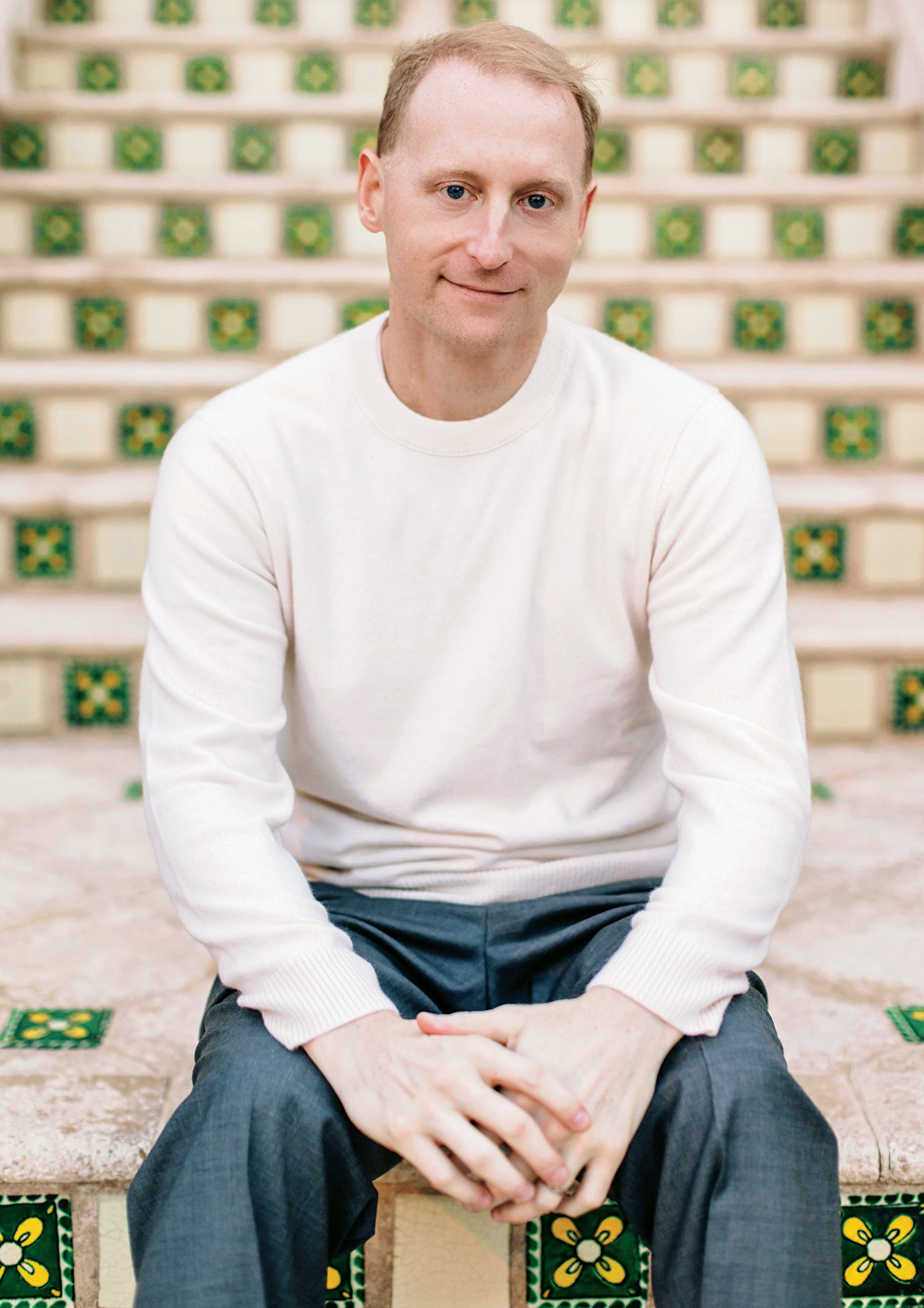
George Ackerman spent most of his life in law enforcement, and his background shows in the way he describes the night that he realized his mother’s battle with Parkinson’s disease took a turn for the worse.
“I got a call at 4 a.m. to rush over to Boca,” he recalls. “I approached her door, and I saw a figure moving, and I didn’t know what was going on. She was actually moving her furniture out of her home, and I said, ‘What’s wrong?’ She said she thinks there’s someone inside that’s going to harm her, and I believed her. … I went in and cleared the house. It was empty.”
Having responded to countless emergencies during his days as a police officer, Ackerman knew to rush his mother to the emergency room, where he was told by doctors that his quick thinking saved her life.
“That was the night that everything progressed downhill,” he says. “We don’t know if it was due to the changes in medication, but she now had delusions and hallucinations. And to be honest, those were even more frightening some days than Parkinson’s itself.”
Prior to that incident, his mother, Sharon, had the characteristic Parkinson’s symptoms—muscle stiffness, difficulty with fine motor movements—but the family had been told by more than a dozen specialists that “you don’t die of Parkinson’s, you die with it.”
“We heard of the word Parkinson’s, but we didn’t even know it [was] a disease or something that would take her life,” Ackerman says. But on Jan. 1, 2020, Sharon lost her life at age 69 due to complications from Parkinson’s. After watching his mother struggle with the disease for more than 15 years, Ackerman resolved to help make sure no more families went through what he did. In 2020, he launched Together for Sharon, a nonprofit dedicated to raising awareness for Parkinson’s and finding a cure.
“I did my PhD and dissertation on aiding African American mothers who lost their loved ones due to murder in West Palm Beach,” Ackerman explains. “But then my whole life shifted to caregiving, and I feel today that a lot of the Parkinson’s community, to me, are almost like those family members who lost a loved one.”
Together for Sharon started small, with Ackerman sending out free Parkinson’s awareness bracelets that quickly made the rounds on social media. “I don’t know what happened, but somehow it went viral online, and celebrities and everyone around the world were wearing the band. We had to stop [donating them]. I couldn’t afford it, because I donated them all for free.”
Since Together for Sharon’s founding, Ackerman has interviewed more than 3,000 Parkinson’s patients and their families around the world, written a children’s book with his daughter, hosted 400 podcast episodes on the subject, spoken before Congress on the importance of Parkinson’s research, and worked with the Michael J. Fox Foundation on spreading Parkinson’s awareness.
“We’re just trying our best to make sure that no family feels alone,” Ackerman says. “And I don’t want any other family to go through the loss or what my mother had to battle, because it’s not easy to even describe.” (togetherforsharon.com)
WHERE AWARENESS AND RESEARCH IS LACKING: I think what’s lacking is that people need to reach out to their representatives. And I send a million letters, but just me. But if everyone in Florida or even the country would flood their politicians—local, city, state—it would change the world.
MISCONCEPTIONS ABOUT PARKINSON’S: [Parkinson’s] used to be known as an elderly white man disease, and that’s no more. Parkinson’s affects 10 million people throughout the U.S., people from every race and culture. The disease does not discriminate.
THE DISEASE IN SOUTH FLORIDA: South Florida, and Florida specifically, has one of the highest diagnoses [of Parkinson’s disease] in the country.
ON THE PREVALENCE OF PARKINSON’S DISEASE: I’ve been really involved in the last six years and learned from leading scientists [that] every 20 minutes someone is diagnosed in the world with Parkinson’s. We’re supposedly going to go from 1.2 million people today to almost 20 million in just 15 to 20 years, which is really frightening.
This story is from the July/August 2026 issue of Boca magazine. For more like this, click here to subscribe to the magazine.