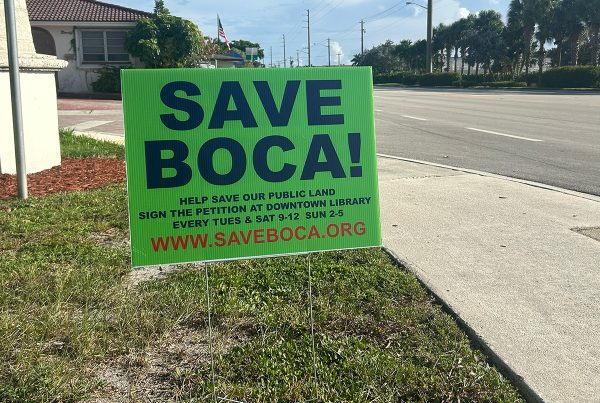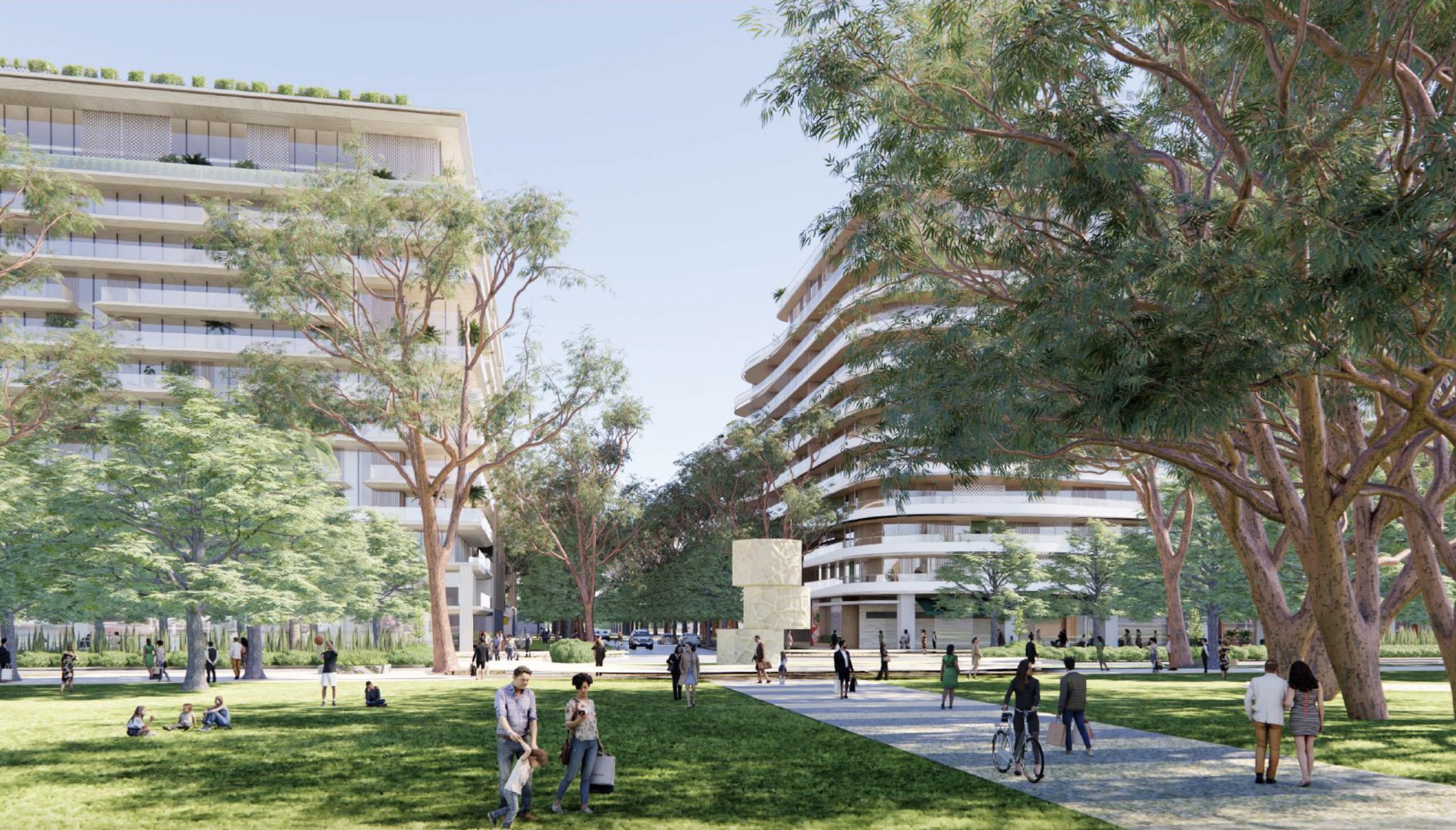
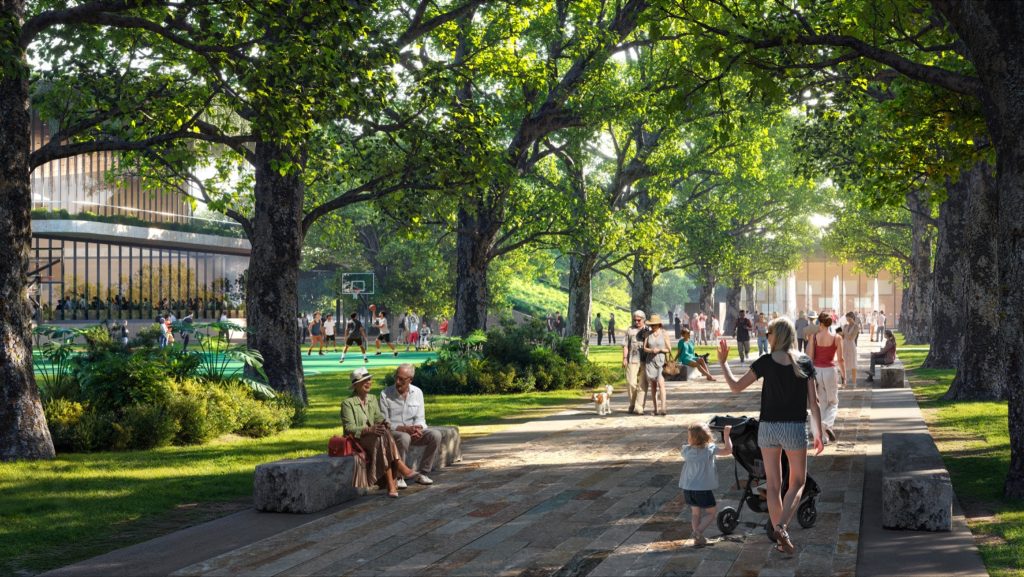
Two weeks from today, the Boca Raton City Council is scheduled to approve the master partnership agreement and lease with Terra/Frisbie. Those documents would govern redevelopment of the roughly 30 acres around City Hall if voters on March 10 approve the project.
Yet as the drafts of those documents show, much remains up for discussion. The top of every one of the 384 pages contains the disclaimer “Draft – Subject to Ongoing Negotiations.” What happens if one side ends the deal? That section, like many others, says, “Parties continuing to discuss.”
City council members discussed the documents during Monday’s workshop meeting. They will be introduced at Tuesday’s regular meeting, with the second and final hearing set for Jan. 20.
That schedule prompted criticism Monday. Some speakers asked why the council would sign a contract with Terra/Frisbie before the voters decide. Without certainty about what the project included and the accompanying financial information, Mayor Scott Singer responded, the voters would lack adequate information. “We could be accused of hiding the ball.”
One recent change concerns the project’s projected benefit. Previously, the city’s consultant pegged the net revenue to the city at $138 million in today’s dollars over the 99 years of the lease. That number is now $175 million.
Andy Thomson, the only council member who opposes the project, raised the question. Chief Financial Officer James Zervis responded that the consultant took a more detailed look at the rent structure after details of the plan became clearer.
Here is what we do know at this point:
Terra/Frisbie would lease four parcels east of Second Avenue totaling 7.8 acres. Those parcels are the police station site, the old library site—which is now home to the building department—a vacant lot south of the current library and part of the land between the library and the Brightline station. Separately, Terra/Frisbie would buy private land south of the library and make that part of the project.
Terra/Frisbie would build 765 apartments, 182 condos, a 180-room hotel, roughly 80,000 square feet of shops and restaurants and an office building. Phase 1 would include everything except 489 rentals and 23,400 square feet of retail.
The cost for public development—most of it west of Second Avenue—would be roughly $200 million. Of that, nearly $60 million would be for a city hall and community center. Boca Raton would pay that cost upfront, with Terra/Frisbie reimbursing the city through rent payments. That overall projection includes $27 million for “contingencies.”
Of that $200 million, $30 million would be for a parking garage that the city would own. It would go on that parcel next to the library, with the office building and grocery store. What about library parking? Deputy City Manager Andy Lukasik said, “More would be learned during the site planning phase.”
Terra/Frisbie would pay for “design, permitting and construction” of all public improvements necessary to support the private development. The city would pay those costs for improvements to Second Avenue, which bisects the area.
One key unresolved issue is what would happen if city hall and the community center run over budget. Who would decide whether Terra/Frisbie has made “turnkey delivery” of the buildings? There also seems no plan yet for how the city would pay for the garage, which emerged late in the negotiations. Critics will continue to note that CBRE, the city’s real estate consultant, would get a $2.8 million fee if voters approve the project. (CBRE is not advising on the financials.)
And as one more reminder of how complex this project is, Phase 2 is “expressly predicated” on moving the police station. Another item on the March 10 ballot asks voters to approve bonds for a new station on Spanish River Boulevard.
As noted, negotiations continue. More details will emerge. I’ll have more before the Jan. 20 meeting.
A change in the Terra/Frisbie agreement ahead of March 10 vote
One day before Monday’s meeting, a mass email from Save Boca noted a change in the agreement regarding the March 10 vote on the project. The city, Save Boca warned, was preparing an option to “remove” that referendum.
The first version referenced only what would happen, whatever the outcome. If voters approved the project, the agreement would be “deemed effective.” If voters rejected it, the agreement would be “null and void.” Neither Terra/Frisbie nor the city would have any liability.
The new version adds this condition: “The failure of the referendum to occur shall not be deemed a rejection, and shall have no effect on the effectiveness of this agreement.”
On Monday, two speakers accused the council of trying to break its promise to hold the vote. But City Attorney Josh Koehler said he made the change. He did so, a city spokeswoman said, because of threats by Pearlman to sue over the ballot language that Save Boca considers too favorable toward the project.
“Without the clause,” the spokeswoman said, “the referendum itself could be defeated procedurally, and the decision would be made in court instead of by the voters. The clause was added to keep the decision with the voters.”
During the meeting, Koehler elaborated. He acknowledged that he might be guilty of “over-lawyering,” but that he had to consider “all possible scenarios.” One of those is the potential for “legal maneuvering.” In essence, the city believes that Pearlman—not the city—might be trying to delay the vote to a special election with a much lower turnout that could favor opponents of the project.
Singer criticized Save Boca and its supporters for “assuming the worst.” For the council at this point to cancel the referendum, he said, “would be ludicrous.”
Maybe, though, the city could add “on March 10, 2026” after “failure of the referendum to occur.”
An update on on Terra/Frisbie litigation
Here’s an update on actual litigation related to the Terra/Frisbie project.
A judge dismissed the lawsuit by a Boca Raton resident who had tried to block approval because the city had not conducted a financial analysis of the project. In fact, the city released that analysis last month.
In addition, a judge ruled against Save Boca’s attempt to overturn his ruling that tossed the group’s proposals from the March ballot. Save Boca had wanted voters to approve an. ordinance and charter amendment to require a referendum on transactions involving at least one-half acre of city land.
Among other things, the judge ruled that only the governing body—the council, in this case—can set such a requirement. Save Boca is still trying to intervene in the lawsuit against the proposals. The litigation named only the city and the supervisor of elections as defendants.
Boca City Council to consider public land protection proposals
On the agenda for tonight’s regular council meeting are two proposals designed to protect public land without having to resort to a series of potentially expensive referendums.
One, as I have written, comes from Singer. It would require two public hearings for approval of any transaction involving public land. City staff also would have to determine that the deal served a public purpose.
The other, new one comes from Councilman Marc Wigder. The staff memo casts it as a “clear, use-based standard” for transactions involving public parks.
Under the proposal, the city would define parks as strictly for “recreational” use. It also “recognizes the practical need for flexibility …” It would allow “easements, utilities and infrastructure” that “do not substantially interfere with public and recreational uses.”
Singer running for Congress

Singer announced Dec. 18 that he is running for Congress. Singer’s term ends in March, and he’s been casting about for his next act.
Singer is late to the field of Republicans running to challenge the District 23 incumbent, Democrat Jared Moskowitz. Singer is the third candidate to enter the primary, and he’s behind in more ways than time.
Joe Kaufman announced his bid just after getting 48% against Moskowitz in 2024. Kaufman had raised roughly $300,000 through Sept. 30. Also in the race is George Moraitis, a former state representative. His wife, Heather Moraitis, is a former Fort Lauderdale city commissioner.
Singer’s other problem is geography. Though District 23 includes Boca Raton and West Boca, most of it is in Broward County, where Moraitis lives. In 2024, 265,000 votes came from Broward compared with 108,000 from Palm Beach County.
Moskowitz already sent out a mailer, hitting the theme of the moment, saying that he is “putting affordability first.”
Boca to decide on official definition for freestanding emergency rooms
Also on the agenda for tonight’s council meeting is a resolution to define what Boca Raton considers a freestanding emergency room.
Such facilities have proliferated across South Florida. They can treat more serious issues than urgent-care centers, and they often have shorter wait times than traditional emergency rooms.
Critics, however, have claimed that use of freestanding ERs can drive up health costs. And if a patient’s condition becomes life-threatening, there is no specialized team on hand as there would be at a hospital.
Boca Raton has no freestanding emergency rooms. Last year, however, the Planning and Zoning Board recommended approval of one near the Boca Raton Innovation Campus (BRiC). The campus’ owner challenged that decision, citing potential traffic problems.
According to the staff memo, the resolution would expand the definition of “outpatient surgery center” to include “emergency room and urgent care procedures” that don’t require an overnight stay. Minimum parking rules then would apply.
FDOT’s fraudulent claims regarding street murals
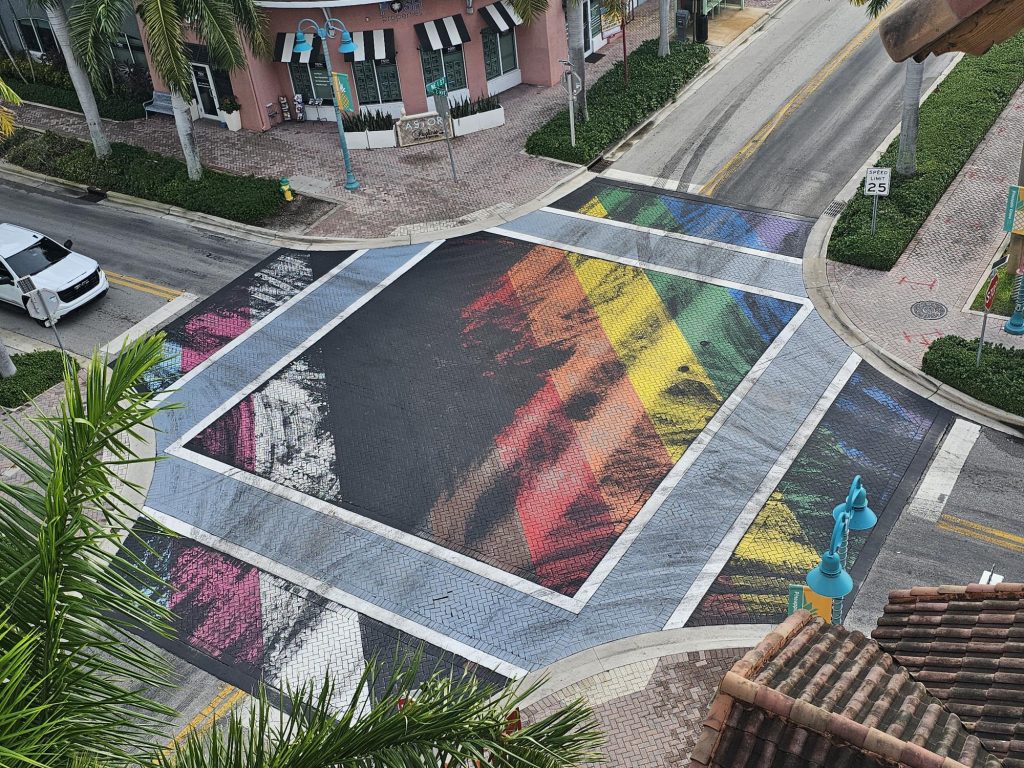
Remember when the Florida Department of Transportation (FDOT) was trying to claim that Delray Beach’s LGBTQ Pride streetscape and others were safety hazards?
That argument lacked evidence all along. And now we know that it was a fraud.
According to a report last month in the Tampa Bay Times, FDOT deleted posts on its website that praised a similar crosswalk for “enhancing safety.” The one in question was a memorial to victims of the 2016 Pulse nightclub shooting. Pulse attracted an LGBTQ crowd; 49 people were killed and 58 were wounded.
The state removed that memorial in August. As in Delray Beach, the work happened overnight. The deletions happened as the Orlando Sentinel was suing FDOT for records related to the removal of the Pulse streetscape.