Of the South Florida museums most likely to inspire moments of Zen in their exhibitions, the Morikami Museum and Japanese Gardens stands front and center: From its meandering gardens to its teahouse to its art spaces, it has always been a place of peace and tranquility. But even considering the museum’s reputation for meditative art, “Light as Air: The Buoyant Sculptures of Mariko Kusumoto” is next-level enchanting, from the piped-in soundtrack of gentle birdsong and serene flutes to the structures themselves.
Running through April 5, “Light as Air” thrives on juxtapositions. It is small in size—comprising just one gallery—but vast in its ability to soothe the senses. Its materials are featherweight but mighty in their visionary application. And its impact is both grounding and transportive, suggesting aquatic wonderlands while firmly planted on terra firma.
Much of the work in “Light as Air” is new, circa 2025, the latest muse of a Japanese-born, Massachusetts-based artist who won awards for her work as a child, majored in oil painting at university, and pursued printmaking, etching and metallurgy. Burnt out on metal after some 18 years of working with the material, Kusumoto pivoted to its opposite: fabric. The resulting sculptures fulfill the exhibition’s title without forgoing substance, and glean more imagination from polyester than you may have thought possible.
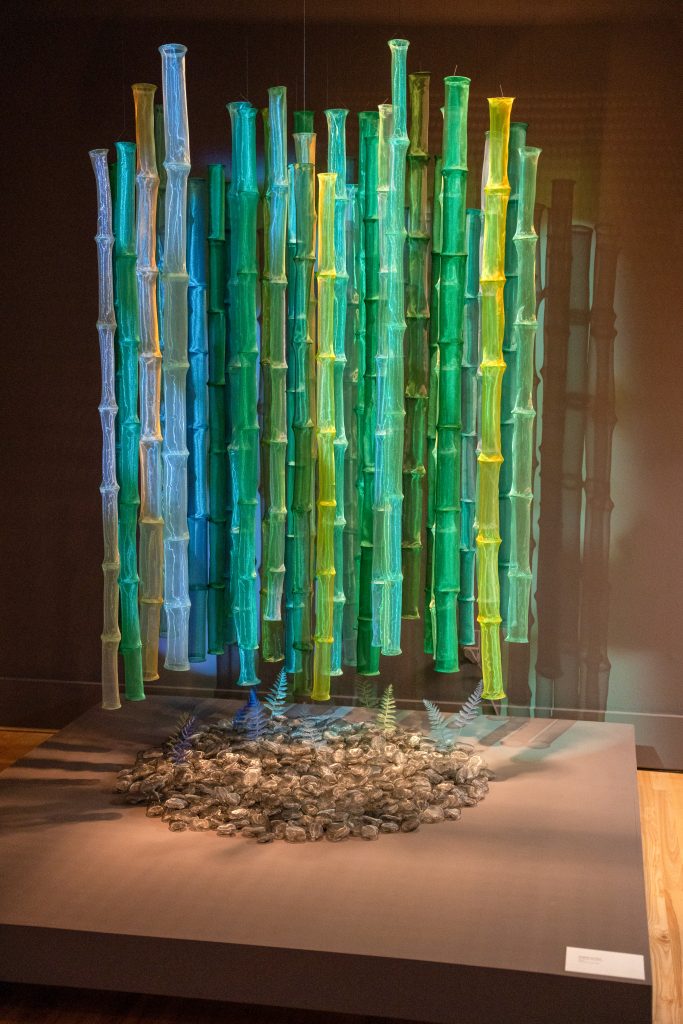
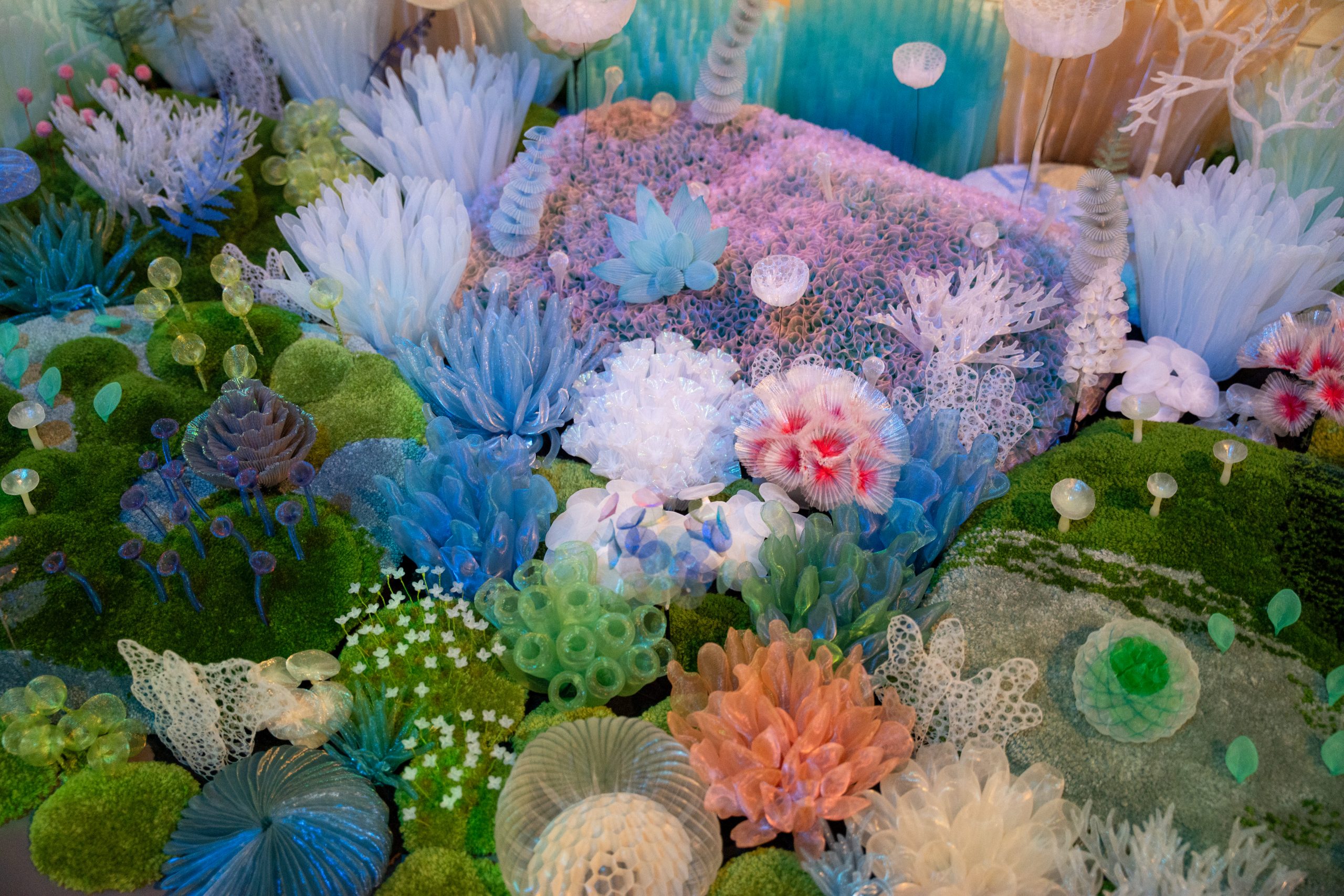
“Bamboo Garden,” one of the show’s two centerpieces, is a case in point. Its long green tubes, suggesting the creaky flowering plant so familiar to Japan, sit atop a bed of “rocks” with “weeds” poking through their gaps, all of them created, delightfully and improbably, from diaphanous fabric. Its other showstopper, “Ethereal Garden,” is a sprawling, large-scale diorama of myriad shapes suggesting urchins, coral and other ocean dwellers, radiating the sort of color and variety we associate with the Great Barrier Reef.
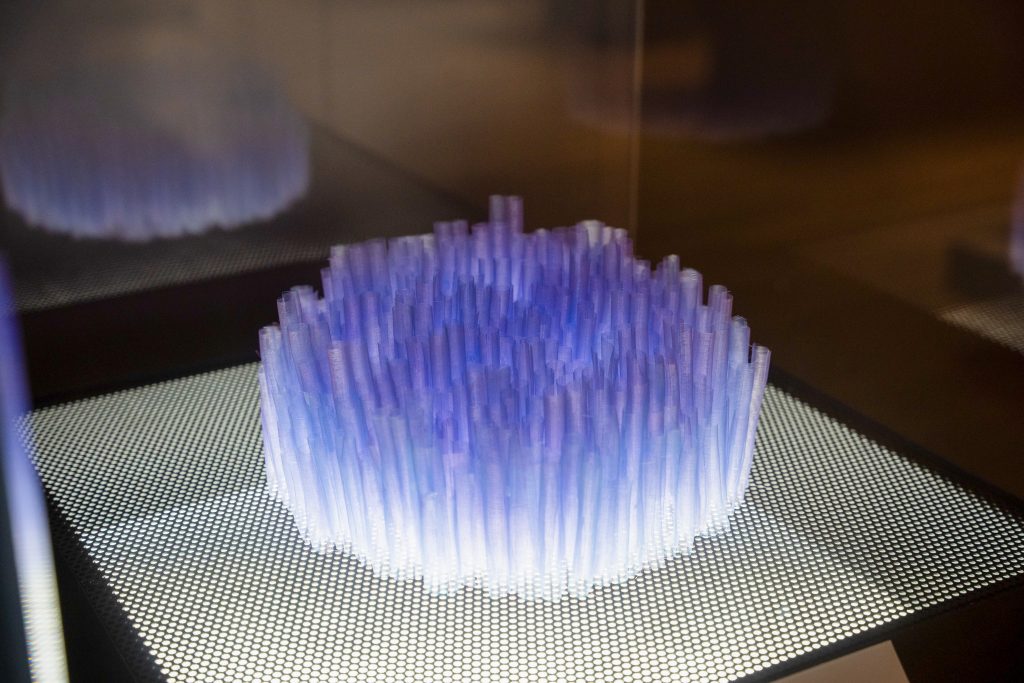
Much of the rest of “Light as Air” comprise smaller pieces riffing on the same themes. “Habitat” is a pouf of lavender funnels, appearing luminous in a glass case, while “Anemone” juts from the nearby wall, a 3D burst of sea foam-tinted squiggles evoking its namesake invertebrate.
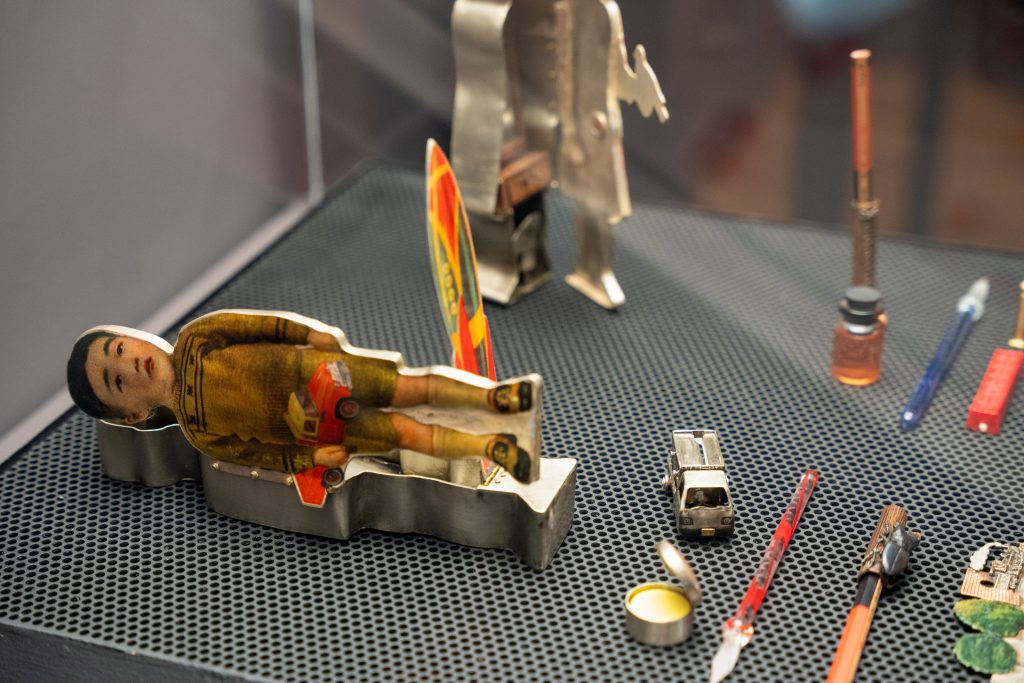
A few select pieces reflect the artist’s background in metal, including nifty pencil boxes, appliqued with magazine images of Japanese children on their exteriors, that open up to miniature delights inside—timepieces, tiny drawers, mirrors. But fabric dominates across all scales, from the aforementioned installations to small wearable art: brooches, bracelets, earrings, necklaces, tiaras. In one particularly boggling conception, a wreathlike arrangement is composed of spheres, each containing objects—a horse, a plane, a car—like treasures hidden in Easter eggs.
Works like these restore a childlike sense of wonder that can easily be lost, especially in harrowing times such as ours. But that doesn’t mean they don’t suggest serious subtext amid the whimsy. The very fact that Kusumoto deployed such a gauzy medium in her re-creations of Earth’s flora and fauna says something, to me anyway, about the fragility of their, and our, environment. We need to preserve and protect nature, lest we lose it as swiftly as a piece of sheer fabric in a gust of wind.
“Light as Air: The Buoyant Sculptures of Mariko Kusumoto” runs through April 5 at Morikami Museum and Japanese Gardens, 4000 Morikami Park Road, Delray Beach. Admission is $12-$18. Call 561/495-0233 or visit morikami.org.
For more of Boca magazine’s arts and entertainment coverage, click here.