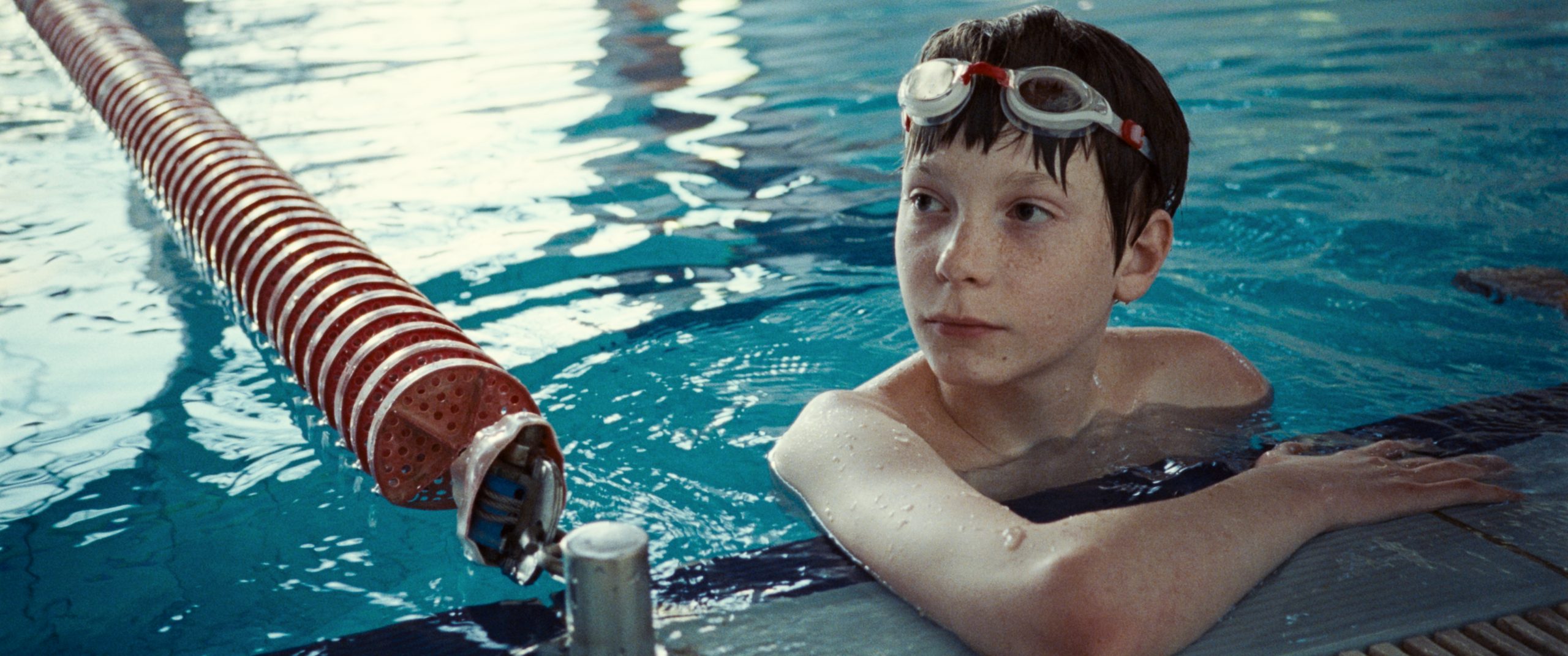
Writer-director Charlie Polinger’s first feature “The Plague” (in theaters now) is set at a boys’ water polo camp over a fraught summer of shifting allegiances, raging hormones and casual cruelties. An astonishing debut, it functions as a “Lord of the Flies” for the early aughts, anchored by a keen sense for the natural cadences of early-teen millennials—disillusioned latchkey kids, often from broken homes, who find mockery in cultural differences and a kinship through the Others they ostracize from their peer group.
Joel Edgerton may provide the movie’s only star power, as the camp’s well-meaning coach, but he’s sidelined for much of the film. This allows Polinger to focus his acute lens on the chemistry of his remarkable young ensemble as they navigate a body-horror psychodrama that will feel familiar to many.
“The Plague” establishes itself with a specificity that seems rooted in autobiography, its title cards placing us in the season session of the second season of the Tom Lerner Boys Water Polo Camp in the summer of 2003. Indeed, Polinger wrote the film after digging through some journals in his childhood bedroom and rediscovering his candid accounts of an impactful summer at an all-boys sports camp. He spun a fiction around this idea, but “The Plague” seldom feels schematic; it hums with an authenticity and a vulnerability that feels both remembered and lived-in.
We encounter this environment through the eyes of Ben (newcomer Everett Blunck, whose unaffected performance is a marvelous discovery), a sensitive transplant from another city whose mild speech impediment makes him an immediate target for exploitation by his fellow campers, particularly the slightly older boys who have established their seniority. But Ben is welcomed into the fold, so long as he can accept a few jibes at his expense, unlike Eli (Kenny Rasmussen), whom the other kids avoid like, well, the plague. Eli has a skin condition—possibly psoriasis or eczema, though the cause is never explained—and his fellow-campers have decided that his condition is virulent and transmitted by even casual touch.
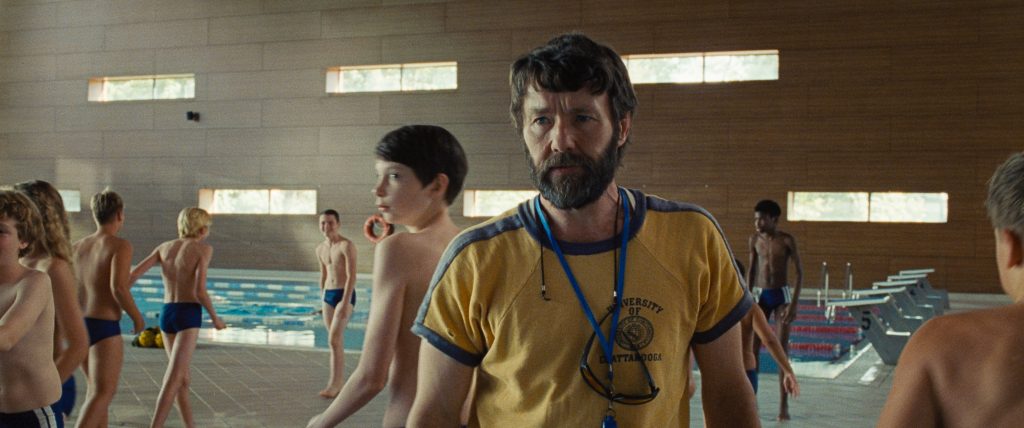
Polinger is as promising an aesthete as he is a storyteller, favoring wide-angle lenses that inject benign places with an unnerving tension. Even a close-up of a vending machine is imbued with menace, and it is no shocker to learn that Stanley Kubrick’s “The Shining” was a formative influence on the film. Composer Johan Lenox’s score, guttural and churning and suffocating, conjures the work of art-rock nihilists Swans, enhancing Polinger’s discomforting vision.
It’s fitting that water polo, and not a more common sport like basketball or football, frames the action, because it foregrounds a potent symbolism: the divide between what’s above and below the surface, the sicknesses seen and unseen. It can be no coincidence that “The Plague” was shot in the shadow of COVID, and also contains echoes of the AIDS epidemic.
But the more damning contagion it exposes is not medical but social. As Ben is torn between the mercurial cliquishness of the main group of boys and his curiosity and empathy towards Eli, “The Plague” has much to say about the abuses we tolerate and the sacrifices we make to be accepted into an in-group.
Bodies can feel like prisons in “The Plague,” and in this troubling slice of early-teen life, we’re all cellmates.
“The Plague” is now playing at AMC Pompano Beach 18 and Regal Royal Palm Beach.
For more of Boca magazine’s arts and entertainment coverage, click here.