
Massive mall makeover
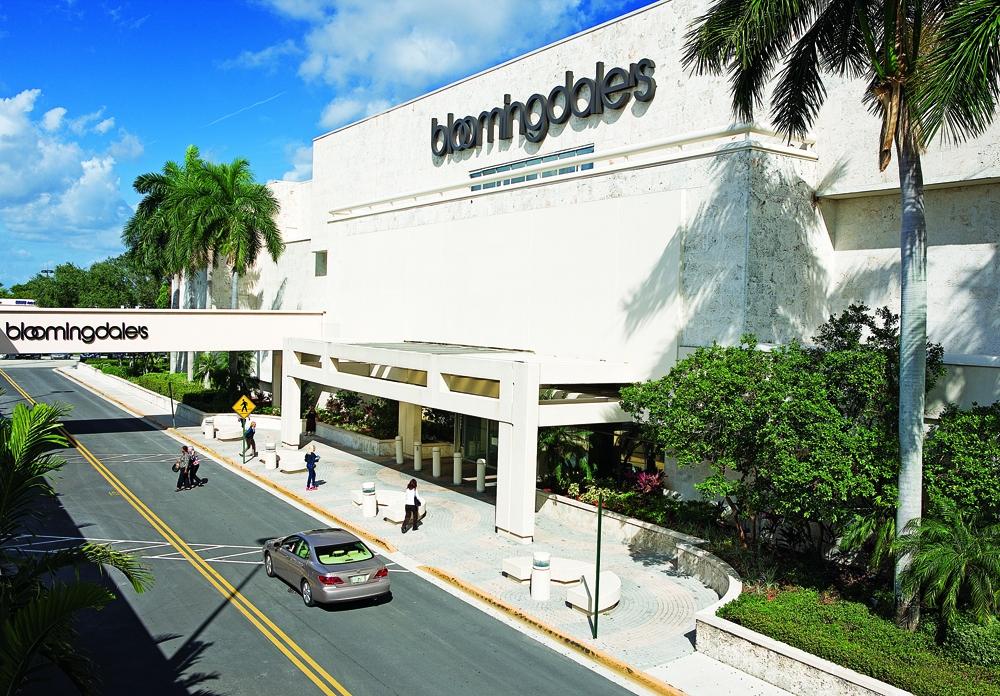
Reliable sources tell me that Simon Property Group plans a major makeover of Town Center Mall.
The price for redoing the interior of the 36-year-old property will be about $40 million. Simon is the nation’s largest owner of shopping malls—with a full or partial interest in about 325 properties—and Town Center is one of the company’s prime locations. The company has said that Town Center’s 220-store mix is unique.
Despite the shift from brick-and-mortar to online retailers, Simon is doing well. The company raised its dividend after releasing earnings for the first quarter. Obviously, an investment that large would signal Simon’s commitment to Town Center and to Boca not just for the next 10 years but longer.
The mall project also will represent another major development in one of Boca Raton’s important business districts. The Palm Beach Post reported this week that Bank of America will move into three floors of One Town Center, just east of the mall. Crocker Partners bought the building, once home to Tyco International, in late 2014.
Crocker Partners also bought Boca Center, formerly Crocker Center, which is east of One Town Center across Military Trail. A company vice president told me last year of Crocker’s ambitious plan to add residential and turn the center into a food-lover’s paradise. The company has not sent any plans to the city.
I will have more on this when Simon and Town Center representatives are ready to discuss specifics.
Office Depot-Staples merger
A speaker at Tuesday night’s Boca Raton City Council meeting interrupted his remarks to inform the council that a federal judge had just issued an injunction to block the $6.3 billion merger between Office Depot and Staples.
Mayor Susan Haynie called the decision “good news.” Maybe not for long.
Haynie’s perspective is understandable. Office Depot employs roughly 2,000 people at its corporate headquarters in Boca Raton. Staples would have absorbed Office Depot and kept the headquarters in Framingham, Mass. Staples never hinted at how many jobs—if any— would remain.
U.S. District Judge Emmet Sullivan’s ruling leaves Office Depot as the second-largest retailer of office supplies, and thus in an even weaker position than industry leader Staples. Office Depot had bought third-place Office Max before becoming a target for Staples.
Despite those rankings, Staples and Office Depot are losing money because of cutthroat competition from discount and online retailers. The companies argued that the merger would leave a single but stronger entity. The Federal Trade Commission responded that the merger would reduce competition for large, corporate buyers.
Rather than appeal, Staples will pay Office Depot a $250 million breakup fee. Both companies will try to figure out their respective futures, which investors for now consider bleak and bleaker. Staples’ stock is down about 15 percent since Sullivan’s ruling while Office Depot’s is down 40 percent. Oliver Wintermantel, a managing director at Evercore International Strategy & Investment Group, told The Boston Globe that Office Depot will “go first and Staples will struggle.”
Presumably, Office Depot and Staples will close more stores and cut more costs, which will mean fewer employees. Those at Office Depot who remain will stay in Boca Raton, but there is little the city and county can do to help. Both already have given Office Depot an incentive plan to keep the headquarters in the city.
The issue underscores the limits of such incentives. Eventually, companies act in their own interest. According to news reports, Office Depot was talking merger with Staples in late 2013 even as Office Depot was negotiating that local incentives deal after the Office Max merger. There’s no reason for Boca Raton to end its $5 million economic development fund, but there’s also no reason to think that money alone will keep jobs in the city. In this case, the market will decide.
Singer’s special elections proposal
Scott Singer now knows how Gov. Scott felt.
In March, the governor offered a motion before the Florida Cabinet to hire his preferred candidate for state insurance commissioner. Scott asked for a second and got 22 seconds of silence.
Tuesday night, Singer proposed a charter motion that would have required special elections to fill any Boca Raton City Council vacancy after 60 days. Currently, the council appoints a replacement who serves until the next scheduled city election.
Singer cited Wellington, which had 30 applicants for a village council vacancy. He spoke of giving the power to voters, not the council. After explaining his ordinance, Singer asked for a second. He didn’t get one.
There were good reasons. A Boca-only election, not held as part of a countywide or uniform municipal election, could cost as much as $100,000. Turnout is low enough in regular city elections and would be much lower in a special election. Finally, there isn’t a recent example of an appointed council member serving longer than roughly the period covered in Singer’s proposal. Sometimes, doing nothing beats doing something.
Airport advisory board
Unlike those of a year ago, the Boca Raton City Council’s 2016 appointments to the airport advisory board weren’t controversial.
On Tuesday night, the council was filling its five of the seven seats, which come with two-year terms. Council members picked incumbents Mitch Fogel, Gene Folden and William Helwig and newcomers David Millidge and Melvin Pollack. Their terms begin June 1.
Twelve months ago, unhappy with a perceived lack of communication from the airport authority, the council put Deputy City Manager George Brown and Councilman Robert Weinroth on the board. They helped to oversee a bylaws change that the city—and some of the holdover board members—believes is less threatening when it comes to communication between the two entities.
So for all the controversy, it appears that the council was successful. Now if the council only could have as much luck improving communication between the city and the Boca Raton Beach and Park District.
Ethics “violation” legal costs
The appointments of Brown and Weinroth drew complaints from BocaWatch Publisher Al Zucaro to the Florida Commission on Ethics. Though the commission didn’t find probable cause to investigate either complaint, the city spent $5,000 on an outside lawyer to respond to each complaint.
A complaint also went to the commission about another authority board member: Jack Fox. The issue is whether his ownership of a hangar at the airport presented a conflict of interest. Fox chose not to seek reappointment. The commission has not ruled in his case. A city spokeswoman said the outside legal cost has been $10,000.
Pfeffer update
It looks likelier that Delray Beach City Attorney Noel Pfeffer will stay on at least through June.
When Pfeffer announced his resignation early last month, the end of May was his intended departure date. The city commission, however, probably won’t have picked a replacement by then. Pfeffer had said he would stay long enough to help with the transition.
So on Tuesday’s agenda will be an item that would allow Pfeffer to keep working longer. One would expect that the commission would pass it. There is other turnover in the city’s legal department, and Delray Beach needs someone to monitor the Atlantic Crossing lawsuit. It would be better if Pfeffer stayed permanently. Absent that, the city needs him for as long as possible.
Dog beach
Delray Beach will not allow dogs on the beach legally anytime soon.
At Tuesday night’s workshop meeting, Mayor Cary Glickstein and commissioners Jorjdana Jarjura and Shelly Petrolia opposed a trial program. Al Jacquet and Mitch Katz were for it.
Jarjura and Petrolia said the city has higher priorities. Katz said that if Boca Raton can do, Delray could do it. Those were mostly the same points that they made to me earlier this week. Jacquet waited to hear from everyone else before declaring his support.
Glickstein cited differences between Boca Raton and Delray Beach. The dog beach in Boca, he said, is much wider than the area near Atlantic Dunes Park envisioned for Delray’s program. Far more people come to that smaller space in Delray Beach, portending far more potential conflicts between those with dogs and those without.
The mayor also said federal rules tied to money for beach renourishment prohibit cities from setting higher admission fees for non-residents. Boca Raton and Fort Lauderdale do that at their dog beaches. Delray Beach’s proposal also would have charged city residents less.
There remains the problem of dogs on the beach illegally. Glickstein, a regular beachgoer, complained of seeing canine feces “weekly.” He also said Boca Raton had reported four bites on the city’s dog beach in the last year, one of them serious. Even a minor bite would be enough to ruin a quiet morning on the shore.
After calling himself a dog lover—I’m one, too— Glickstein reminded those who had shown up in support that dog owners sometimes presume that everyone loves dogs. Delray Beach’s dog owners would help their case if they followed the law, and thus showed that a legal dog beach could work.