For owners of high-value homes in Boca Raton, Palm Beach and throughout South Florida, a roof decision now sits at the intersection of property preservation, insurance underwriting and Florida law. The essential question is no longer simply, “How old is the roof?” It is, “What does documented evidence show about its condition and remaining useful life?”
Florida’s Roof Age Law, codified in Florida Statute §627.7011, provides specific protections for homeowners’ insurance policies issued or renewed on or after July 1, 2022. An insurer may not refuse to issue or renew a policy solely because a roof is less than 15 years old. For a roof that is at least 15 years old, the homeowner must be allowed to obtain an inspection by an authorized inspector before replacement is required as a condition of issuance or renewal. If the inspection shows at least five years of useful life remaining, the insurer may not refuse to issue or renew the policy solely because of roof age. Other lawful underwriting requirements may still apply. The statute lists roofing contractors among the professionals who may qualify as authorized inspectors, subject to insurer approval. That makes the quality of the inspection and documentation critically important.
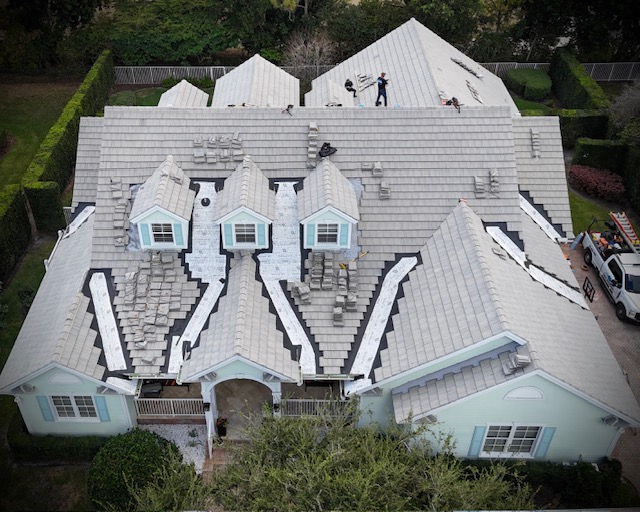
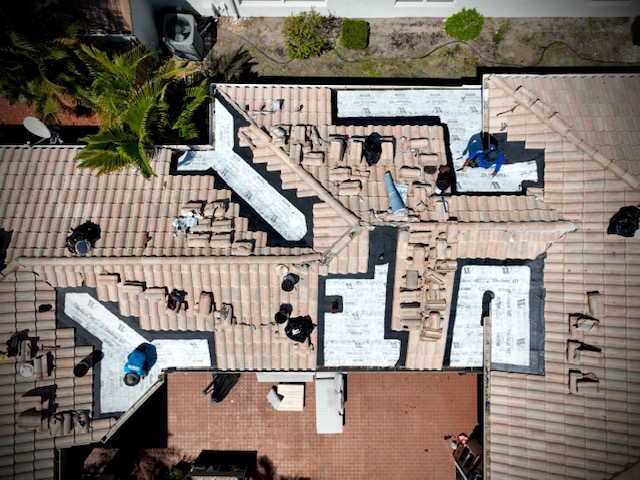
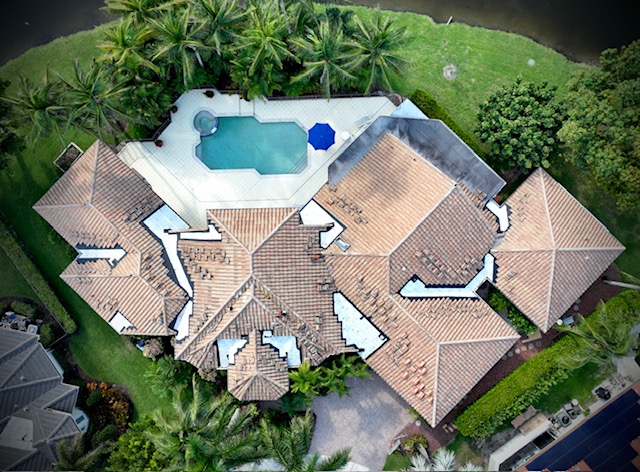
Roofs rarely deteriorate uniformly. On South Florida tile roofs, valleys, flashings, penetrations, transitions and other high-water-flow areas often age faster than surrounding sections. A condition-based inspection evaluates the tile, underlayment, roof deck, drainage paths and moisture indicators, then records what is sound, what has failed and what can be repaired or rebuilt.
For luxury properties, roof preservation can protect original tile, maintain architectural continuity and avoid replacing serviceable roofing merely because one section has reached failure. When appropriate, targeted reconstruction replaces compromised decking, underlayment and flashing while returning existing tile to its original placement.
The professional standard should be documentation, not sales pressure: high-resolution photography, thermal imaging when appropriate, written findings, repair records and a remaining-useful-life assessment. When a roof qualifies, a signed 5-Year Roof Certification can provide insurers, lenders, buyers, property managers and homeowners with a durable record of condition. Acceptance and documentation requirements vary by carrier.
The strongest roofing decision is neither repair at all costs nor replacement by default. It is an evidence-based decision made by a licensed professional who can explain what the roof needs today, what can be preserved and how its condition should be monitored.
About the Author

Mike McGilvary is the owner of Mike McGilvary Roofing, Inc., a Florida Certified Roofing Contractor (CCC1331721) serving Palm Beach County and South Florida, with family roofing roots dating to 1974. He is a published expert contributor on Florida’s roof-age law, repair-first roofing, tile-roof preservation and documented roof certifications. His commentary has appeared in the South Florida Sun Sentinel, regional Business Journals and Florida Construction News. Additional educational resources are available through FloridaRoofAgeLaw.com.