I was not prepared for, nor had I ever experienced anything quite like, “Cursed Images,” a photography exhibition running through Nov. 1 at Norton Museum of Art. Having written about art for some 20 years, there’s a level of expectation that goes into the task, which usually involves critiquing the output of a professional artist, or group of artists, presented with curated intention and quality lighting. Even outsider art, if primitive in execution, usually fulfills certain parameters of form or function—a baseline of structure and materials that qualify it, even to casual observers, as art.
“Cursed Images” throws all of these conventions to the wayside. For one, the lighting in this single-gallery exhibition is dim, and the walls are painted a deep crimson. Immediately, a sense of the forbidden permeates, as the spectator begins to furtively take in private snapshots lining the wall in the hundreds (thousands?), with no frames and in no discernable order, all taken by amateurs, some from as recent as the 1980s, others dating back to the 19th century. Is this even art?
Apparently, being someone who is not perpetually online, I was unaware of the phenomenon of the cursed image, which began as a Tumblr thread in 2015 and exploded in internet popularity a year later thanks to a Twitter thread called @cursedimages. There is no clear definition for what makes a photograph “cursed,” but we’re not talking about photos of ghosts or demons or anything so obvious. They are generally shots of mundane activities infused with an implacable eeriness through the staging of the image, the placement of the camera, or an accidental effect of said camera.
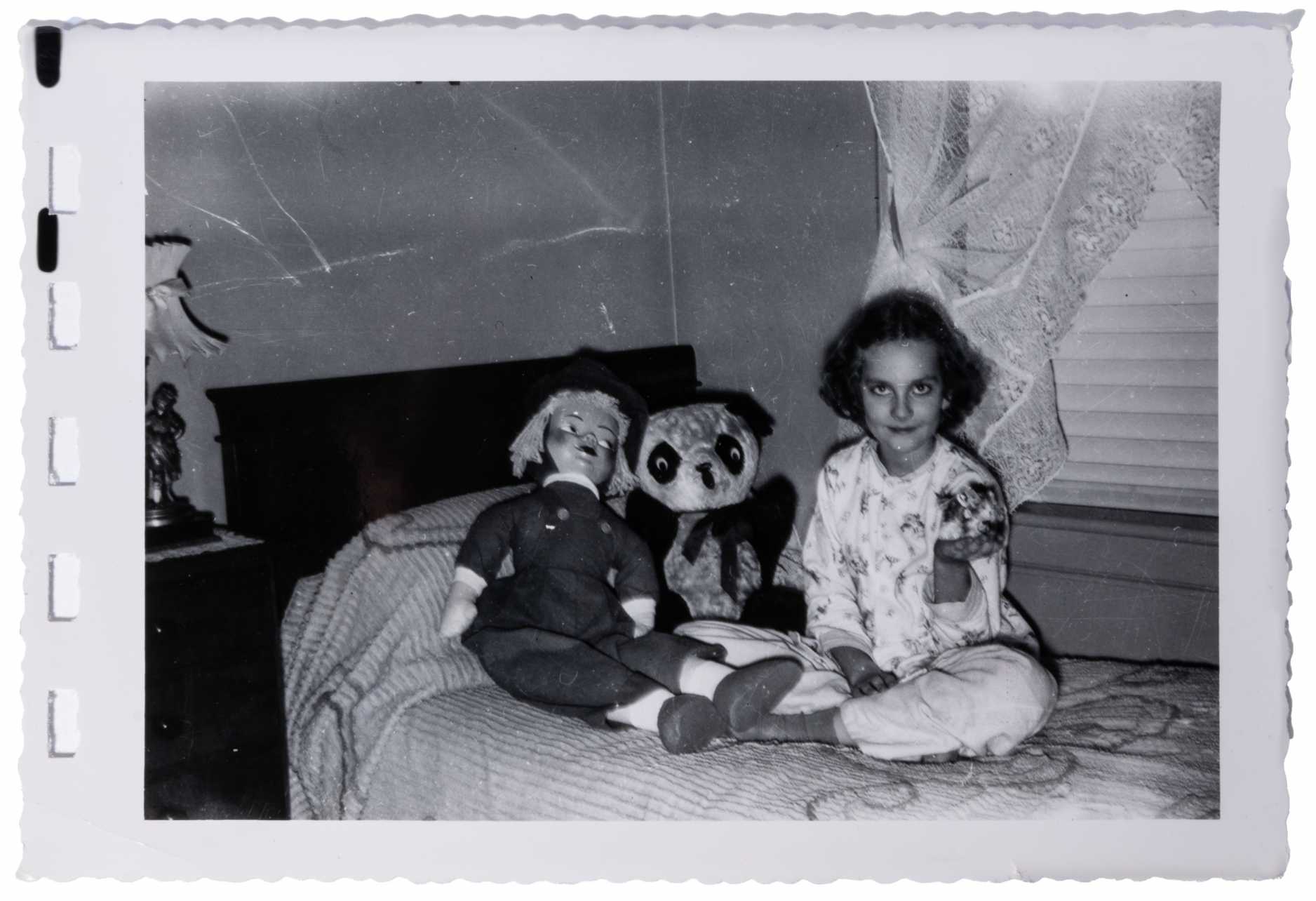
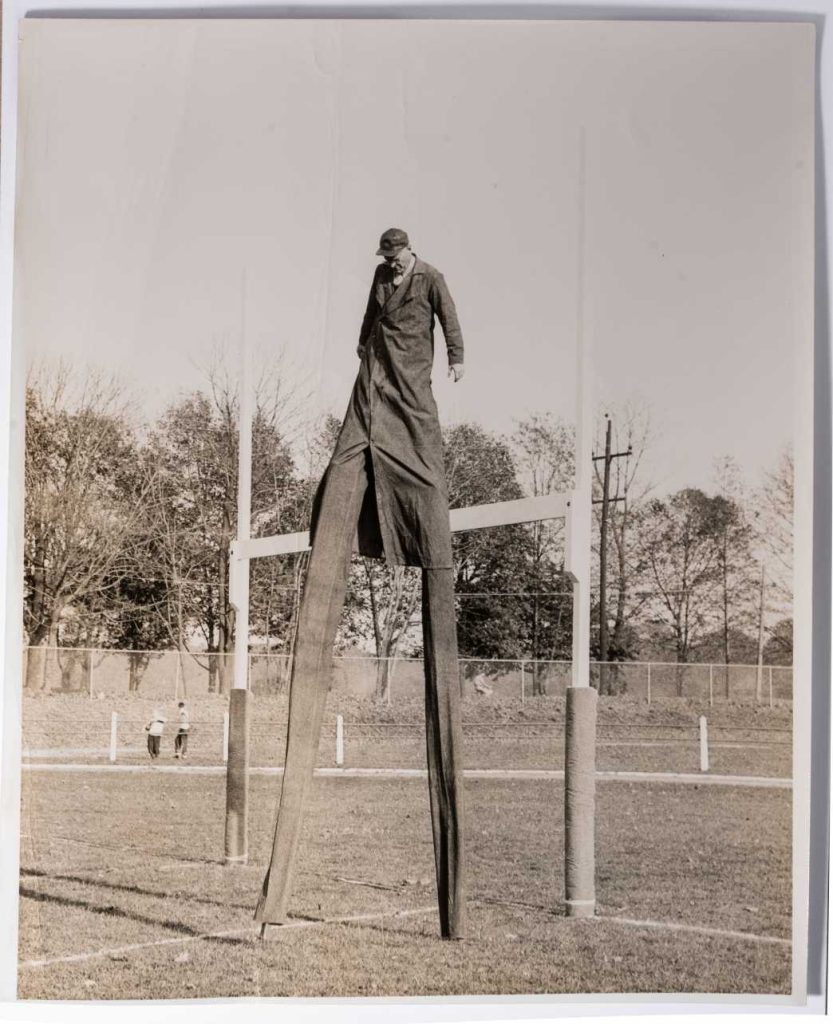
Examples presented in the exhibition—drawn from the exhaustive collection of Peter J. Cohen, whose archive of anonymous photography is one of the largest in the United States—include a giant stuffed bunny that appears to be gazing creepily down at a lost child at a fair; a surreal double exposure of a woman balancing on the edge of a pool; another woman whose own reflection appears to stare at her through a nearby window; and a figure towering on stilts like a character out of a Tim Burton fantasy.
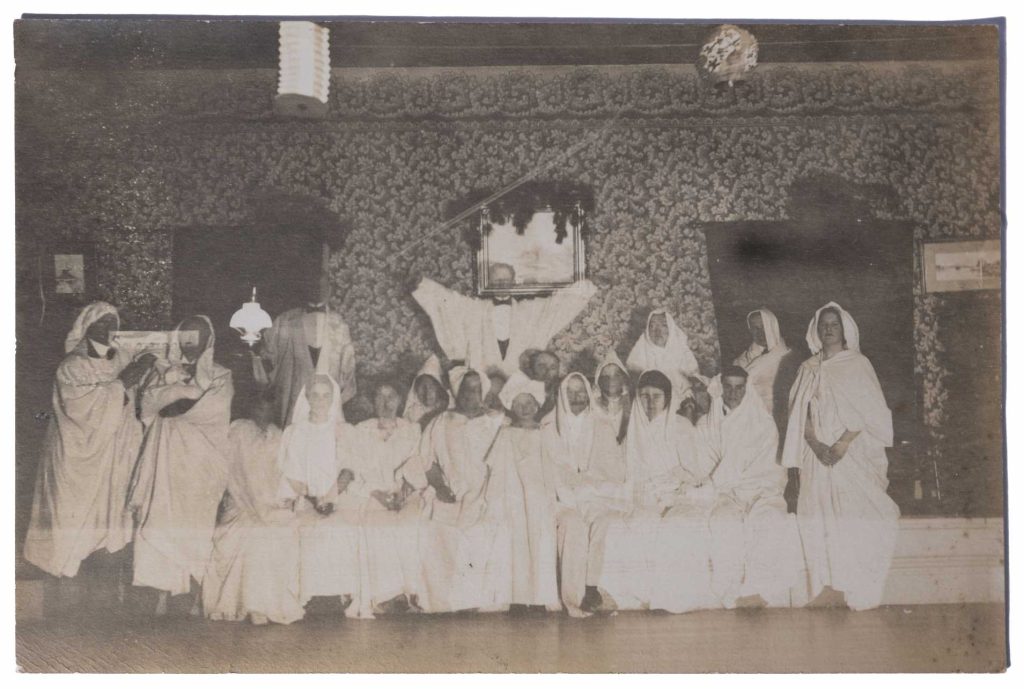
Some images are simply curious, others more genuinely disturbing. One photo appears to show a dive into a pool that is going very wrong. In another, one woman appears poised to stab another with a knife. One lady dances nude with a skeleton. Three children are buried up to their heads in sand, and one appears to be screaming. A severed rubber—we hope it’s rubber—hand rests on the hood of a car, as if Thing from The Addams Family had strayed way off the reservation.
Certain images simply represent tourist kitsch of a bygone era, like wooden roadside face-in-hole boards where visitors can cosplay as Bigfoot or cowboys. You’ll encounter a woman who appears to be hoisting a giant rock above her head, and a sepia-toned photo of a truck carrying a gargantuan fish. Determining if such images are tricks of the camera or genuine evocations of reality is part of this show’s fun.
And it is, above all and despite the Halloween-coded title and atmosphere, a fun experience, especially if you approach it the right way. We’re not meant to linger long on any one image. After all, the photos are so small, many fitting in the palm of one’s hand, and the lighting so moody that it’s difficult to discern details from behind the distance of the gallery ropes.
But it’s the totality of it all that flummoxes us more than the idiosyncrasies of individual images. Instead of a single beguiling shot that captures the imagination, we’re asked to succumb to the overwhelming strangeness—to rest our feet in the uncanny valley for a while.
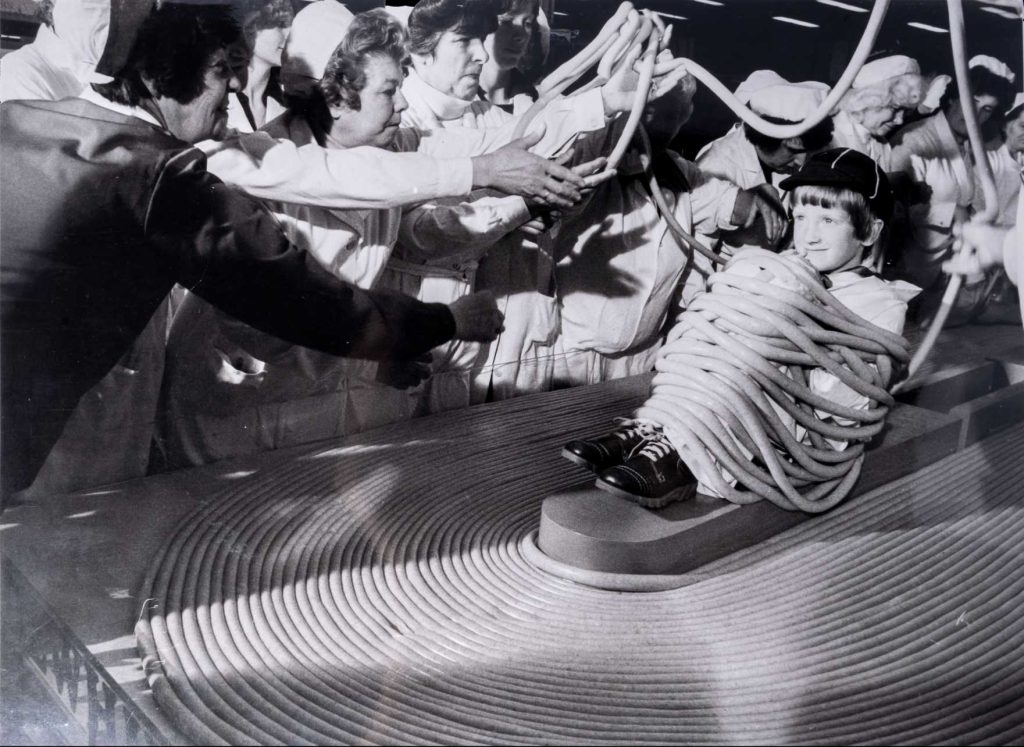
If there’s a grand takeaway from “Cursed Images,” it’s that humans are weird. We place wigs over our genitals, and pose with monkeys on our heads, and string children up in ribbons of sausage. It’s as if the world were an endless Tom Waits song. To quote a recurring line from HBO’s DTF St. Louis, one of my favorite shows of the past year, “No one’s normal. It just looks that way from across the street.”
“Cursed Images” runs through Nov. 1 at Norton Museum of Art, 1450 S. Dixie Highway, West Palm Beach. Museum admission is $18. For information, call 561/832-5196 or visit Norton.org.
For more of Boca magazine’s arts and entertainment coverage, click here.