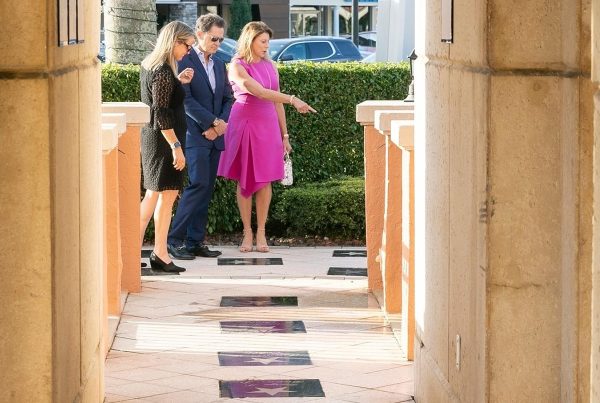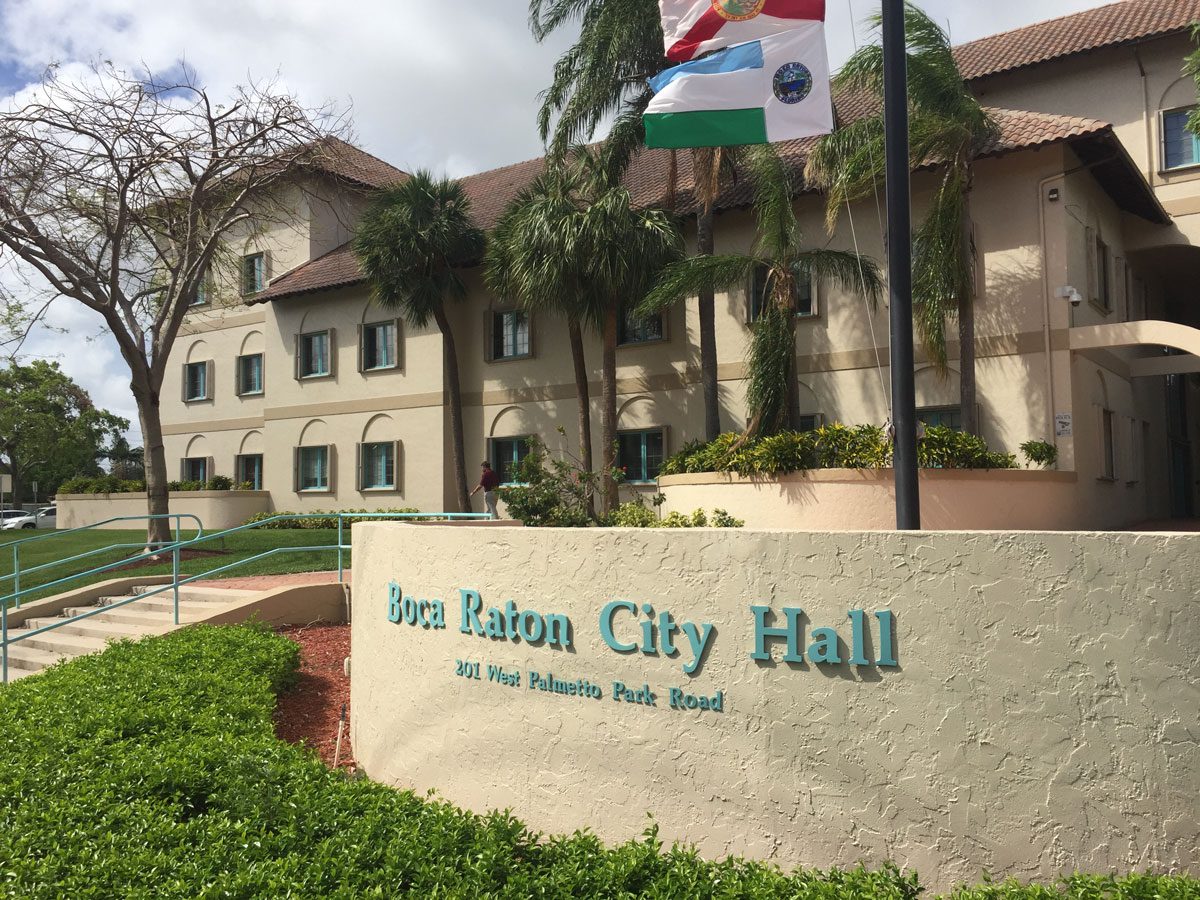
Boca Raton City Council members want to be clear about two things: They are not rushing plans for a new downtown complex around City Hall, and they want the process to create that complex to start as soon as possible.
These seemingly contradictory statements emerged from Monday’s discussion at the council’s workshop meeting. Members directed many of their comments at an article on the BocaFirst website about the proposal that carried the headline: “Is This Already A Done Deal (sic).” The secondary headline read: “Why is A New Government Campus Fast-tracked?”
Mayor Scott Singer noted, correctly, that the city has been studying this idea since 2016. He said there have been “20 or more public discussions,” and that the council has made the campus a priority at the last two strategic planning sessions.
True enough. Almost no residents, however, attend those three-day sessions. More important, three new factors are in play from the first attempt, which the council at the time rejected because of the high public cost.
One is that the council’s aspiration goes well beyond government buildings. Singer invoked Brickell City Centre, a large, mixed-use project whose developer claims to have “transformed the heart of downtown Miami.”
Which brings us to the second new factor: The council envisions this as a public-private partnership, or P3. In return for private profit, the developer would pay some of the public cost.
The area covers roughly 30 acres bordered by Dixie Highway on the east, the Brightline station and downtown library on the north, Crawford Boulevard on the west, and Palmetto Park on the south. Public facilities include not just the library and City Hall but also the police station, the community center, a separate city office building, the tennis center, two ballfields, a skate park and shuffleboard courts.
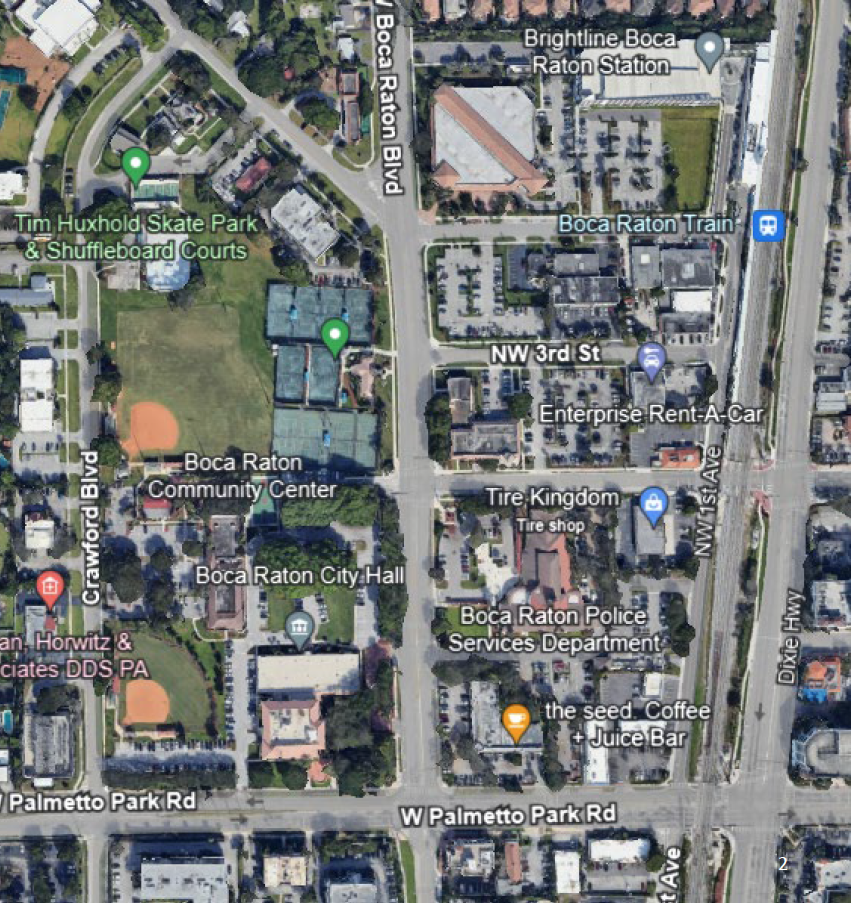
Several private parcels also are within the area. Some have changed hands since the station opened, in anticipation of redevelopment. One of the city’s priorities for this “Transit Oriented Community Area” is “economic environment/private investment.” The other two are “Downtown Economic Stability and Mobility” and “Municipal Operational Needs.” City Hall dates to the 1960s and has leaked often in recent years. The police station opened in 1988.
So, while the topic itself is not new, much has changed. Which brings us to the third new factor: the Brightline station.
Without the station, the city could not seek to create “transit-oriented” zoning. Residential density in such areas is higher. Mixed-use projects like what council members envision focus on pedestrian-friendly development, which is in line with the council’s push for downtown mobility.
Because Boca Raton began as a resort destination, it had no traditional downtown, as Delray Beach does. The closest thing is Mizner Park, which Singer noted replaced “a dilapidated mall” three decades ago. This time, council members want to create something much more transformational. Singer called it “a complete redo.”
Such ambition can lead to public skepticism. That’s why council members stressed the need for a “transparent process.” Councilwoman Fran Nachlas said, “We have to be open.” Councilman Andy Thomson said, “I have an open mind. We have to do it responsibly.” Singer said, “Everything is on the table.”
But they are not waiting. “The time has come,” Vice Mayor Yvette Drucker said. “We are not rushing, but it is time,” Nachlas said.
Council members complained about “misinformation” in the BocaFirst article. But the city has been slow to respond to my questions about the campus.
Example: In a June 28 memo, City Manager George Brown said the city had contracted with land-use lawyer Stephanie Toothaker “to provide initial strategic input regarding P3 issues.” On Wednesday, however, Toothaker said in a text message that she hadn’t worked for the city since Aug. 1.
Why was she hired? It was an odd choice, given Singer’s comment that, though he cited Brickell City Centre, he isn’t proposing something as big. That project has two residential towers, two office buildings, a movie theater and a hotel “above a supercharged fashion and culinary experience” that includes a 107,000-square foot Saks Fifth Avenue.
In Fort Lauderdale, Toothaker has represented many large projects. One of her latest features a 37-story condo, a 30-story apartment, and a 30-story hotel. When I asked Toothaker for details about her work for Boca Raton, she did not respond.
Similarly, city officials did not respond to questions about Toothaker. I wanted to ask Singer why he postponed discussion of the campus from the July 22 meeting. After two days, I got an email from his new “special legislative assistant.” She did not respond by deadline for this post.
According to the staff memo, the proposal asking for consultants—called a request for qualifications—was to have gone out after that July 22 meeting. What is the timetable now? The city did not respond by deadline for this post.
Councilman Marc Wigder estimated that the campus could be “a billion-dollar project.” Brown said the city should try to “control the narrative.” Full disclosure and public input will be essential. I’ll have more when I hear from the city.
Council members and city staff are basing their campus plans largely around the Brightline station. But how successful has it been? That will be the subject of an upcoming post.
Boca council overrides advisory board decision
Council members dealt with another aspect of the campus plan during their Tuesday meeting.
They overruled the historic preservation board’s denial of a certificate that will allow the city to move the Singing Pines Children’s Museum from the north end of the campus area to near Meadows Park. A new home for the building department will go on the site.
In approving the override unanimously, council members pointed out that while the building is historic, the site isn’t. The museum used to be somewhere else. “The big goal,” Drucker said, is to get the museum reopened. It has been closed since before the pandemic.
The new location, council members said, will provide more parking and link the museum with the nearby community garden as a place to take children.
Boca council approves settlement offer in oceanfront lot lawsuit

As expected, the council Tuesday approved a settlement of litigation involving a proposed oceanfront home. Council members took pains to say that approval doesn’t amount to approval of the 10,325-square foot house. Without approval, though, the settlement is off.
Movement on TCAI project
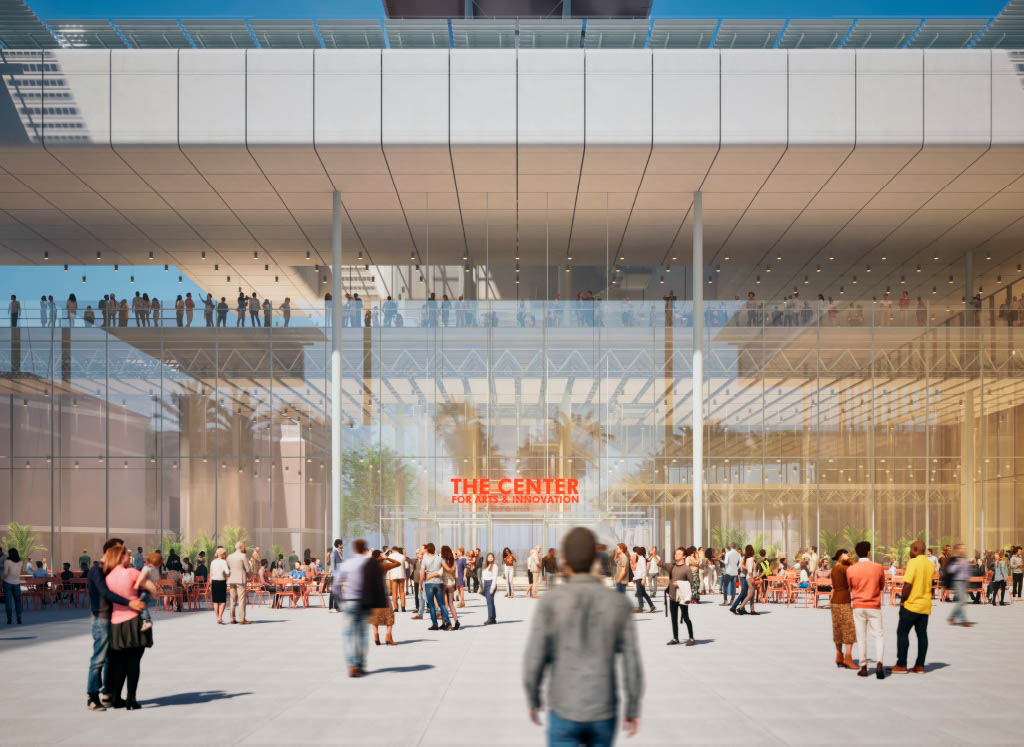
Another potentially transformational project in Boca Raton is moving toward an inflection point.
That would be the proposed performing arts center in Mizner Park. City staff and representatives of The Center for Arts and Innovation (TCAI) continue to review plans for the project, to make sure that it would align with the terms of the lease for public land.
TCAI CEO Andrea Virgin called the most recent meeting “very collaborative.” The group flew in its architects, who “helped to explain the differences” between the original design and the revision. “It seemed to be very helpful” for both sides.
Deputy City Manager Chrissy Gibson told me last week, “We have most of what we need.” She expected the rest by this week. Gibson said the plan is for the staff to make a presentation to council members on Sept. 23, when they meet as the community redevelopment agency.
At that point, the staff is supposed to recommend whether the project aligns with the lease. “It might be a little more gray than that,” Gibson said. TCAI also faces its second fundraising deadline in October.
Delray Beach recognized for procurement excellence
Normally, I don’t report on the many—often arcane—local government awards that trade groups hand out. This one seems worthy of an exception.
The National Procurement Institute just gave Delray Beach its award for excellence. Basically, procurement is how a government handles bids for goods and services. Delray Beach was one of 72 cities to get the award, which the city also won three years ago.
I mention this because City Commissioner Juli Casale regularly implies that Delray Beach’s procurement department is a mess. Apparently, these outside experts disagree.
Delray’s Pompey Park spotlighted by The Athletic
Speaking of Delray Beach, The Athletic website has a nice feature this week on Pompey Park, where Coco Gauff began playing when she was 6 years old. Gauff is defending her U.S. Open championship this week in New York.
The reporter notes that Gauff could have played at the city’s large downtown tennis center. Pompey Park, though, “goes a long way to explaining” Gauff. The choice, Gauff said, was not random.
Gauff’s maternal grandmother, Yvonne Odom, desegregated Delray Beach High School. Her maternal grandfather started a Little League for Black children when they couldn’t play on teams of white players. The two Pompey Park courts recently were resurfaced with a grant in Gauff’s name.
And you can play for free. As the reporter wrote, “It’s a sweet way to start a day.”