Today, in the last of my series on Boca Raton’s March 10 election, I examine the most important item on the ballot: the vote on the downtown redevelopment plan.
No city issue has been more controversial since the 1989 vote on Mizner Park, which passed overwhelmingly, with almost two-thirds of voters in support. Such a result seems unlikely this time. Supporters will be happy with just a win.
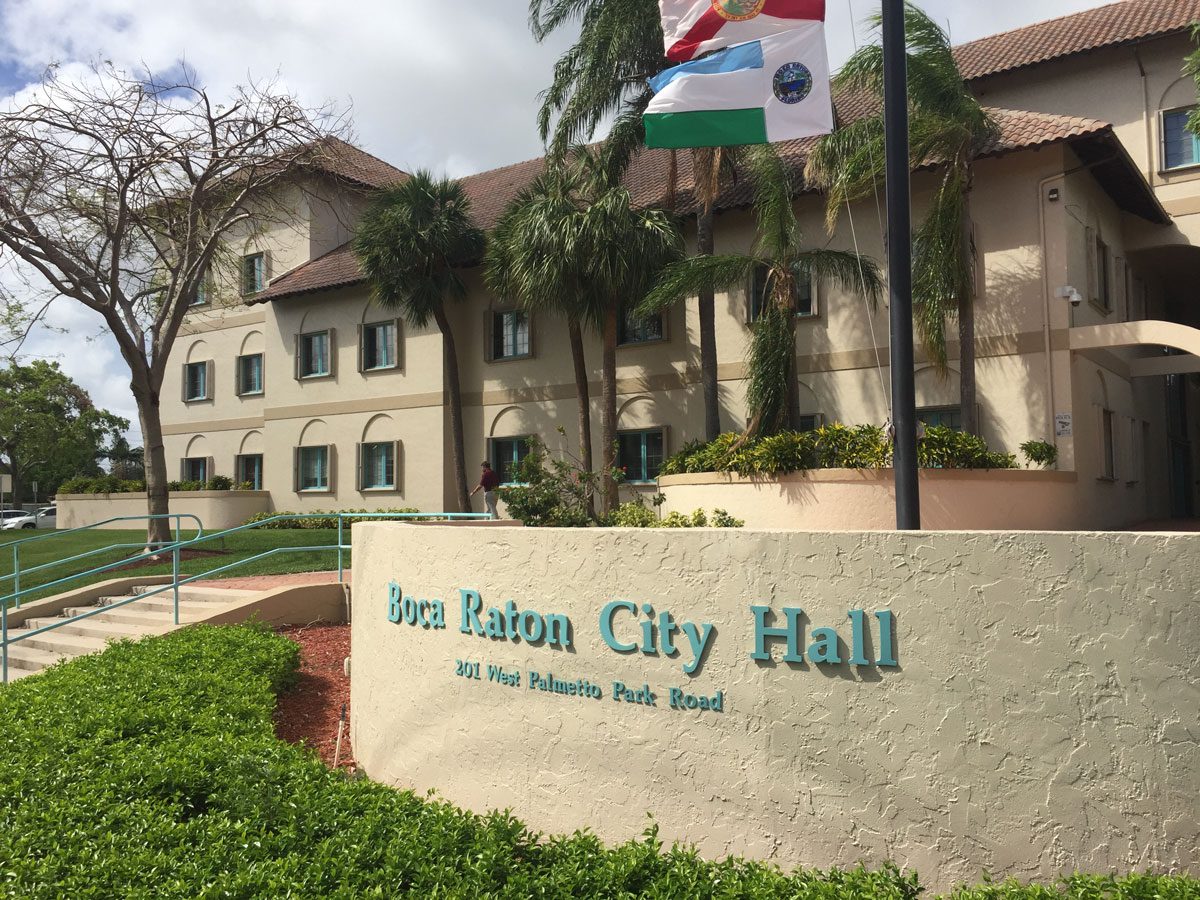
This time, the target area is roughly the same size as Mizner Park—the roughly 30 acres around City Hall. As with Mizner Park, a private developer is involved. As with Mizner Park, each side says the project would be transformative. They disagree on whether the transformation—and the deal—would be good or bad for Boca Raton.
All Your Terra/Frisbie Questions Answered
What are we voting on?
Whether to lease 7.8 acres of city land east of Second Avenue near City Hall to an entity of Terra Development and Frisbie Group called Boca Raton City Center LLC.
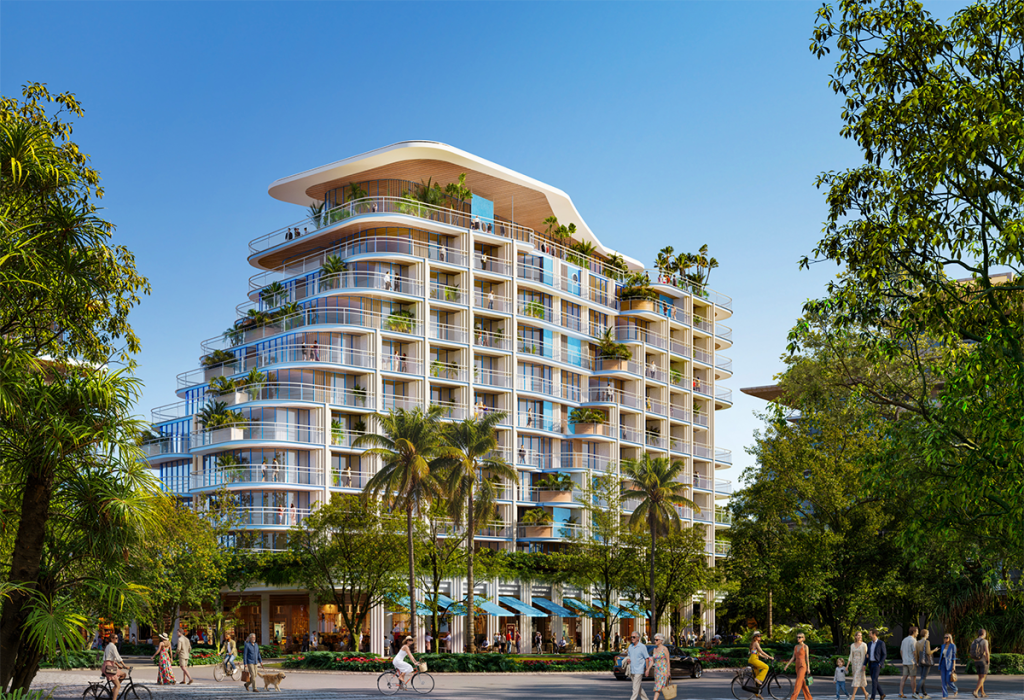
What does Terra/Frisbie want to build on that land?
A mixed-use project that would include 947 apartments and condos, 79,000 square feet of shops and restaurants, a 30,000-square-foot grocery, a 180-room hotel and a 120,000-square foot office building. There also would be a 581-space parking garage.
In addition to the leased land, Terra/Frisbie would buy two private parcels across Fourth Street from the library.
Why is this happening now?
Boca Raton badly needs a new city hall and community center. Rather than have the public pay for them, the city council entered into a public-private partnership (P3) with Terra/Frisbie.
According to the city, revenue from the private development—lease payments, property tax revenue—would pay for those projects and a police substation.
Why a substation?
The city wants to build a new police headquarters next to the Spanish River Library. A separate ballot item seeks approval of bonds to finance that project. The site of the current police station would be part of the land leased to Terra/Frisbie.
Why Terra/Frisbie?
The council chose it in February last year from among four bidders that made proposals.
Who’s for it, and why?
Well, Terra/Frisbie, of course, and four of the five council members. They say that it will bring needed money to the city and create a vibrant neighborhood near the Brightline station that will draw residents and outsiders. The Greater Boca Chamber of Commerce also supports it.
Who’s against it, and why?
Primarily, a group called Save Boca, which organized last summer to demand a vote on the 99-year lease. Critics oppose the sale of public land to a private developer and say that the deal favors the developer too much.
Opponents also say that the council majority tried to rush approval of this project.
Are they right?
On the second point, yes to a large degree.
Terra/Frisbie’s first proposal arrived in October 2024. It called for 1,163 apartments and significantly more office and retail space and leasing all 31 acres around City Hall.
At that point, given the scope of what was planned, the council could have asked the city’s communications and marketing team to make clear what the council was considering and gauge public opinion.
Instead, the council set an aggressive timetable; final approval of the master agreement and lease would have come last October. A deputy city manager called that schedule “challenging.” Downtown residents saw that as an ambush. The city has been trying since to restore trust, with mixed results.
So, why are we voting?
Councilman Andy Thomson, the only one to oppose the project, asked Terra/Frisbie if the developer would agree to a referendum. Terra/Frisbie did.
How does this plan compare to the original?
It’s 25% smaller in square footage and 70% smaller in area.
I’ve heard a lot about Memorial Park. Why?
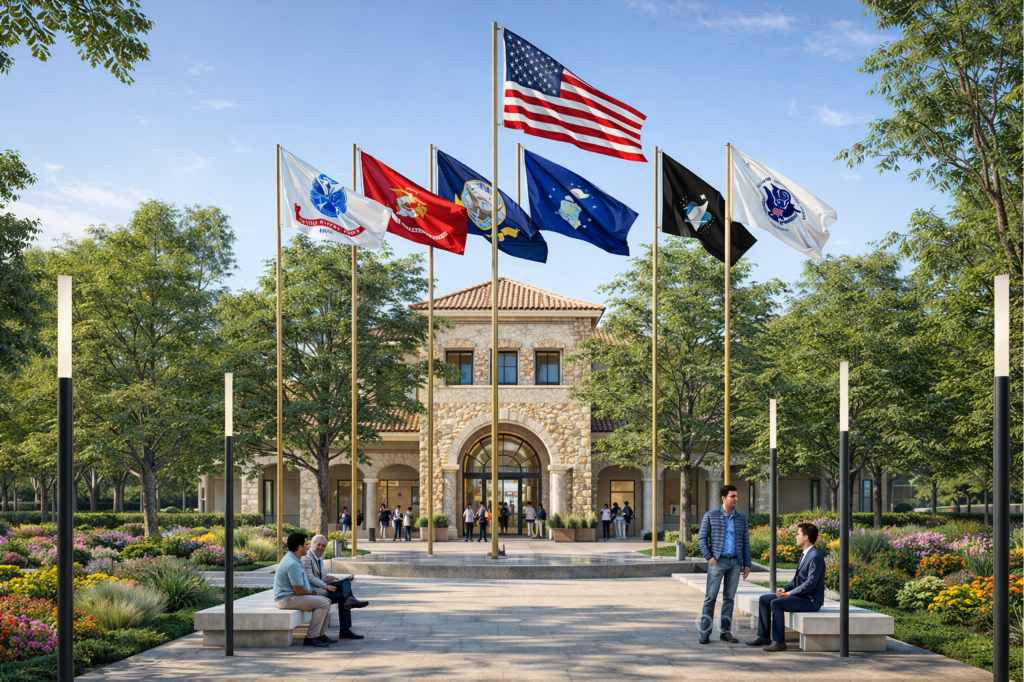
In 1947, the city named the planned recreational space north of Palmetto Park Road Memorial Park. Despite the name—and coming two years after the end of World War II—no military ceremonies have taken place there, nor are there any commemorative markers.
Save Boca falsely claimed that leasing the site would dishonor the city’s war dead and veterans. Still, the plan now includes a flag plaza and eagle statue west of Second Avenue.
What else would go on the west side?
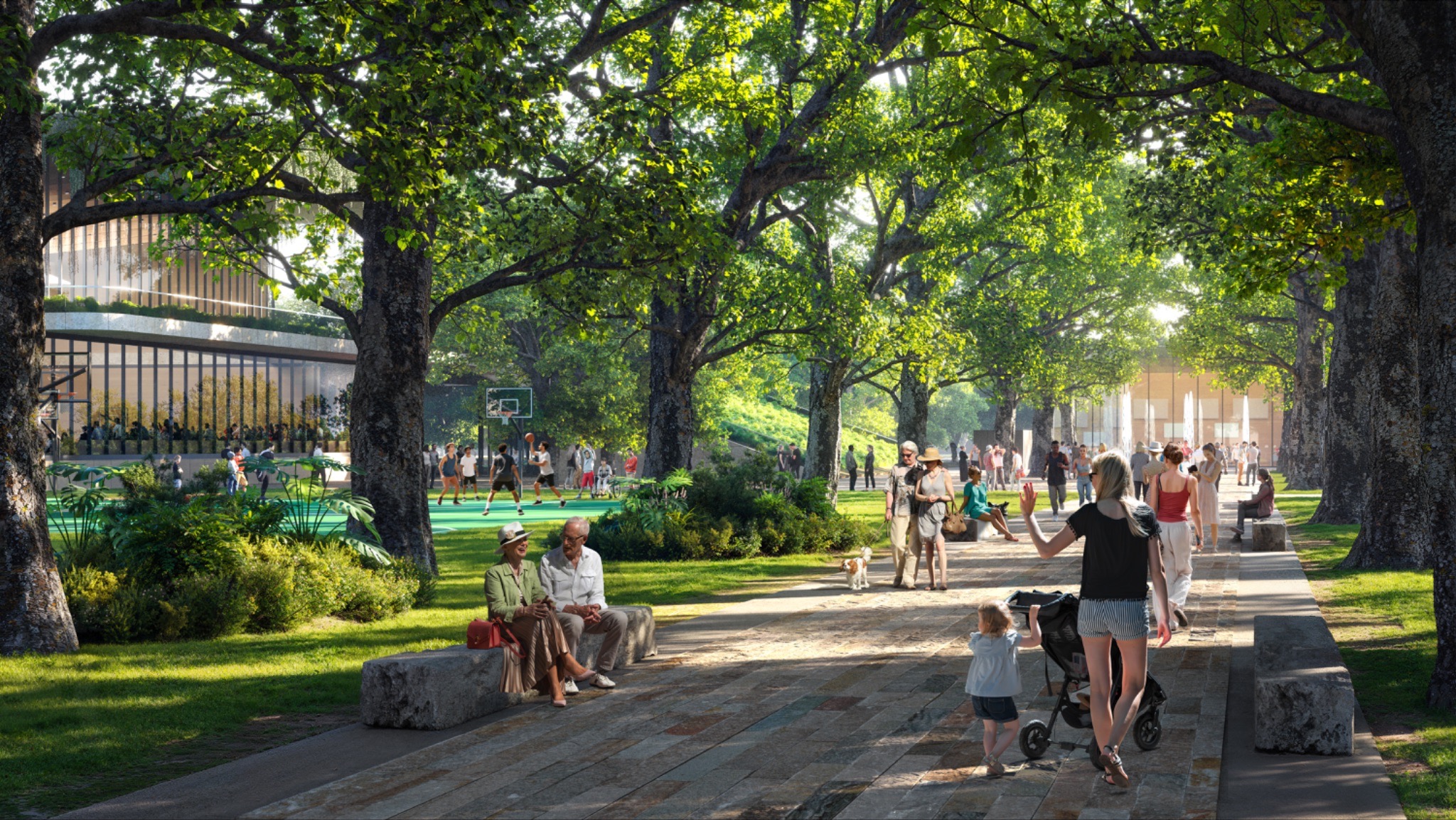
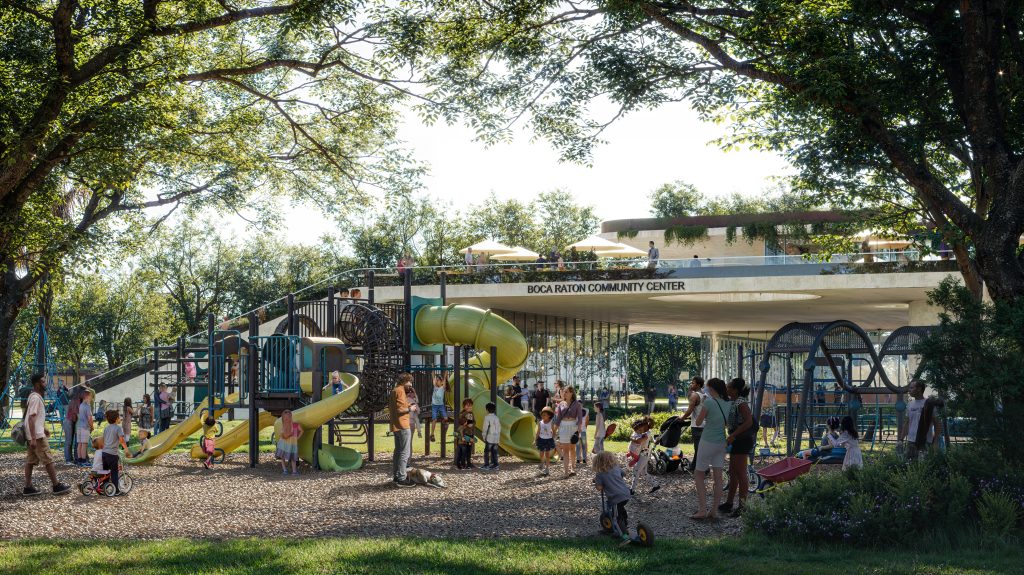
City Hall, the community center, and police substation. The community center would more than double in size. A promenade would bisect the area. There would be more than twice the recreation/park space than there is now. All of it would be named Memorial Park.
I’ve also heard about recreation. Why?
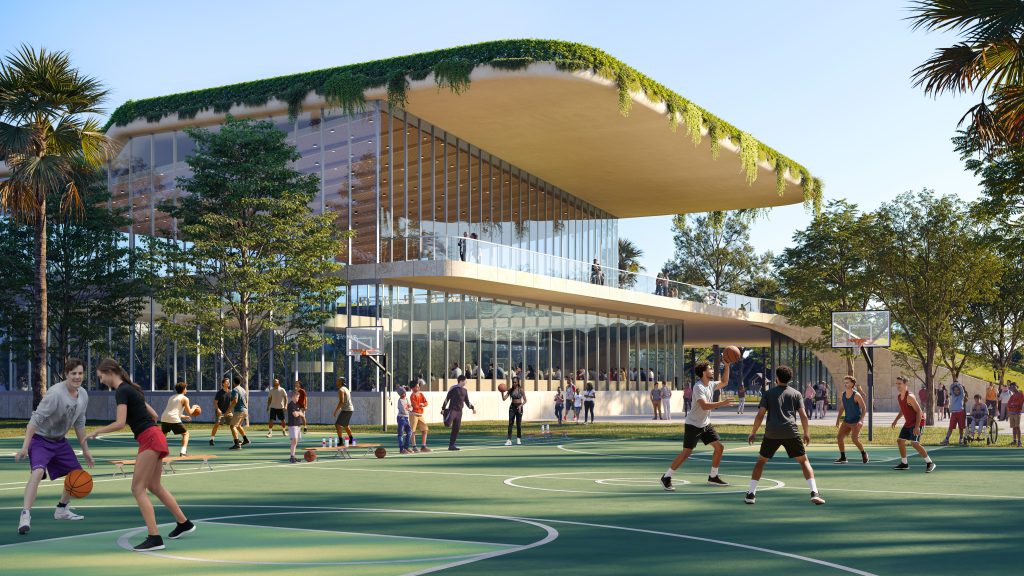
The area includes two softball fields, a tennis center, skate park, basketball court and playground. When the lease was for 31 acres, the city planned to move the softball fields to Sugar Sand Park as part of a new, larger complex and move the skate park to North Park, north of Yamato Road. Both seem likely to happen no matter how the Terra/Frisbie vote goes.
The city also planned to move the 10 tennis courts to Meadows Park. When neighbors and regular tennis players objected, the courts became part of the west side plan.
Let’s get back to numbers. How much would this cost?
According to the city, roughly $247 million for the public projects—$85 million for the city hall, community center and substation; $20.5 million for recreational facilities (not including the softball fields and skate park) and $39.5 million for “general construction.”
Another $72 million would be for infrastructure, especially along Second Avenue. Examples: traffic circles and protected bike lanes and intersections. Of that, the city would pay $27 million and Terra/Frisbie would pay $45 million. The city also would pay $30 million for that parking garage on the east side.
Why isn’t Terra/Frisbie paying more?
In a traditional P3, the developer would pay for the city hall and the other buildings. In this case, Boca Raton would front the money by issuing bonds and get reimbursed not from Terra/Frisbie but from Terra/Frisbie’s tenants.
Isn’t that a good deal for Terra/Frisbie?
Critics say yes. They worry that the reimbursement money would come much later. Chief Financial Officer James Zervis, though, said payments would have to start when Terra/Frisbie begins construction, perhaps in two years.
City officials counter that Boca Raton would make money when any part of the private development changed hands. The rent schedule, they say, would allow the city to share in the success of the private development.
Finally, the city points out that after the 99 years, the land—and everything on it—would go back to the city.
How much money would the city get?
According to the city’s financial consultant, $5.5 billion over those 99 years. But that doesn’t account for inflation and cost of borrowing money. Factor those in, and the “net present value” is $382 million. Then factor the cost of added city services, and the figure is $228 million.
Would that be a good deal for Boca Raton?
Depends on who you ask.
City officials say the public would come out ahead, given that $201 million cost of the public facilities; a number that could be lower. That new revenue, they say, would be important after the Legislature orders property tax cuts for homeowners.
In addition, the city says, the project would activate the dead space around City Hall. As we have seen with Wildflower Park, you can’t activate space without people. The residential component would provide that.
Opponents, though, argue that the finances are too risky. Who can project anything over a century? They also argue that the city couldn’t handle all the new traffic. Since the private structures would be between nine and 12 stories tall, they say, the project would overwhelm the area.
Also, the garage would encroach on the library, taking the remaining surface parking. The city, they say, should build only the public space and pay for it with city money.
Could the city do that?
Not without raising taxes.
Save Boca founder Jonathan Pearlman has claimed often that Boca Raton has nearly $700 million in reserves and so could easily afford to pay for the work. That isn’t true.
Zervis explained in an interview that most of that money is earmarked for other uses or can’t be spent on a city hall and community center. The city has $63 million from the sale of the former golf course, but that money can go only for recreation.
The city thus would have to issue a bond financed with an increase in property taxes. That’s how the city would pay for the police station project on the ballot.
How long would it take to build?
On the east side, the private development would happen in two phases, over perhaps seven to eight years.
Phase 1, on the northern leased land, would include the office building, grocery, hotel, some retail, 276 apartments and rhe garage. On the private land would be 182 condos.
Phase 2, on the other leased land, could not begin until the police department moved. Assuming voters approve the police station bonds, the city expects the move to happen in early 2029.
On the west side, the new city hall and community center would come first. They would be on the north end, near the library. After that, it’s hard to tell. The plan for the west side remains subject to public feedback.
Has the debate gotten personal?
Oh, yes. Save Boca supporters regularly have accused council members of being corrupt, even though there is no evidence at this point of Terra/Frisbie money going to any candidate directly or through a committee.
At one point, Deputy Mayor Fran Nachlas, who is running for mayor, said, “We’re not taking bribes.” One speaker said council members who support the project are “literally corrupt.” Many people clapped. Mayor Scott Singer said, “I’m sorry that got any applause at all.”
What if voters approve the plan?
Even council candidates who oppose it say they would try to make it work best for the city. The council hired City Manager Mark Sohaney because of his experience with big projects. Boca Raton would need that experience.
What if voters turn down the plan?
Assuming they approve the police station, that move would continue. Demolition would leave a 4.4-acre vacant lot. To the north would be the old library building, abandoned after building department employees move to the office complex in the northwest that the city bought last July. To the north of that would be a vacant lot. All three are part of the proposed lease.
Presumably, the city would start over. But that would be a decision for the new mayor and council.
Financing for Boca Raton City Council races
Pearlman has put $60,000 of his own money into his challenge of Councilmember Marc Wigder for Seat B on the council.
That’s the headline from the financial reports for council candidates covering the period from Jan. 1 to Feb. 6. That accounts for almost all of Pearlman’s direct campaign money.
Wigder reported another $5,300, bringing his total to about $130,000. That includes a $100,000 loan. Among Wigder’s contributions is $1,000 from former Councilwoman Monica Mayotte and $100 from Craig Ehrnst, who serves on the Beach and Park District Board. Meredith Madsen, the third candidate in the race, has raised $610 overall.
In Seat A, Michelle Grau took in another $7,700, for an overall total of $24,000. Christen Ritchey added $7,600. She has $30,000 in direct contributions and another $15,000 from her political action committee.
In Seat D, Robert Weinroth continues to maintain a large fundraising lead over his opponents. He got $9,700, for a total of $83,000. Like Nachlas, who is running for mayor, Weinroth got $4,000 from Accesso Properties, which that recently bought an office building in the northwest part of the city.
Larry Cellon got $1,100 and has $15,000. His contributions include $200 from former Councilwoman Andrea O’Rourke. Stacy Sipple loaned her campaign $2,500. She has $300 from other sources.
The reports show how intense the closing weeks of the campaign have been. I reported Tuesday that mayoral candidate Mike Liebelson has donated $140,000 more to his campaign. He spent that much in the first five weeks of 2026.
Nachlas, one of Liebelson’s opponents, spent $91,000. Wigder spent $40,000.