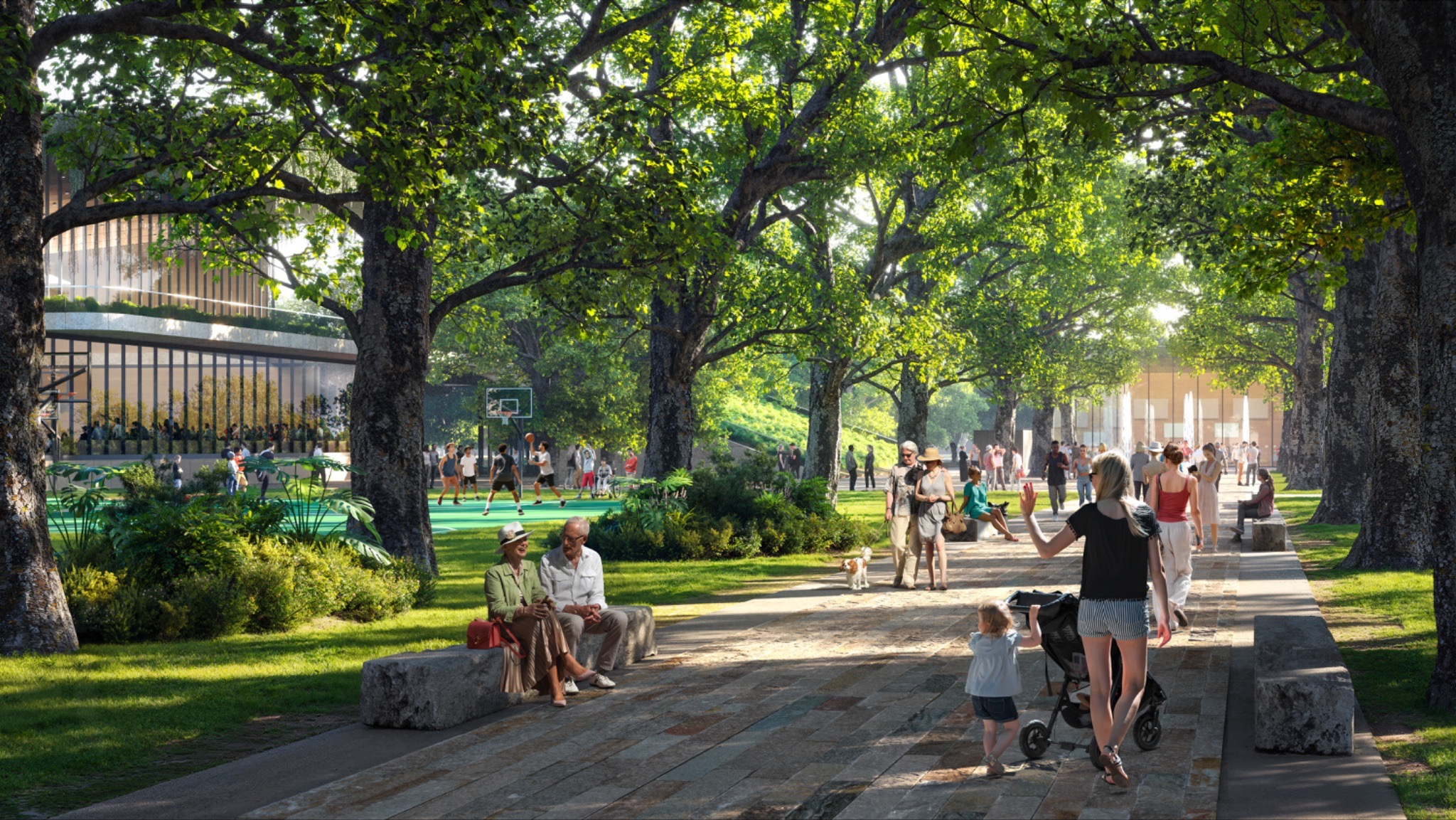
According to new estimates, Boca Raton would receive $4.1 billion over 99 years from the proposed Terra/Frisbie plan for redeveloping the area around City Hall.
And according to new figures from the city, the public cost of the project would be roughly $200 million.
Deputy City Manager Andy Lukasik and representatives of CBRE—the city’s consultant—presented those figures to the city council this week. Here’s a breakdown:
That $4.1 billion would come from five sources. The largest—$1.95 billion—would be rent payments from private development on roughly eight acres east of Second Avenue. The next largest—$1.3 billion—would come from property tax revenue associated with the private development—apartments, an office building, restaurant and retail and a hotel.
Roughly $575 million would come from the city’s share of profit from the private development. About $218 million would come from fees when any of the private development is sold. Approximately $89 million would come from revenue to the Community Redevelopment Agency until it goes away in 2042. Finally, Terra/Frisbie would pay $7.8 million toward “offsite mobility improvements” to the area. Example: Roadwork and other spending to help traffic flow better.
Of that $200 million in public cost, $90.4 million would go for the new city hall and community center on the west side of Second Avenue and a police/fire substation. Roughly $13 million would go for new “open space and recreation,” also on the west side of the project.
About $39 million would go for “sitewide works” on the west side. Lukasik defined these expenditures as “activities and items such as demolition and site preparation, utilities, landscaping, walking paths, parking, street furniture as well as some soft costs and contingencies.” Another $18.2 million would go for “utilities and roadways.” Finally, $38.6 million would go for “transportation and mobility.” Examples, Lukasik said, would be a traffic circle at Second Avenue and Fourth Street, technology upgrades such as “fiber connectivity,” lighting and parking garages.
Two other items are on that public list. The city plans to build a softball complex at Sugar Sand Park, to replace the two fields at Memorial Park. The cost is estimated at $11 million. Also, the city and the Greater Boca Raton Beach and Park District are sharing the cost of a skate complex at North Park, to replace the facility near City Hall. Those numbers aren’t final.
One key question is how much of that public cost Terra/Frisbie would pay. Such public-private partnerships are designed to help local governments avoid the cost of new public facilities by having the developer pay for them. Early on, the assumption had been that Terra/Frisbie would pay directly for the city hall and community center.
Later, though, it seemed that the city would front the cost for those buildings. It remains unclear how much Terra/Frisbie would pay. Lukasik said the budget “only contemplated the public costs.” Terra/Frisbie costs “were not included in the cost estimate.” Lukasik said, “The city pays for the buildings generally through the use of the revenues generated by the project.” More information on the finances, he said, would be available at the Dec. 2 council meeting.
Lukasik also laid out a schedule for the proposed project, leading to the March 10 referendum. Language for the ballot question also will go before the council on Dec. 2. Two weeks later, the council will see the proposed lease agreement. It will go to the planning and zoning board during a special meeting on Dec. 18.
On Jan. 6, the council will see the proposed master plan. Before the council on Jan. 20 will be that agreement and the lease agreements.
At recent meetings, more speakers have praised the plan. Opponents, though, question the reliability of 99-year forecasts and continue to claim that the city could redevelop the public facilities on its own. Expect lots of discussion about the finances before that March 10 vote.
Boca Raton wins small victory in lawsuit over oceanfront lot

Boca Raton won a procedural victory this week in the city’s fight over development of an oceanfront lot, but the damaging facts of the case remain.
The 11th U.S. Circuit Court of Appeals ruled that Natural Lands, LLC, which owns the property at 2500 N. Ocean Blvd., should have pursued its claim in state court. Natural Lands had alleged that Mayor Scott Singer and then-council members Monica Mayotte and Andrea O’Rourke prejudiced themselves before voting to deny a variance for the house that Natural Lands wanted to build.
After a bench trial, U.S. District Judge Rodney Smith excoriated Singer, Mayotte and O’Rourke. Though he did not agree with Natural Lands that the council had illegally “taken” the property, Smith said in essence that it had the right to build the house. Smith also awarded Natural Lands attorney fees.
In sending the case back to Smith for transfer to state court, the appellate judges did not dispute the accusation of bias. Indeed, Natural Lands first had gone to state court. Two rulings there agreed that Singer, Mayotte and O’Rourke should have recused themselves.
As the appeals court noted, before the council vote Singer had stood on the site and said nothing would be built. O’Rourke had signed a petition opposing development. Mayotte had said she said “no intention” of approving the variance to build east of the Coastal Construction Control Line. The state had granted the permit. The council overrode the state.
Keith Poliakoff represents Natural Lands. Poliakoff said the developer is “looking at all options”and trying to determine whether state court offers “adequate remedy.” Meanwhile, Poliakoff said, Natural Lands has resubmitted its application.
Boca Raton City Council approves second phase of Camino Square
Acting Monday as the community redevelopment agency, the Boca Raton City Council approved the second phase of the Camino Square project.
Council members had delayed a vote last month after asking the developer to provide more retail. The second phase originally called for all retail. This version proposed another 394 apartments to go with the 346 in the first phase and with a much smaller retail component.
As I had reported, the developer came back with a plan for 374 units and roughly 23,000 square feet of retail—triple the original revised proposal. The developer also pledged to make the site on Southeast Third Avenue near Camino Real more connected to the area.
Several speakers said the project would not be compatible with what they called “working-class neighborhoods” to the north. As Councilman Andy Thomson noted, though, with property ownership come property rights, and the developer is asking for less than could be built.
Council members did agree with opponents that the four-decades-old rule governing downtown development —under which the council heard this proposal—needs updating. There seemed sentiment to do so.
Boca Raton City Council approves second phase of Martin Manor redevelopment
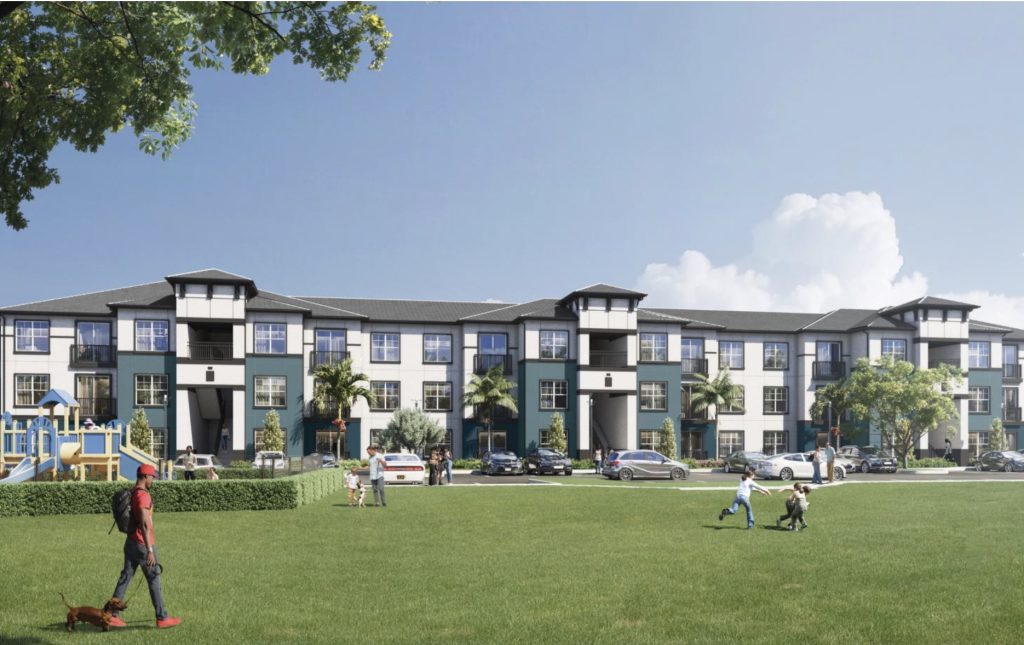
During its regular meeting Tuesday, the council approved the second phase of The Residences at Martin Manor, which began its existence as Dixie Manor.
Developer Atlantic Pacific will add 105 units to the 95 under construction. As I wrote previously, this phase will include a museum to recognize the historical importance of the site to the Pearl City neighborhood.
Save Boca founder Jonathan Pearlman, claimed that Martin Manor residents were being “forced out.” At Singer’s request, Atlantic Pacific’s representative reiterated that all former residents of the 95 apartments who want to return will be able to do so.
Boca Raton to debut autonomous shuttle service
On Friday, Boca Raton will debut the city’s driverless shuttle service.
Called MiCa, it will operate for now only within Mizner Park. It will stop at set points, so riders won’t need a phone app to schedule pickups. MiCa will be a venture of Circuit Transit, which operates the existing downtown shuttle, and Guident, which makes the technology.
A news release for the 4 p.m. event says the public can check out this “sustainable, technology-driven loop.” During this test phase, which will last several months, the city and Circuit Transit will evaluate what a city spokeswoman called the “functionality” of the service—meaning whether it works.
If all goes well, the spokeswoman said, the service will expand between Mizner Park and Royal Palm Place.