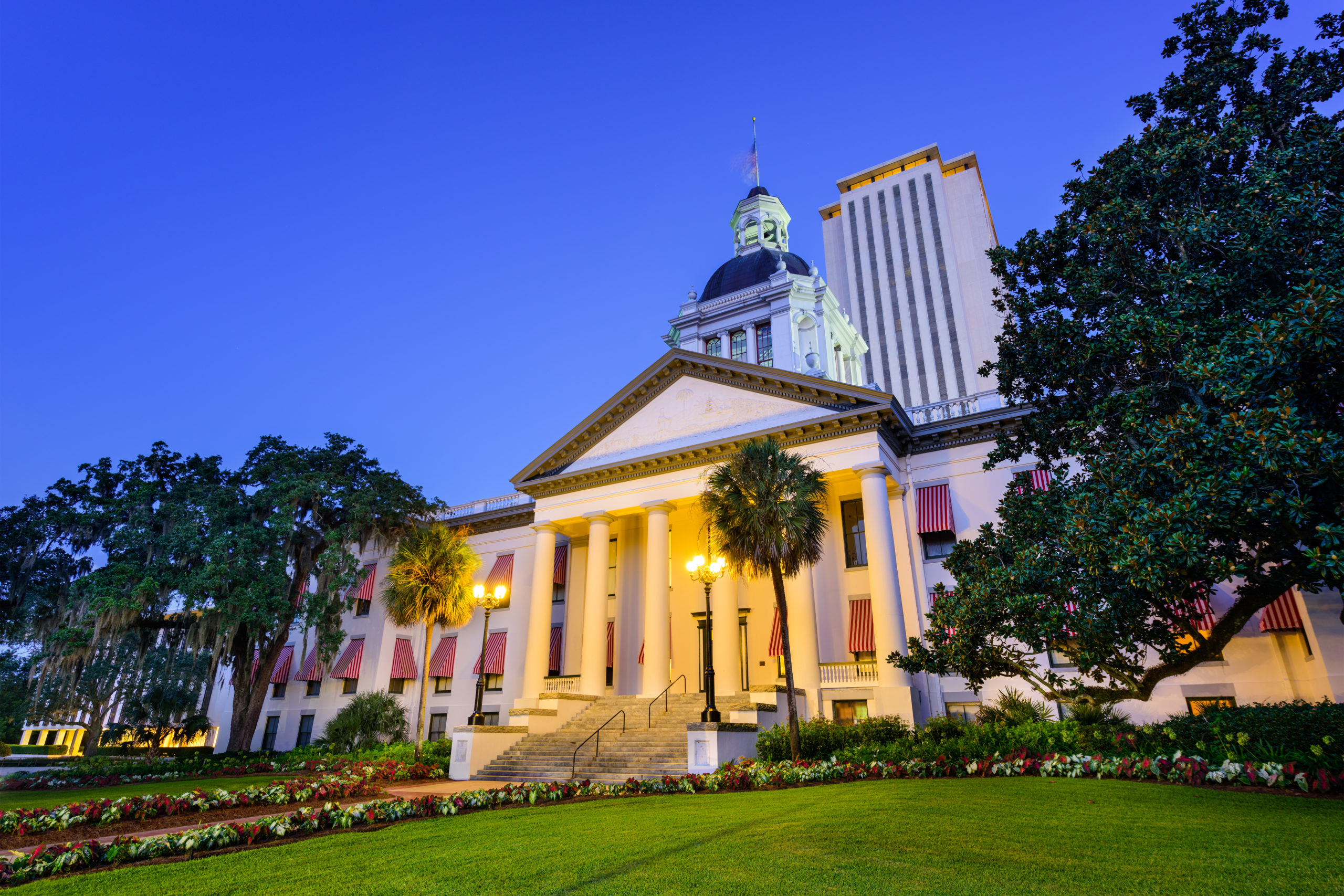
After years of encroaching on Florida cities’ ability to set their own rules, the Legislature next year will mount what amounts to a takeover.
The campaign comes in the form of bills that would reduce or eliminate the property tax that finances most local government operations. From Gov. Ron DeSantis on down, Republicans are promising “property tax relief,” but opponents say the bills pay little or no attention to consequences for residents.
GOP House members have filed nine bills related to property taxes. Seven are proposed amendments to the state constitution that would go on the November 2026 ballot. The House also has created a select committee on property taxes. It has 35 members, or nearly one-third of the House, reflecting the issue as the GOP’s top priority for the legislative session that begins in January.
Mack Bernard, a Democratic state senator from Palm Beach County, has also filed several property tax bills. With Republicans holding supermajorities in both chambers, however, they will decide what passes or goes before voters.
DeSantis, who favors ending the property tax, has criticized House Speaker Daniel Perez for his approach. The governor may have a point. Perez said voters could approve “some, all or none” of the proposed amendments. But that could create chaos.
Example: House Joint Resolution 201 would immediately end the property tax on homesteads—primary residences—for all government entities except schools. House Joint Resolution 203 would phase out the tax over 10 years. If both passed, which would take effect?
Five other proposals would make smaller changes. HJR 205 would end all non-school property taxes for primary homeowners ages 65 and older. HJR 207 would increase the homestead exemption. HJR 209 would add a $100,000 homestead exemption for owners with all-perils insurance policies. HJR 211 would lift the cap on equity homeowners could transfer when they sold. That proposal is designed to loosen up the housing market. HJR 213 would limit the annual growth of assessed value, on which tax bills are based.
To make the ballot, a resolution would need a three-fifths vote in each chamber. As noted, Republicans have the votes to override Democratic objections. Each proposal would need approval from at least 60% of the voters.
In addition, GOP legislators have filed two standard bills. One, HB 215, is minor. It would increase the homestead exemption for newly married couples who had separate exemptions in their previous residences.
The other, HB 149, is major. It would require all local taxing agencies to reduce tax rates to those for the 2022-23 budget year. Sponsor Ryan Chamberlin claims, without offering details, that property taxes have risen “almost 50%” in the last four years. Such a change would mean lower taxes for owners of commercial property and owners of second homes, not just permanent residents.
One more thing: HJR 201 and HJR 203 would prohibit cities and counties from cutting law enforcement budgets if they lost property tax revenue.
Much of this debate will turn on the definition of “property taxes.” So, first, a primer.
Local tax bills—the new ones are just coming out—are calculated by multiplying each agency’s tax rate by the assessed value of your property. Boca Raton’s rate is $3.66 for every $1,000 of assessed valuer. Delray Beach’s is $6.19. Delray Beach does not have Boca Raton’s large commercial tax base; that’s one reason why the rate is higher.
The bills, though, can get as complicated as the issue itself.
In Boca Raton and Delray Beach, there are lines on the tax bill for the city’s operating budget and debt service. There are similar lines for the county. There are lines for the school district. There are lines for the county’s children services council and health care district. There’s a line for Everglades restoration.
In Boca Raton and areas west to the turnpike, there’s a line for the Greater Boca Raton Beach and Park District. In Delray Beach, there’s a line for property owners within the boundaries of the downtown development authority.
Every year when they approve a budget, Boca Raton city council members like to say that they “didn’t raise taxes.” In terms of the rate, they have been correct. Tax bills went up, however, because property values went up. So “property taxes” went up.
Any credible effort to cut property taxes would look at the potential consequences and collect all information. But DeSantis vetoed a bill that would have required state economists to study the effect of ending property taxes. There is not yet any staff analysis of all those proposals in Tallahassee.
Still, Boca Raton and Delray Beach offer a look at what could be at stake.
In Boca Raton, 53% of the general fund budget—the one that finances police, fire, parks and other basic services—comes from property taxes. In Delray Beach, it’s 59%.
In both cities, the biggest share of the general fund budget goes to police. In Delray Beach, it’s 28%. In Boca Raton, it’s 32%.
Let’s assume that voters end the property tax and prohibit any reduction in “law enforcement” spending. How would Boca Raton and Delray Beach balance their budgets? Would they assess law enforcement service fees, as Boca Raton does for fire service? At one point, there was discussion about raising the sales tax to compensate for the loss of property tax revenue. No one in Tallahassee who matters is having those discussions now.
For Tallahassee, this is a political freebie. No property tax revenue goes to state government. Chief Financial Officer Blaise Ingoglia and other Republicans have seeded this campaign by claiming that local governments are overspending. Those claims—notably involving Broward County—have not held up well under scrutiny.
Perez revealed the play-it-by-ear approach when he said that the joint resolutions won’t have “accompanying implementing legislation,” meaning how they would be carried out. Such decisions “should be made by the Legislature once they know which proposals have been approved by the voters and can devise an appropriate statutory framework that accounts for how the various provisions might work together.”
With or without reliable information, the campaign will continue. Cities and counties have pushed back against the accusations. I’ll have more as the session gets closer.
A changeup in Save Boca’s slate of candidates
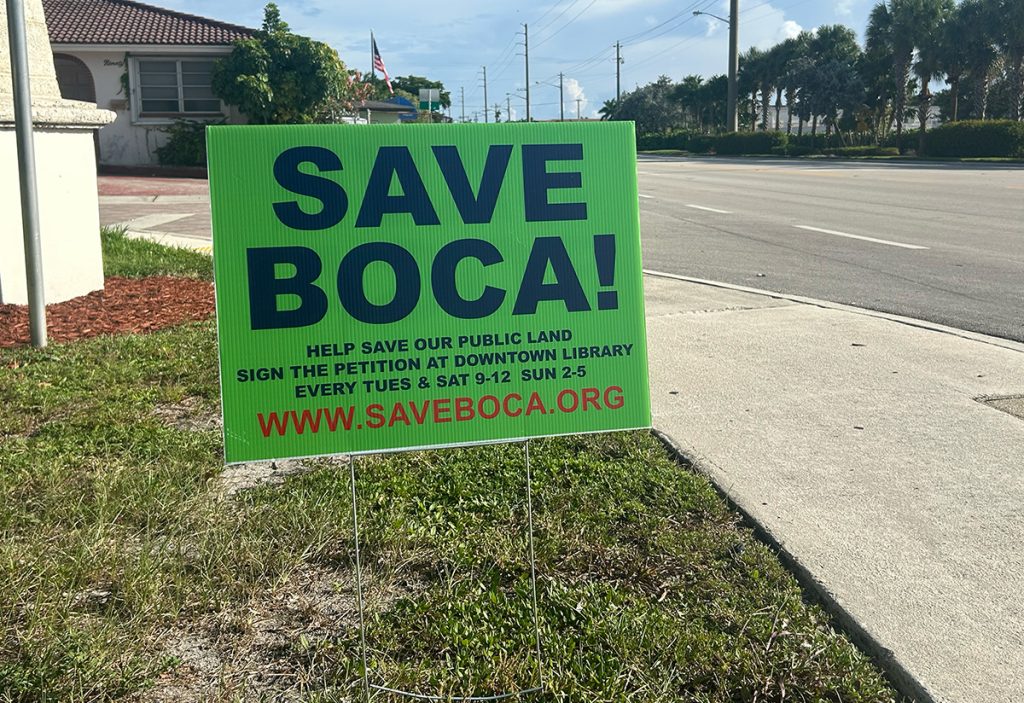
The lineup for Boca Raton’s election has changed.
Joe Majhess III, who had been running for the open Seat D city council seat as part of the Save Boca slate, withdrew Friday. In his place goes Stacy Sipple.
When we spoke Monday, the first day of qualifying for the March 10 ballot, Sipple told me that she has been “extremely unhappy” about what she considers the city’s favorable “treatment of developers.” She opposes the use of public land for the downtown Terra/Frisbie redevelopment project.
Sipple had been considering a run for next year for Seat C, which Councilwoman Yvette Drucker will leave to run for county clerk and comptroller. When Majhess discovered “conflicts,” Sipple said, she offered to run this year instead. Sipple is a pharmacist who worked most recently for Boca Raton Regional Hospital; she left to care for her late father. “I now have the time” for a campaign, she says. Sipple joins Save Boca candidates Michelle Grau in Seat A and Jonathan Pearlman in Seat B.
Meanwhile, Larry Cellon filed paperwork to become the fourth Seat D candidate. Cellon has served for roughly two decades on the Planning and Zoning Board. He would join Sipple, former council member Robert Weinroth and Save Boca Beaches founder Jessica Gray.
As of Monday, 15 people had filed paperwork for the four races on the ballot. Qualifying ends Nov. 12.
Camino Square developer makes changes to Phase 2 of plan
The developers of Camino Square Phase 2 have made changes they hope will please the Boca Raton City Council.
Last month, council members postponed a vote on the application. Landowner Kimco wants to change Phase 2 from all retail to mostly residential. Phase 1 created 346 apartments on the site near Camino Real and Southwest Third Avenue. Council members said they wanted more retail.
Ele Zachariades, the developers’ attorney, told me that the proposal now calls for 374 apartments. That is 20 fewer than the first version. Retail space has increased roughly 300%, to 23,400 square feet. The developers would “redo” the small park that was part of Phase 1. Speakers at last month’s meeting said the park is drawing homeless people.
With these changes, Zachariades said, “all of Third [Avenue] would be activated.” A pedestrian promenade would make the mixed-use project easily accessible even for those who don’t live there. There would be a 35-foot “paseo” and “more outdoor dining. Zachariades noted again that the developers spent $3 million on their own initiative to ease traffic issues resulting from Phase 1.
The developers hope that Phase 2 can come back to the council, acting as the community redevelopment agency, for the CRA’s Nov. 17 meeting.
Boca Raton moves CRA and workshop meetings
Boca Raton has moved all three regular meetings to 10 a.m. today. Normally, the CRA meeting and council workshop are held on the Monday before the Tuesday council meeting.
Council members made the change to avoid a conflict with the Veterans Day holiday Monday. The agendas are very light for all three, but the downtown redevelopment proposal—as usual—is on the agendas for the workshop and regular meetings. Expect the usual crowd of opponents and meetings that last longer than for normal light agendas.