Most people wouldn’t consider a White House photographer to be a high-risk media position; they’re not embedding themselves in a war zone or covering a crime beat. But when danger strikes, even in the seemingly high-security confines of a campaign speech, Doug Mills puts his personal safety second if it means delivering the most accurate information to the millions of Americans and even more international spectators who view his work.
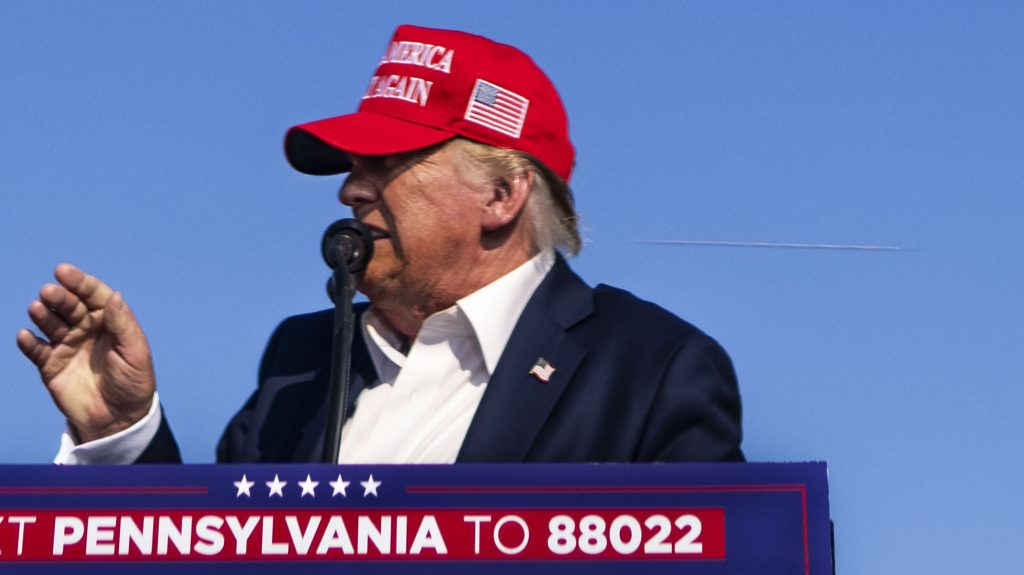
And so it was that on July 13, 2024, in Butler, Pennsylvania, when a bullet clipped the right ear of then-former President Donald Trump, Mills, who had been following the candidate on his reelection campaign, jumped into the fray of the action, even as Secret Service agents instructed everyone to drop to the ground. In the 12 seconds between those fired rounds and the killing of the would-be assassin by a Counter Sniper Team, Mills placed himself in the midst of an active-shooter situation, and his resulting photographs would not only win him his third Pulitzer Prize; they have since proven invaluable as a forensic, frame-by-frame account of the event, preserved for posterity in high-definition.
Mills spoke a great deal about that day in Butler at his illuminating presentation yesterday afternoon at FAU, as the speaker at the university’s 20th-annual Larkin Symposium on the American Presidency. And for good reason: It served as a concrete example of his propensity to run toward the action instead of away from it, all in the service of providing information for “the eyes that can’t get in there,” in his words—whether it’s a day in the Oval Office or a campaign bus, or a history-making event such as 9-11, the killing of Osama Bin Laden or the multiple presidential impeachments he’s documented.
As a slideshow of his favorite images flickered behind him, Mills shared the circumstances surrounding his remarkably candid, unflinching work covering every president from Ronald Reagan onward, along with the philosophies that have propelled his success. Most importantly, he doesn’t take his own politics into the room, and indeed, the tidbits he shared on the presidents he’s photograph revealed honest appraisals of the photos’ contexts but no discernable bias in any direction. The other key facet of his M.O. is the trust he builds with presidents and their staff, which has helped to facilitate images of stunning access, from presidents’ vacations to meetings with world leaders.
Mills opened his presentation by sharing the details of his coveted position as one of some 13 journalists from the White House Press Corps who travel with presidents on Air Force One—a privilege that costs his employer, the New York Times, up to $350,000 a year. An image of cartons of cigarettes, once supplied to every press seat on the vaunted aircraft, reveals how much times have changed since Mills’ entry into the business. (The cigs were later replaced by jelly beans, a favorite of President Reagan, and then M&Ms.)
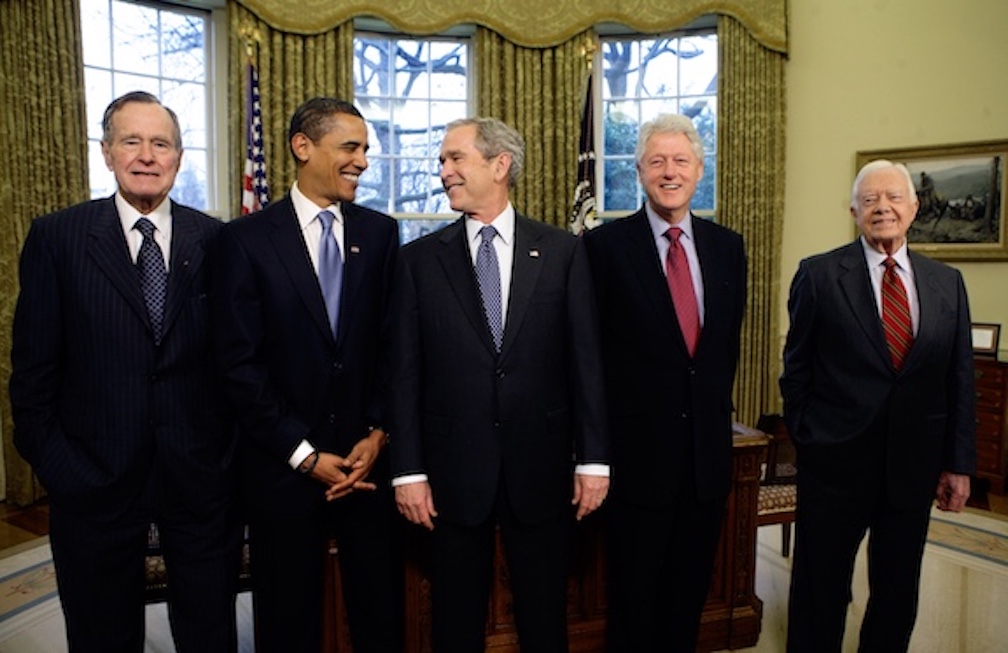
Other memorable photos Mills showed and discussed included his coverage of Reagan’s funeral, his besting of President George H.W. Bush in a game of horseshoes—the rules of which Mills had to learn just before the friendly competition—Bill Clinton’s famous McDonald’s runs during his campaign for the presidency, and the first times he saw George W. Bush and Barack Obama shed tears. Of Obama, photographed in bars and pizza parlors and pickup basketball games on the campaign trail, Mills said, “he was a rock star—a chameleon who could fit into anything.”
The same might be said of Mills, who, as this motley assemblage of images from the halls of power, everyday America and global hotspots attests, has had to step out of his own comfort zone, sometimes literally, to shoot history. And we’re all better informed because of it.
For more of Boca magazine’s arts and entertainment coverage, click here.