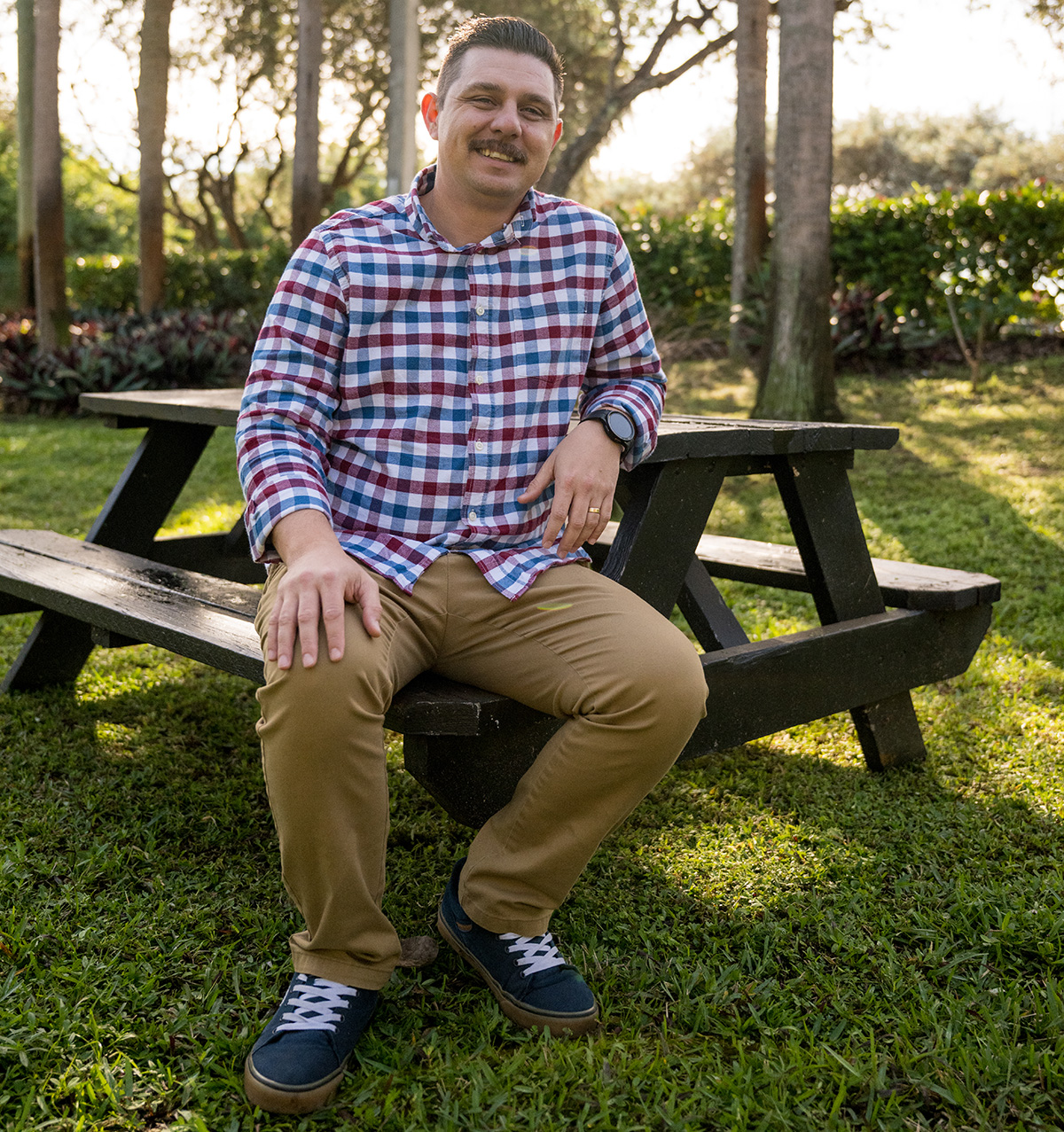
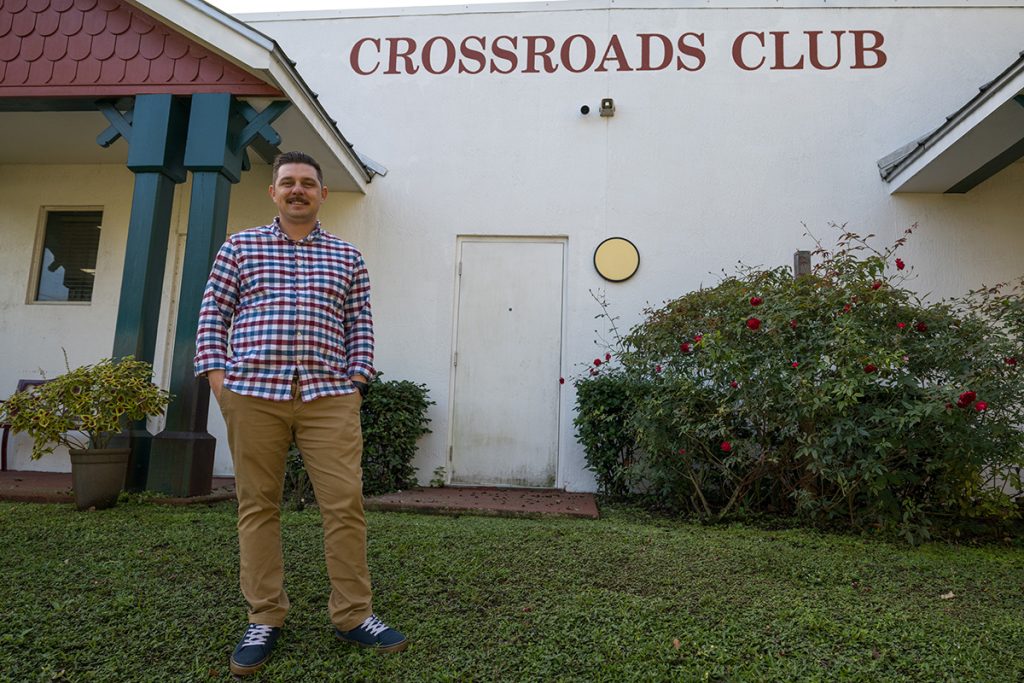
Dylan Morgan had a seat saved at the Crossroads Club long before he attended one of the recovery nonprofit’s 12-step meetings as an alcoholic. As a third-generation member of his family to suffer from alcoholism, his name was one known by Crossroads regulars who lined the seats of Alcoholics Anonymous meetings alongside his father and grandfather.
“I walked into my first meeting here, [and] I sat down in a chair, and this guy literally turns to me and goes, ‘Hey man, we’ve been saving this seat for you,’ and I’m like, ‘yeah, yeah, I’ve heard that, that’s a saying,’” says Morgan. “This guy says, ‘No, Dylan, I know you, I know all about you, we’ve been saving this seat for you. Welcome.’”
That meeting was 12 years ago, and Morgan has maintained his sobriety ever since. “Crossroads saved my life in many ways,” he says. “I got married, I had a kid. That’s all thanks to [Crossroads].”
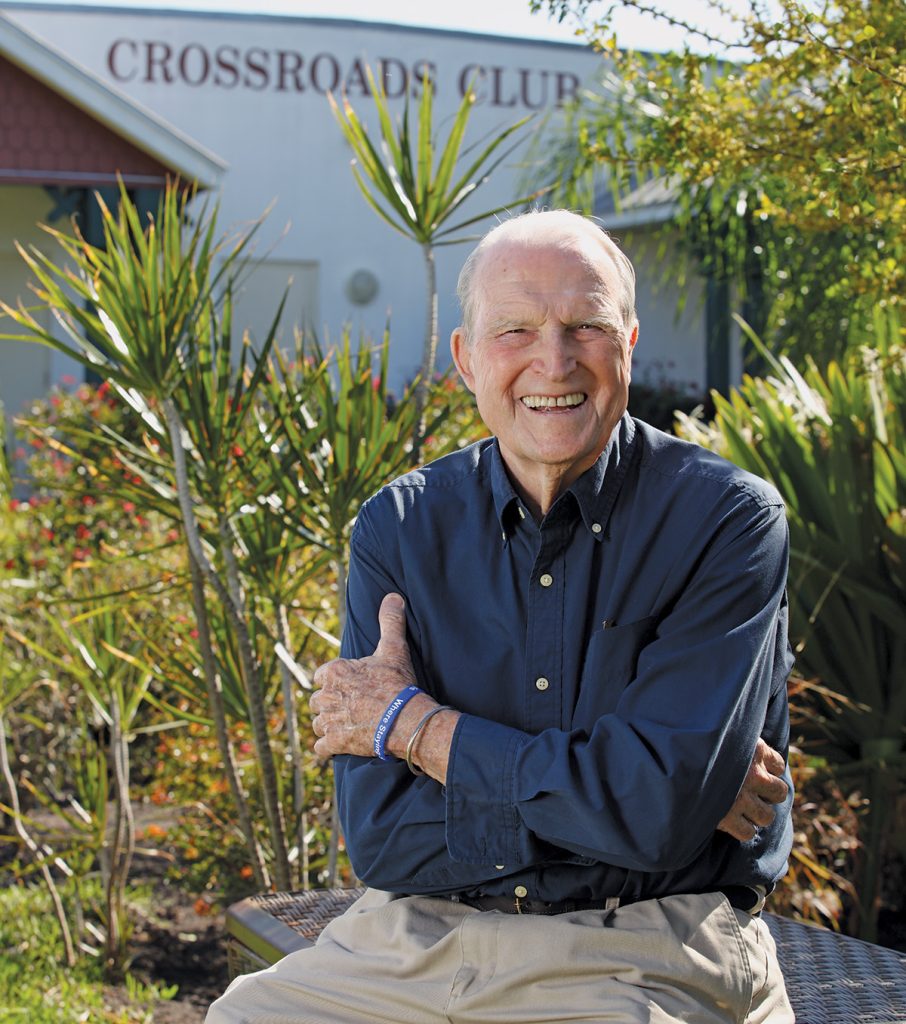
Morgan was introduced to Crossroads as a child when he attended meetings with his father, who got sober at the club in 1995, and his grandfather, who got sober in 1970 and regularly attended Crossroads meetings through its incarnations across four different locations. It was through his father and grandfather that Morgan came to know Tony Allerton, who served as Crossroads Club’s executive director from 1982 until his death in September of last year at the age of 96. Shortly before he passed, Allerton tapped Morgan to step into the role.
“Tony kind of kept his eye on me all those years, and that’s how I fell into the position,” says Morgan. “In June [2024] he calls me up, and he’s like, ‘Hey, let’s grab lunch, let’s talk.’ And I’m like, ‘Oh boy.’ When Tony calls you like that, you’re either in a lot of trouble or it’s good news.”
Morgan was initially hesitant to take on the job, having declined the position from two others who had offered it to him. “I was like, ‘this isn’t for me,’” he says. “But it’s hard to say no to Tony.”
Morgan agreed to serve a temporary role to assist with the transition to a new executive director, but that changed when he began immersing himself in the work.
“[Tony] died in September, and I was in the midst of putting together Taste of Recovery [an annual food festival with local restaurants benefiting the Crossroads Club–Ed.], and I was falling in love,” says Morgan.
“It’s one thing in my daily meeting—I see a lot of great things happening, I see people change, I see families reunited, it’s beautiful. But seeing it on such a large scale, I’m like, man, I can’t get enough of this.”
Morgan now occupies Allerton’s same humble, unmarked office by the front door of the Crossroads Club, where hundreds on their recovery journeys pass daily. In his office is a picture on the wall of Allerton’s beaming countenance, and on the desk are pictures of Allerton and Morgan’s grandfather with their sponsor, and Morgan with his wife and daughter.
“I keep these pictures of Tony and my grandfather to remind me what brought me here, and I keep my picture of my wife and my daughter to remind me why I keep coming back,” says Morgan. “Because it’s easy to forget what life was like before.”
How has your role changed from being a member of Alcoholics Anonymous to being the executive director of Crossroads Club?
[In AA] we don’t promote. We attract. We attract by living our lives a certain way. Part of the anonymity of it is so that the principles are what’s showcased, not the personalities. … As executive director of Crossroads, I don’t have to showcase. I don’t have to be a representative of any particular group. … But from sitting in this office I get to be a representative of Crossroads, which is really cool, because that gives me the freedom to talk more about recovery in a more open way.
How has the Crossroads Club changed since you were a kid?
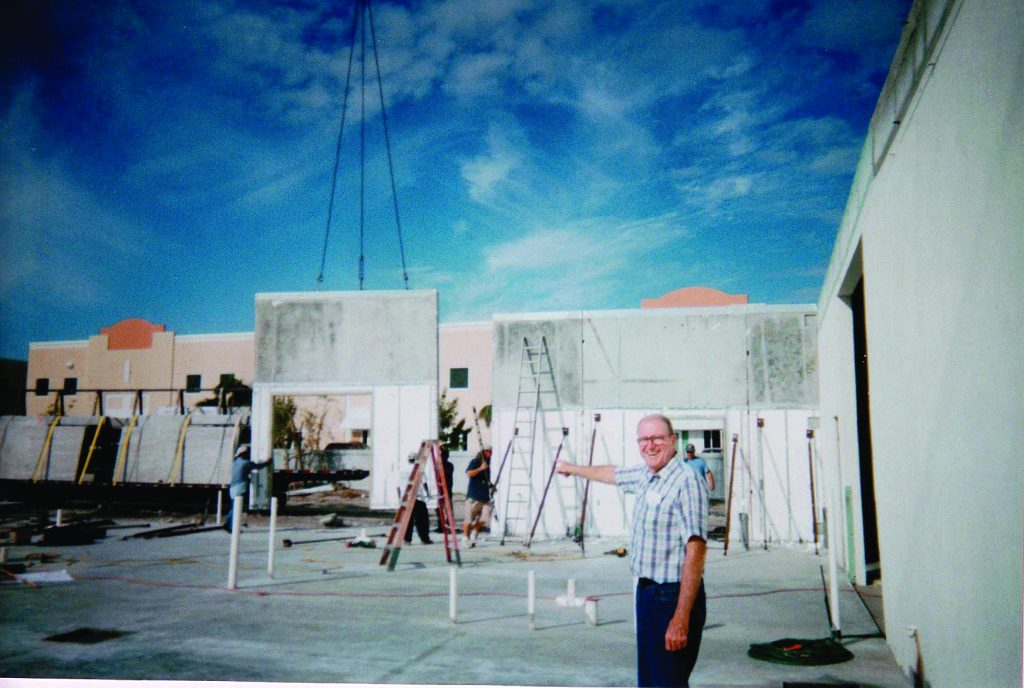
I’ve seen three different Crossroads Clubs [the current Crossroads location is the fourth–Ed.]. The easiest answer is, I’ve seen it grow tremendously. It used to be just a couple of rooms with a bunch of smokers and open doors. [Now] we’re 7,500 square feet of meeting spaces. We host nearly 70 meetings a week. We host 15 different types of 12-step-model programs that help all sorts of different people.
How has your view of the Crossroads Club changed since taking over as executive director?
I used to think Crossroads was just the meeting I went to. Now I see we’re so much more than that. We’re an organization that helps [with] gambling, drugs, codependency, depression; we have a smoking cessation meeting, we do everything. … We see about 600 to 700 people a day come through our doors. When you go from being in a meeting with 20 people to seeing that on a daily basis, that’s pretty wild.
What changes would you like to make to the Crossroads Club?
I don’t want to change any of the fundamentals of what Crossroads does. Crossroads, at the end of the day, is a safe haven for people to come from all backgrounds, all places, to recover, and to begin or continue the recovery journey … Community outreach is a big thing that I want to focus on. I don’t want to be the building behind the train tracks anymore. I want to really be this lighthouse that stands out.
Has the perception of recovery changed over the years?
There is still a very large stigma. There are a lot of negative feelings toward the recovery community, especially in South Palm Beach. Because being the recovery capital of the country also means we’re the relapse capital of the country. So I know there’s a lot of people, a lot of organizations, a lot of institutions that are kind of iffy about [recovery], and I really want to change that. That may not be something I can do in my tenure here, but it’s definitely something I want to start doing.
In Palm Beach County, deaths due to opioid overdose have dropped 64% since 2022. Do you see that reflected at Crossroads?
It’s an answer of yes and no. We’re at the center of it. We have a Narcan station here at Crossroads just in case. We’ve had people collapse in meetings from drug overdoses. … Yes, the opioid crisis has diminished, the numbers are there, that’s true. But we don’t see a change in things, because we’re at the center of it.
How has the local recovery community changed since Delray’s heyday as the nation’s recovery capital?
There have been a lot of changes. Especially in 2015 to 2017, there were a lot of laws that changed how treatment centers and halfway houses can treat their patients and treat their tenants, and that has been a dramatic change for the recovery community. Because for years, there were some treatment centers that did not do things well. There was body-brokering happening. They would just run your insurance until it was no good anymore, and then they would get you high to get you back into treatment. A lot of those places are shut down, [and] the people who were doing things like that were rightfully convicted, and now we have great treatment centers out there.
What is the role of treatment centers in a recovery journey?
Treatment is great to get you cleaned up, but the 12-step programs are where you’re going to find that long-term sobriety, if you take to it. So that’s what we provide. We provide that safe haven, that gateway between what happens after that.
Is the anonymity aspect of 12-step programs harder to maintain in the digital age?
A lot of people have a lot of different opinions on this. It’s not like this set-in-stone, clear-cut, “This is the anonymity of these 12-step programs.” It’s more that we don’t want to be representatives. … I don’t want to be an anonymous representative of Alcoholics Anonymous; I’m just another guy. I don’t want to be on a billboard and say, “Yeah, AA works,” because the fact of the matter is, I can make a mistake, I can slip up. There’s fallibility in the individual; there’s an infallibility in the overall scope of it.
What would you say to someone who is considering attending a meeting at Crossroads but is skeptical?
Come. Come and scoff at us. By all means, come and judge us. Judge us by the things we do. There’s this idea—and I suffered from this—contempt prior to investigation. It’s easy to do that. It’s easy to say, “the numbers are terrible for recovery; they don’t work.” Come try it out. Come see. We have open meetings that allow people to come and sit in, and you don’t have to make any claim on what you identify as, just come and sit and listen. You’d be amazingly surprised at the redemption stories that we have here. You might even hear your own story being told.
What is Crossroads Club’s role in the recovery journey?
I get a lot of questions of “Can I send so-and-so there to get sober?” And I’m like, no, you can send them here, and they can go to a meeting, and they can ask for help, but Crossroads doesn’t administer recovery. It just is a safe haven for people to come and experience the recovery that’s already there. We’re supposed to be a beacon of hope, but we house the beacon of hope, and that’s it. Crossroads is just a building. The heart of recovery within it is the people.
What is the legacy left behind by Tony Allerton?
Tony was an incredibly humble man. He had 43 years of sobriety when he passed away. That was 43 years of diligent, persevering, good sobriety. One of the last things he said to me before he passed away was, “Dylan, they’re going to call me a legend. Don’t let them call me a legend.” I thought that was such a humble thing to say. … I’ve come to realize the legacy that Tony left behind was second chances. It was forgiveness, humility and openmindedness, and a willingness to serve, and that’s what I’m trying to bring to crossroads to continue that legacy.
Do you feel like you have big shoes to fill?
A lot of people came up to me and said that. The first few months, yes, I was intimidated. [Then] I had an epiphany. I realized something. I’m not here to fill his shoes. The legacy that he left behind is Crossroads. Crossroads is established. I’m here to continue the trajectory that Crossroads was on, and to be more inclusive and do more community outreach. I’m not here to be the next Tony. I’m not here to fill those shoes. I’m here to ensure that Crossroads continues for another 40 years. To leave essentially a pathway so that the person who comes in after me can also continue that. … I’m here for Crossroads. And I think that whatever it is that I accomplish here, it will be enough. As long as I just keep the positive attitude, the humility and the open-mindedness like Tony used to talk about, I don’t think it can fail.
If you or a loved one are struggling with substance use or addiction, help is available. Visit thecrossroadsclub.com.
This story is from the March/April 2026 issue of Delray magazine. For more like this, click here to subscribe to the magazine.