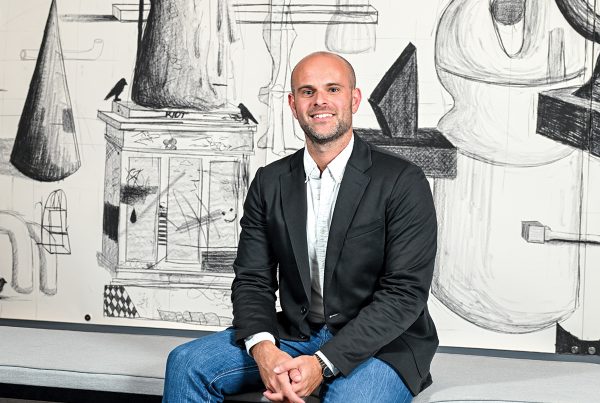
The last thing a food bank wants to do, says Jamie Kendall, is buy food. But in the years since the COVID-19 pandemic, the Palm Beach County Food Bank CEO has seen this last resort become routine.
“Every year over the last four years, we’ve had to purchase more and more food to keep up with the need,” Kendall says. “That means we have to find the money and budget the money to buy the extra food needed to make sure that we’re following our mission of helping end hunger in Palm Beach County.”
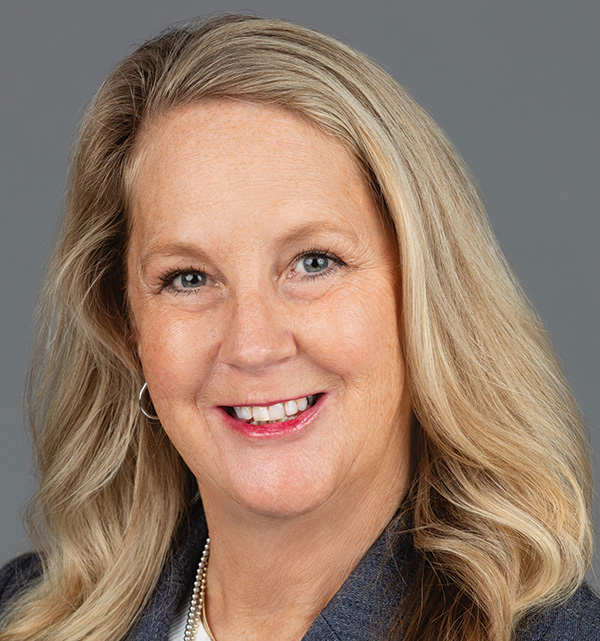
Food banks saw historic federal support during the pandemic, when more than $6 billion in funds were directed to address a record demand for food assistance. But last year, new federal policies enacted under the Trump administration clawed back the programs that food banks had come to rely on at a time when more than 192,000 Palm Beach County residents, including 50,000 children, are struggling with food insecurity.
To see how Palm Beach County is meeting the demand for food assistance, we reached out to the nonprofits that are on the front lines in the fight against hunger.
The Cuts
Two months into its second term, the Trump administration announced that it would be slashing more than $1.5 billion in United States Department of Agriculture (USDA) funds for food assistance. The decision—made as part of sweeping cuts to the federal budget to reduce costs and fraud—affected three programs: the Local Food for Schools program, which provided funding for school meals; the Local Food Purchase Assistance (LFPA) Cooperative Agreement, a pandemic-era program that provided funds for food banks to purchase produce from local farmers; and The Emergency Food Assistance Program (TEFAP), an initiative that since 1981 has directed surplus food commodities to low-income households.
Compared to some food banks, the PBCFB was only mildly affected.
“We were very nervous that we were going to be facing a drastic shortage in the food that we get in from that program [TEFAP],” Kendall says. “We were alarmed and able to kind of pivot some of our internal programs.”
Feeding South Florida, however, felt the cuts more acutely.

“In total, Feeding South Florida saw about a $17 million cut,” says President and CEO Paco Vélez. “The first thing [I thought] is that a lot of families are going to be negatively impacted, and it’s an unfortunate state of affairs where we’re struggling to take care of folks who need help.”
The largest portion of cuts for Feeding South Florida was from the LFPA, from which they expected $14 million. Another $3 million in cuts to Supplemental Nutrition Assistance Program (SNAP) and nutrition education forced Feeding South Florida to downsize its nutrition education team from 17 to four. “We’re working with some funders to see if we can expand our nutrition education back to where it was,” Vélez says. “We want to make sure that folks are eating properly, and hopefully that will mitigate a lot of the health care issues that people [have].”
To cover the funding gap, Feeding South Florida turned to its donors. With private donations, as well as $8 million that was routed through the Feeding Florida network from the State of Florida, the nonprofit “made up a little bit more of [the funds] but nowhere near the amount of funding that we lost,” Vélez says.
The effect on larger food banks was magnified at smaller ones, like Boca Helping Hands. The LFPA cuts resulted in a drop of 150,000 pounds in produce in the first quarter of 2025.
“We had problems getting the same amount of produce that we were accustomed to,” says Boca Helping Hands CEO Andrew Hagen. “The federal government’s program cuts in January [2025] were the main culprit.”
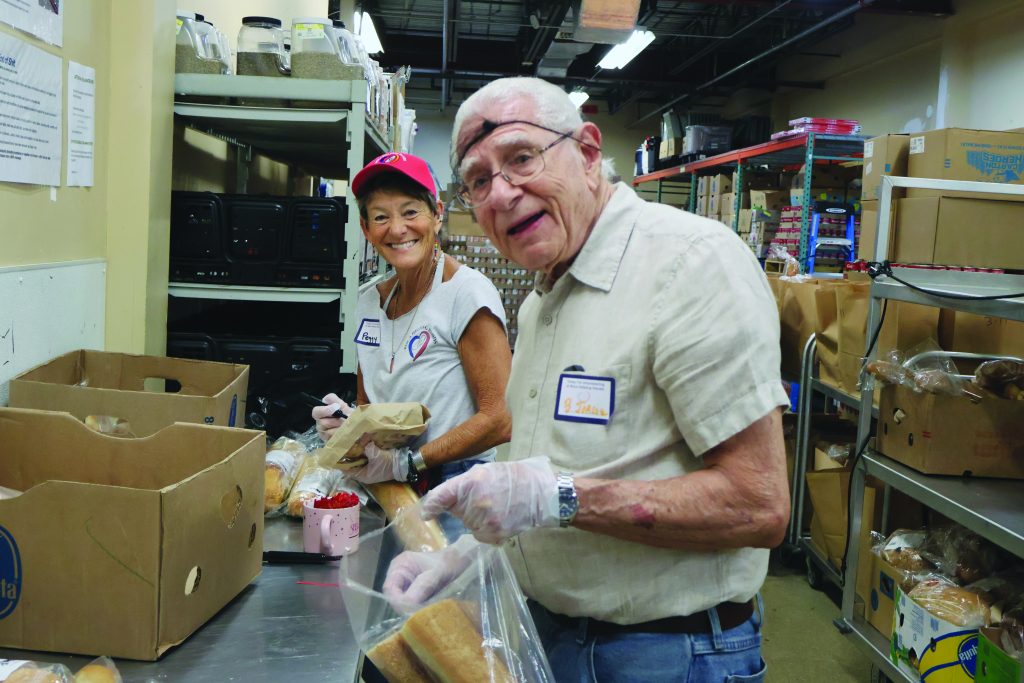

Like Feeding South Florida and the Palm Beach County Food Bank, Boca Helping Hands reached out to its network of donors for support, and “people responded immediately,” Hagen says, “and we’ve had a very good year, donation-wise.”
But with food insecurity affecting a growing number of area residents, philanthropy alone can’t cover the demand. The combination of the cuts, increasing food costs, and a higher cost of living have created a situation where Boca Helping Hands’ services are at record demand, while the organization’s ability to provide them is increasingly unpredictable. Hagen says that Boca Helping Hands’ Boca Raton location has had a nearly 25 percent increase in cars coming for food.
“The thing that is hard for us is to look and say, this week we’re probably giving out less food than we gave out last week,” Hagen says. “Maybe next week will be back to normal, but there’s less certainty of that.”
SNAP and the Shutdown
On Oct. 1, 2025, the federal government shut down due to stalled budget negotiations. The shutdown lasted for 43 days—the longest shutdown in American history—during which time SNAP benefits were paused or reduced and many government workers were furloughed. For food banks, the shutdown resulted in the largest spike in demand since the pandemic.
“The whole of 2025 was a challenging year,” says CROS Ministries Executive Director Ruth Mageria. “But then especially when we got to that last quarter. … There was a time we were not sure whether we would be able to get the funding that we needed, or the food that we needed, and even having to … start thinking, how do we make ends meet?”

Executive Director Ruth Mageria
CROS Ministries, like other food banks, fell back on the only recourse for nonprofits when federal funds are removed: turning to its community of supporters. The generosity of donors more than covered the 7 percent of the budget CROS lost from the federal cuts, while volunteers stepped in to provide meals for federal workers and SNAP recipients. But while federal employees returned to work with back pay following the shutdown, some SNAP recipients have not seen their benefits restored to pre-shutdown levels.
Maria, who requested her name be changed for this article, is a 67-year-old woman on disability who has been an American citizen for 24 years. Prior to the shutdown, she was receiving $100 a month in SNAP benefits. Those benefits were paused during the shutdown, and when they resumed were cut to $50 without explanation.
“I tried to call them, but they don’t answer,” Maria says. “Everything is machine, machine, machine. They don’t have people who listen to our voice.”
Included in H.R. 1, or the “One Big Beautiful Bill,” signed into law by President Donald Trump in July 2025, was a provision that would cut SNAP by $186 billion over the next 10 years. Its implementation has already begun. Seniors like Maria, who live on a fixed income, are among the populations projected to be most affected, along with children and individuals with disabilities. These three groups make up 70 percent of SNAP’s 42 million recipients.
“They have new rules,” Maria says. “But what I receive in Social Security is $1,100 [per month]. I cannot survive, because I need to pay condominium, light, and water [bills].”
For Maria, who has been a client of CROS Ministries for more than a year, the services delivered by food banks have provided a necessary supplement to what she’d been able to purchase with SNAP, even before her benefits were halved.
“Now I buy more bread [to] fi ll my stomach,” she says. “I need to count the bread, [ration] how much I’m going to eat during the week.”
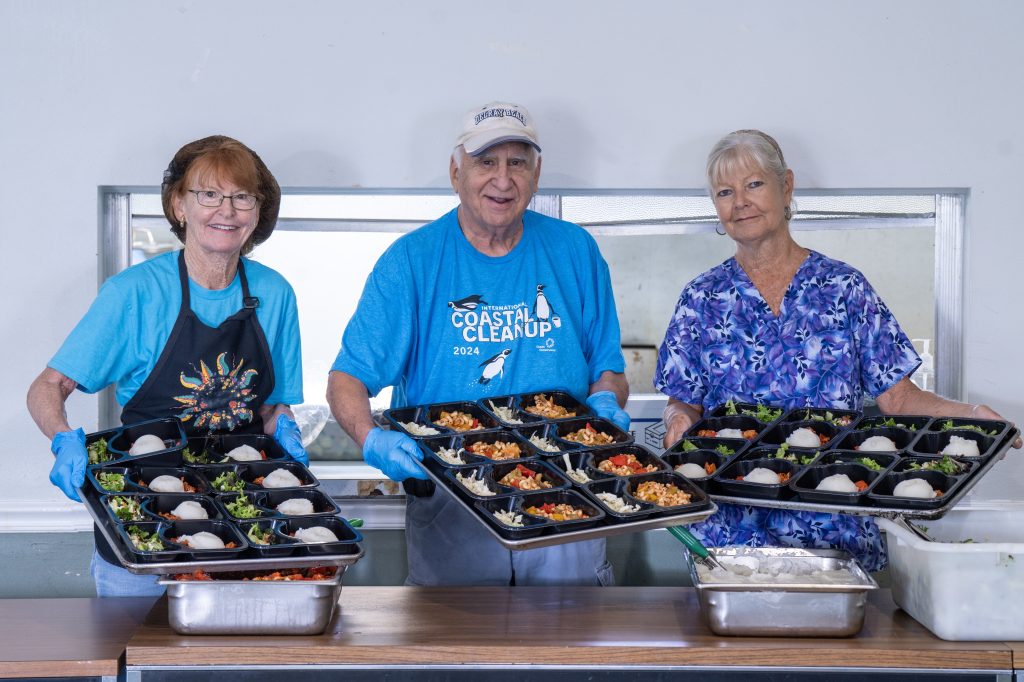
H.R. 1 expands work requirements from ages 18 to 64 (previously capped at 54), reduces previous work exemptions for parents with children under 18 (now under 14), and eliminates exemptions for veterans, homeless individuals, and young adults who have aged out of the foster system. Estimates for how many SNAP recipients will have their benefits reduced or eliminated range from 2 to 4 million.
“What we’re going to continue seeing is an increase in people who need food assistance, because the new requirements of SNAP mean that some people will either be getting less SNAP benefits, or some will not be getting any benefits at all,” Mageria says. “Which means that people will require more food from us … We’ll have a new group of people who may never have had to seek food assistance doing that.”
As food banks prepare for an even larger demand for their services, the SNAP crisis threatens another program that provides free daily meals to more than 190,000 Palm Beach County children: school lunches.
No Such Thing as a Free School Lunch
The Palm Beach County School District provides free meals to students through the USDA’s Community Eligibility Provision (CEP). Under the CEP, if a minimum of 25 percent of students qualify for federal benefits, including SNAP, the entire school is eligible for free meals.

“That SNAP benefit is a large portion of what creates what’s called directly certified,” explains Allison Monbleau, the school district’s director of school food service. “If they qualify for SNAP benefits through the Department of Children and Families, they automatically qualify for our program.”
In Palm Beach County, 47 percent of students are directly certified. The school district receives reimbursement for meals from the USDA based on the number of directly certifi ed students multiplied by a federally set factor of 1.6. In Palm Beach County, that means that more than 75 percent of meal costs are reimbursed through the CEP and the rest is covered by the school district. That number, however, is directly tied to SNAP participation, which has become more restrictive due to new requirements.
“Just a slight drop in percentage really makes it fi nancially not responsible to do those free meals for all,” Monbleau says.
Another concern, she adds, is the district’s declining enrollment as the cost of living, among other issues, has pushed more families out of Palm Beach County. The most recent count shows a decrease in enrollment of more than 7,500 Palm Beach County School District students.
“That decrease in enrollment is obviously a decrease in who we can feed, and then that’s a decrease in the funds back into our program, because the only way we get money is for every meal that we serve,” says Monbleau.
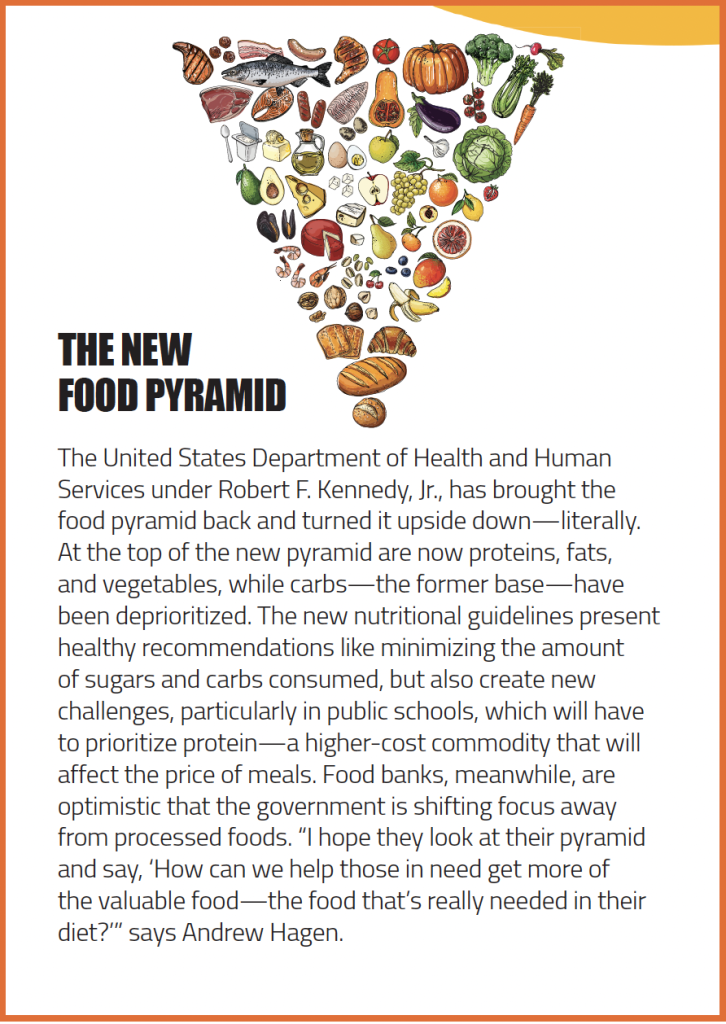
Monbleau says that the school district is “doing everything that we can” to ensure it can provide free universal meals for the 2026-27 school year, but nothing so far has been finalized. A state bill from the 2026 legislative session that would have funded free meals for all public school students died in committee. If a school no longer qualifies for the CEP, families can still apply for $0.40 reduced-price meals through the federal National School Lunch Program—an option that comes with its own hurdles.
“There’s people that don’t feel comfortable filling out paperwork right now,” Monbleau says, specifically immigrant families who are wary of the Trump administration’s immigration policies. For many students, the PBCSD’s participation in the CEP also alleviates social concerns related to applying for reduced-price meals.
“If you’re [providing] 100-percent free meals, there’s no stigma attached to the meal,” Monbleau says. “Everybody gets a meal for free, but when you start to say, well, you have to apply to get the meal for free, then students feel uncomfortable. Then they say, you’re only going up to get that meal because you can’t afford anything else.”
What’s Being Done?
At the Community Foundation for Palm Beach and Martin Counties’ annual luncheon this year, the nonprofit announced the creation of the Hope for Hunger Fund, a campaign established with the goal of supporting local nonprofits addressing food insecurity. The fund launched in part due to cuts to food banks last year.

“That influenced it,” says foundation President and CEO Danita DeHaney, “because our nonprofit partners called us in a panic. They needed help, because those funds are used by individuals and families to buy food.”
The fund was started with a $50,000 matching challenge by Delray Beach philanthropists Harvey and Virginia Kimmel, and as of writing has raised more than $150,000. While every dollar counts in the fight against hunger, DeHaney believes there is more to addressing the crisis than just fundraising.
“Philanthropy can’t meet this demand alone,” she says. “So that begs the question about policy, and are there things that we can do as a community to make food available to those who need it. … We see the gap, and that’s why we try to fi ll it with philanthropy. But you can’t do that all the time.”
The question of policy, however, is one that will remain open at least until the next legislative session in January 2027.
“This session, all the bills have been filed, and there’s really nothing else that can be done,” says State Rep. Debra Tendrich, who also founded the nonprofit Eat Better Live Better in Delray Beach. As the head of a nonprofit, Tendrich understands the limits of a charity in addressing the increasing demand for food assistance.
“It’s going to be a long road ahead,” she says. “A lot of nonprofits still haven’t recovered from the federal cuts, and neither has the affordability crisis gotten any better.”
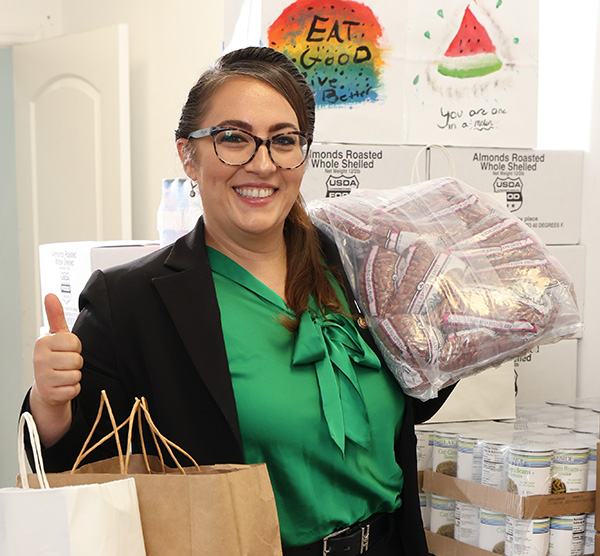
To keep up with the rising cost of living, more nonprofits are developing job programs to train workers and place them in careers that will pay a living wage. United Way of Palm Beach County specifically works with a population termed ALICE (Asset-Limited, Income-Constrained, Employed), which refers to the “working poor” who have jobs but are still unable to cover basic necessities.
“[We’re] really looking holistically at their financial stability and helping hardworking folks in the ALICE population be able to afford their own food,” says United Way President and CEO Dr. Laurie George. “That means skills training, jobs training, advancing their education, understanding financial literacy. … We’re mapping out what assets we have in our community, and then how we need to weave those together to help support a system for ALICE locally.”
Beyond the efforts of nonprofits, Tendrich argues that addressing the hunger crisis, and broader affordability crisis, requires systemic change.
“Every system really needs to be evaluated to where we are today,” says Tendrich. “Poverty and struggling looks so much different now than it did 50 years ago … Back then, one [salary] was able to sustain a household. [Now], you’re looking at kids having to work after school just to help their two parents work and pay their bills.
“This system is designed to keep people where they are. Someone will take [a] promotion but not the raise, because if they take the raise, their kids wouldn’t get food benefits. … You make one dollar too much, you lose everything.”
MAKING A DIFFERENCE
World Hunger Day is May 28. Join the fight against hunger by donating your time or money to the nonprofits in this story:
- United Way of Palm Beach County: unitedwaypbc.org
- CROS Ministries: crosministries.org
- Boca Helping Hands: bocahelpinghands.org
- Community Foundation for Palm Beach and Martin Counties: yourcommunityfoundation.org
- Feeding South Florida: feedingsouthflorida.org
- Palm Beach County Food Bank: pbcfoodbank.org
This story is from the May/June 2026 issue of Boca magazine. For more like this, click here to subscribe to the magazine.