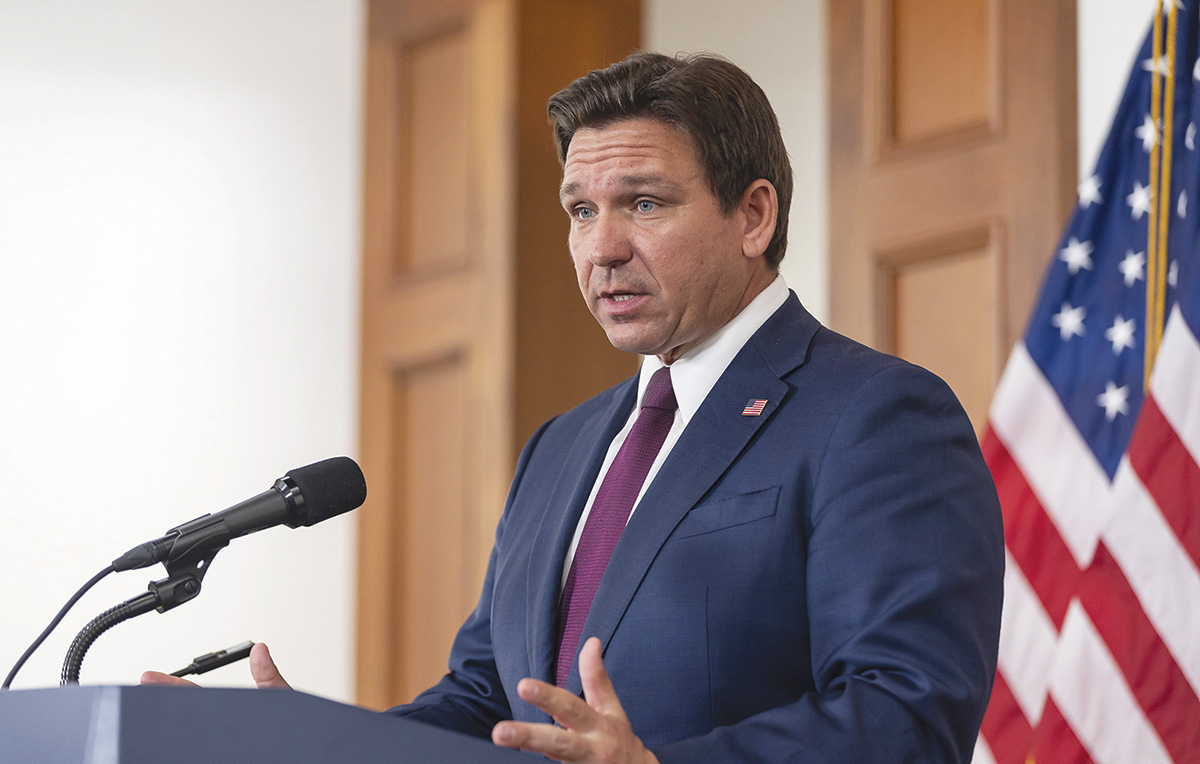
This Tuesday, Florida lawmakers passed a property tax cut plan backed by Gov. Ron DeSantis during a special session of the Legislature.
The ballot measure aims to increase the homestead exemption to those who own primary residences in the state from $50,000 to $150,000 in 2027 and $250,000 in 2028. Newer residents would qualify for a $50,000 exemption to start and they would fully benefit from the tax break after five years.
Gov. DeSantis has talked about the need for a large property tax cut for more than a year, but a concrete proposal and the special session were only announced last week. In a press release, he emphasized the importance of its fast rollout.
“Property tax revenue collected by local governments has nearly doubled in the past seven years and is expected to reach an astounding $83 billion by 2032,” said Gov. DeSantis. “Florida homeowners need relief. Now is the time to stand up for taxpayers, enact a historic reform, and save the home of every Floridian.”
The proposal will now go on the ballot of the November midterm elections and will be adopted if approved by 60% of voters.
Local Government Concerns
While a vast majority of Florida House Republicans supported the proposal, Democrats expressed concern over what it meant for funding of local services. A significant slash to tax property revenue could force cities and counties to shift costs from public services such as parks and community centers or cut them altogether.
A Florida House staff analysis estimated the proposal would reduce annual revenue to non-school governments by $8.4 billion per year. Boca Raton Mayor Andy Thomson, in an interview with WPTV, said the plan would result in a $16 million loss in revenue for the city.

“It’s going to require us to make significant changes and make some very difficult decisions on what kind of services are going to be provided or what’s going to be cut back, or how many folks we’re going to have to lay off,” said Thomson.
Thomson added that in order for essential services like police and fire, water, sewer and sanitation to keep going, money is going to have to come from somewhere.
A Major South Florida Service Potentially in Peril
Another notable consequence of the proposed bill is the reduction in funding for special districts like the South Florida Water Management District (SFWMD). The SFWMD currently has authority to collect property taxes from landowners within its 16-county jurisdiction—revenues which make up about a quarter of its budget.
The SFWMD is responsible for flood control, water supply planning, water quality improvement and ecosystem restoration. It manages water resources for more than 9 million Florida residents.
In its preliminary budget submission for the 2026-2027 fiscal year, property taxes are the SFWMD’s second largest revenue source behind state sources, with a contribution of $417 million.
An Unintended Effect on Renters and Business owners
An additional concern raised by the tax property cuts is its potential effect on rent prices. In a WLRN article, the Florida Association of Counties (FAC), a policy and advocacy group working on behalf of municipal governments in Florida, argued that local government may increase taxes on non-homesteads as an alternative source of revenue.
“Rents could go up as landlords pass through the additional tax burden that’s placed on non-homesteads to renters,” said Jeff Scala, a deputy policy director with FAC on a statewide call this Monday. According to the Palm Beach County Housing Profile, roughly one-third of Palm Beach County residents rent their homes.
Non-homesteads encompass any properties that aren’t primary residences, meaning mall business, commercial properties and any rentals, big or small could be affected.
What Changed from Gov. DeSantis’ Original Proposal?
Although lawmakers moved forward with the plan, certain amendments were made.
Firstly, schools were now excluded from the proposal, meaning homeowners would still pay property taxes that go to local schools. The same was applied to constitutional officers, which include supervisors of elections, sheriff’s offices and clerks of court.
In addition, legislators also axed a proposed trust fund to assist small, rural municipalities. No source of funding for the trust fund was outlined in DeSantis’ original proposal.
What’s Next?
One possible impediment to DeSantis’ plan is it being brought to a circuit court, as opponents have 30 days after both the House and Senate approve the ballot measure to challenge it.
In the meantime, questions remain about the efficiency of the bill. Local governments may soon face the tough questions of which services to fund, and which to let go.