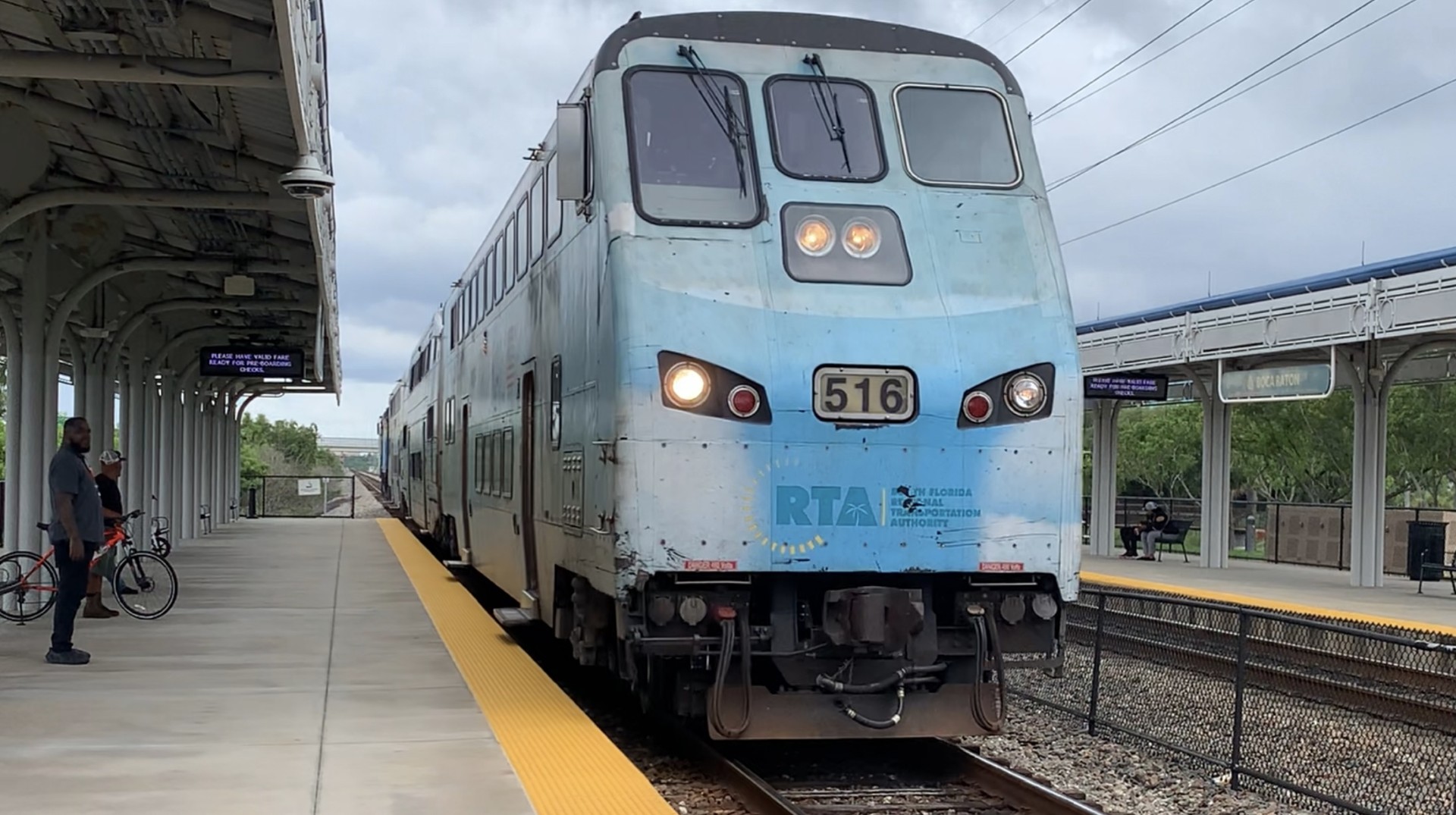
Tri-rail, South Florida’s commuter train service, will regain up to $60 million in state funding if Gov. Ron DeSantis approves Florida’s annual budget, which state lawmakers approved on May 29.
The funding is part of a deal Tri-Rail’s governing board, the South Florida Regional Transportation Authority (SFRTA), made with the Florida Department of Transportation (FDOT) on May 22.
According to Steve Abrams, former Tri-rail executive director and now a transportation policy advocate, both parties agreed that state funding would be cut to zero by 2037. In exchange, SFRTA would be able to retain revenues from advertising and real estate development built around Tri-Rail stations.
However, if revenue from real estate development doesn’t provide enough funding, the three counties the train services (Palm Beach, Broward, and Miami-Dade) will have to cover the deficit.
These solutions, however, face significant hurdles now and possibly more in the future.
Current Concerns and the Potential Impact of the Property Tax Cut Bill
Regarding the real estate developments around rail stations, Abrams worries the lease payments will not be enough to fill the financial gap. Being familiar with the Boca Raton station development due to his time as Tri-Rail director, he says these projects often take a long time to get underway.
“I know what the lease payments are for the Boca stations and there is no way that these payments, even if they come out of the ground tomorrow, they are not going to cover [the operational costs],” said Abrams.
This problem would be magnified by the Property Tax Cut Bill, should it be voted into law during the November election. As we reported last week, one major concern of the Florida Association of Counties, a policy and advocacy group working on behalf of municipal governments in Florida, is that local government may increase taxes on non-homesteads as an alternative source of revenue. The bill also threatens counties’ ability to contribute financially.
“The counties are going to be constrained because if the property tax reform proposal passes, then they have far fewer resources in order to fund Tri-Rail,” said Abrams
Boca Raton Mayor Andy Thomson, in an interview with WPTV last week, said the plan would result in a $16 million loss in revenue for the city, and that they would “make some very difficult decisions on what kind of services are going to be provided or what’s going to be cut back.”
“Along with things like interest rates that fluctuate all the time, SFRTA’s future will be tied to those of types of changes that really have nothing to do with providing transportation,” said Abrams.
Palm Beach County has already denied contributing to the service last year. The Palm Beach Post reported last year that county officials argued it would saddle taxpayers with millions of dollars in maintenance costs for the rail lines.
Tri-Rail also still faces an additional $30 million shortfall once the federal COVID-19 relief money that it has saved runs out by the end of this year.
Precedent for the Deal
Tri-rail previously lost funding in July 2025, when FDOT slashed its funding from $42.1 million to $15 million. The justification given by the department is still the same outlined by the 2026 deal—they wanted the counties to contribute for Tri-Rail, not the state.
“Candidly, the counties have really been pretty stagnant in their contributions, much less than the department,” said FDOT District 4 (Fort Lauderdale-Palm Beach region) Secretary Steve Braun in an article by STET News last year. “The state contribution has continued to grow and has been, historically, way more than even that $42 million,” with funding in some years topping $60 million.
Braun adds that FDOT fully supports the continuation of the commuter rail, and that they are committed to “trying to work with all parties on a plan forward.”
The Silver Lining
While some Tri-Rail board members opposed the agreement, Tri-Rail Interim Executive Director Diane Hernandez Del Calvo regarded the deal positively in a statement to Boca magazine.
“This is a great first step, and SFRTA looks forward to continuing to work collaboratively with our funding partners to provide Tri-Rail service in the future,” said Del Calvo.
Real estate development around Tri-Rail is also something heavily encouraged by Abrams not only as a source of revenue but for enhancing riders’ quality of life.
The SFRTA/FDOT deal comes as Tri-Rail brought in record breaking ridership numbers for 2025, with it surpassing 4.5 million riders across its 18 stops from Mangonia Park to Miami International Airport.