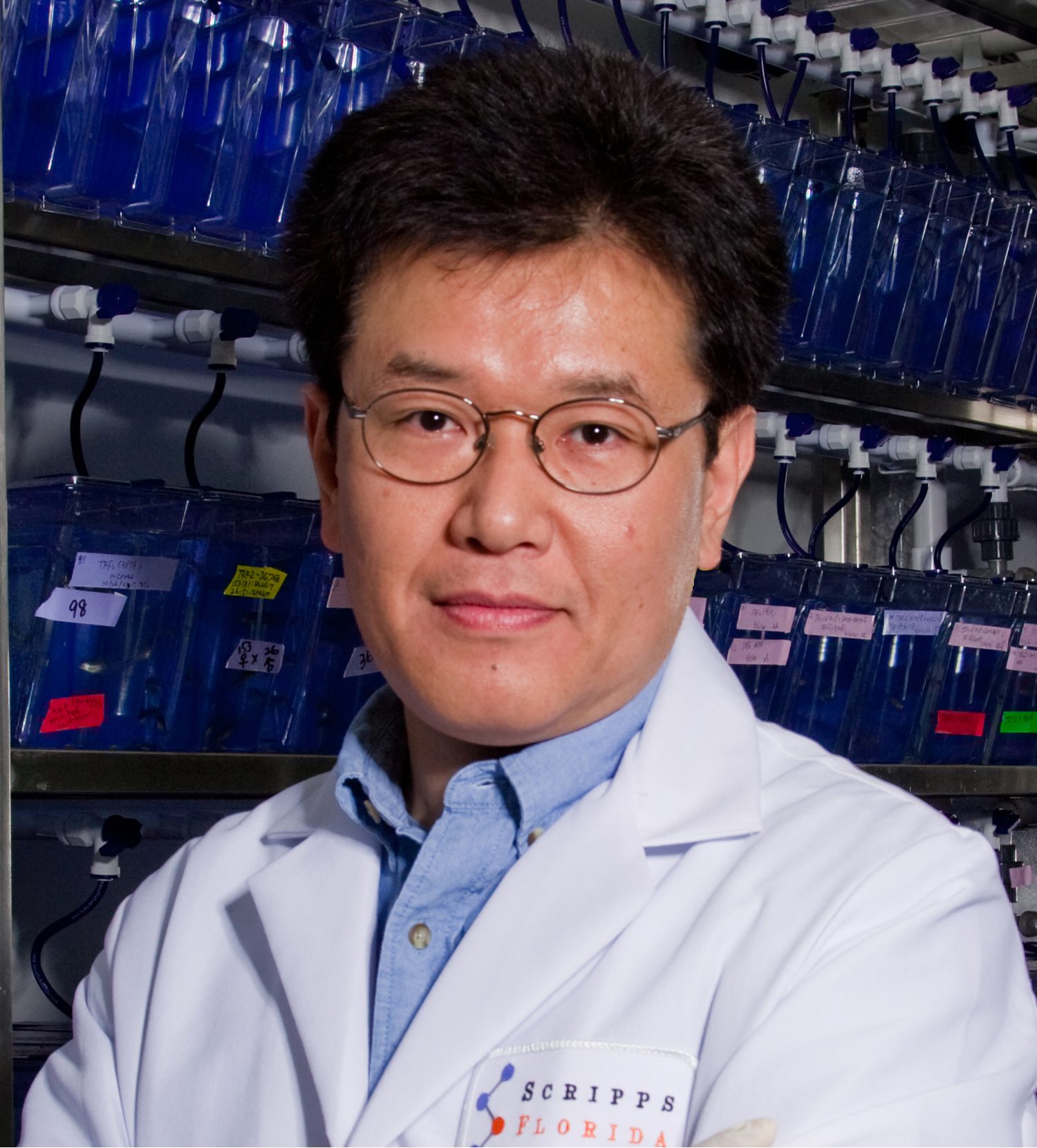

Associate Professor Shuji Kishi led the study on the Florida campus of The Scripps Research Institute. (Photo by James McEntee.)
Scientists at The Scripps Research Institute in Jupiter, Fla., have published a study on zebrafish looking at how premature aging might occur at the cellular level.
In essence, they found that when the spns1 and atp6v0ca genes are in balance, normal cell function occurs. But when spns1 is disrupted it can cause premature aging. The other gene, atp6v0ca, has the power to suppress the degradation of aging. Combined, the genetic disruptions can fight aging, even extend life, according to a Scripps press release.
Cellular degradation or premature aging is also called senescence. It’s the process in which cells stop dividing. It’s also a normal part of aging.
Theoretically, restoring balance could have far-reaching implications—treating disease, including age-associated degenerative diseases. The research by local scientists could also lead to the identification of new genes that impact aging.