Luc Besson, director of a handful of sci-fi and fantasy classics over a prolific 40-year career, recently said, “I’m not a fan of horror films, nor of Dracula.” By most accounts, this would make Besson (whose top-shelf work includes “The Fifth Element,” “Lucy” and “Leon: The Professional”) an odd choice to film the umpteenth adaptation of Bram Stoker’s pioneering novel.
Indeed, the movie (opening today in Boca Raton), while visually rich and breezily paced, has little interest in frightening us. Besson emphasizes the gothic but jettisons the horror of this gothic-horror landmark, reveling instead in pageantry, debauchery and the eternal flame of two characters separated from their love by 400 years. For better or worse, the movie’s Valentine’s Day-adjacent opening makes some degree of sense.
For those familiar with the traditional opening of “Dracula”—solicitor Jonathan Harker alighting at the title character’s castle one fateful night—the preamble of Besson’s “Dracula” is genuinely jarring. His vision opens several millennia prior, and follows Prince Vladimir of Wallachia (Caleb Landry Jones), the flesh-and-blood person who would evolve into the mythical Count Dracula, during his battle with the Ottoman Empire. Mostly, though, Besson emphasizes the prince’s passionate love for Elisabeta (Zoë Bleu), rendered in wordless, nearly Skinemax-like montages of sexual intercourse amid rose petals, pillow feathers and red curtains, not to mention the unsanitary combination of food and bodily fluids.
After Elisabeta falls to the enemy’s sword, Vladimir slays a pontiff, denounces God and transitions into Dracula. The main thread of the story picks up 400 years later, with Besson dividing the action between Harker’s triggering visit to Dracula’s castle and a priest with a background in the paranormal, played with subversive pleasure by Christoph Waltz, whose investigation into the appearance of another vampire (Matilda de Angelis) leads him to uncover Dracula’s quest.
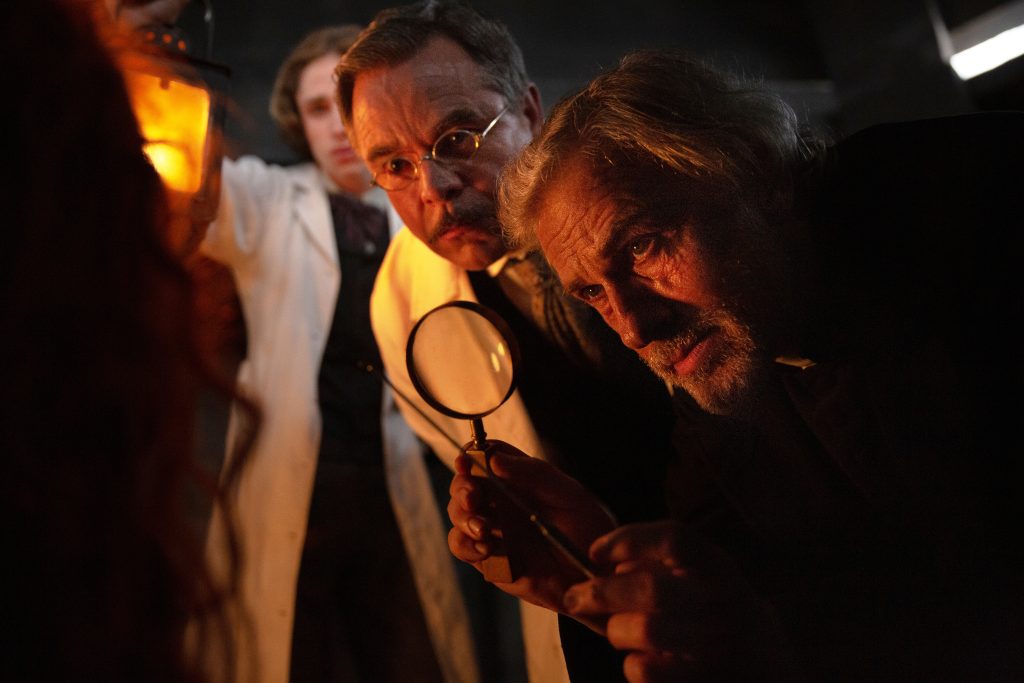
This “Dracula” varies in more surprising ways from Stoker’s source material, which Besson, as he has indicated, does not treat as a sacrosanct text. He dispenses with the character of Renfield entirely; his Dracula lives with a clutch of CGI gargoyle helpers instead. There’s also no Van Helsing, per se, though Waltz’s world-weary priest satisfies the role of vampire-slaying antagonist.
Besson’s Dracula is something of a floral alchemist, having designed an aphrodisiac elixir that lures all women, and their necks, into his aura. We see this effect play out during the centenary of the French revolution, in a set piece of gilded hedonism that involves more bodily fluids excreted in unseemly ways. Later, Dracula reacquaints with the spirit of Elisabeta, who now occupies the form of Harker’s wife Mina, in another extravagant sequence, this time a freak-show carnival of conjoined twins, a mermaid and other Barnumesque perversions.
As you might gather, this is not a Dracula for purists. It wanders so far off the literary reservation that it can almost be described as a movie inspired by Dracula, not based upon it. Besson’s ostentatious approach is only intermittently successful, and despite his sizable tweaks to the story’s familiar trappings, his direction can feel stiflingly routine. This “Dracula” is a curiosity, not a necessity.
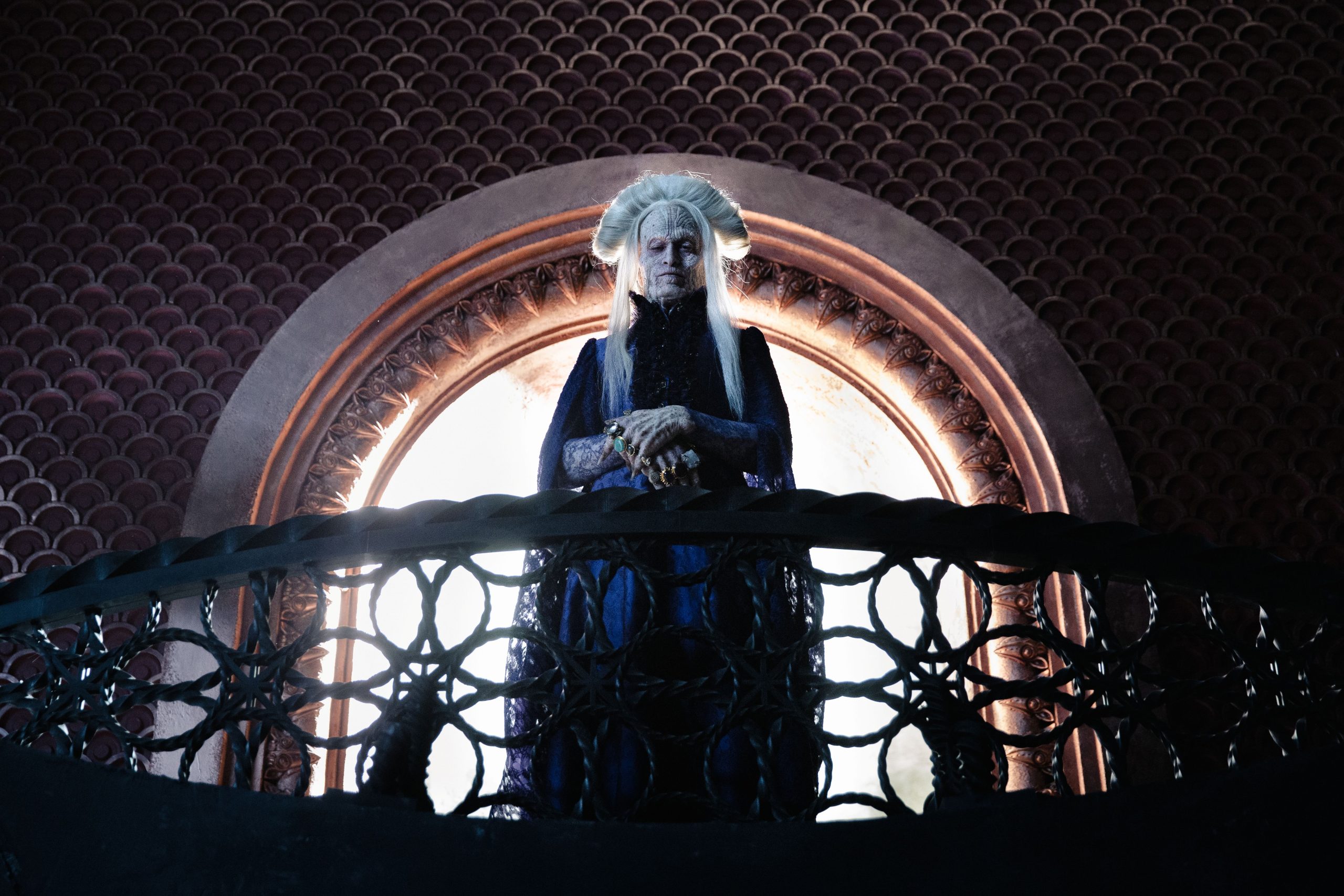
Its prime raison d’être lies in the performances, both from Waltz and especially from Jones. Absent the groaning Lugosian puns that have taken Dracula to camp in too many adaptations, Jones presents as a sympathetic, if still predatory, lovesick demon. With his hair styled in a blonde bouffant for much of the film, and occasionally donning a women’s fascinator hat, he also projects the most nonbinary Dracula I’ve encountered onscreen—the great count as you’ve never seen them before.
“Dracula” is now playing at Cinemark Bistro Boca Raton, IPIC Theaters in Delray Beach, Paragon Theaters Deerfield, Silverspot Cinema in Coconut Creek and other area theaters.
For more of Boca magazine’s arts and entertainment coverage, click here.