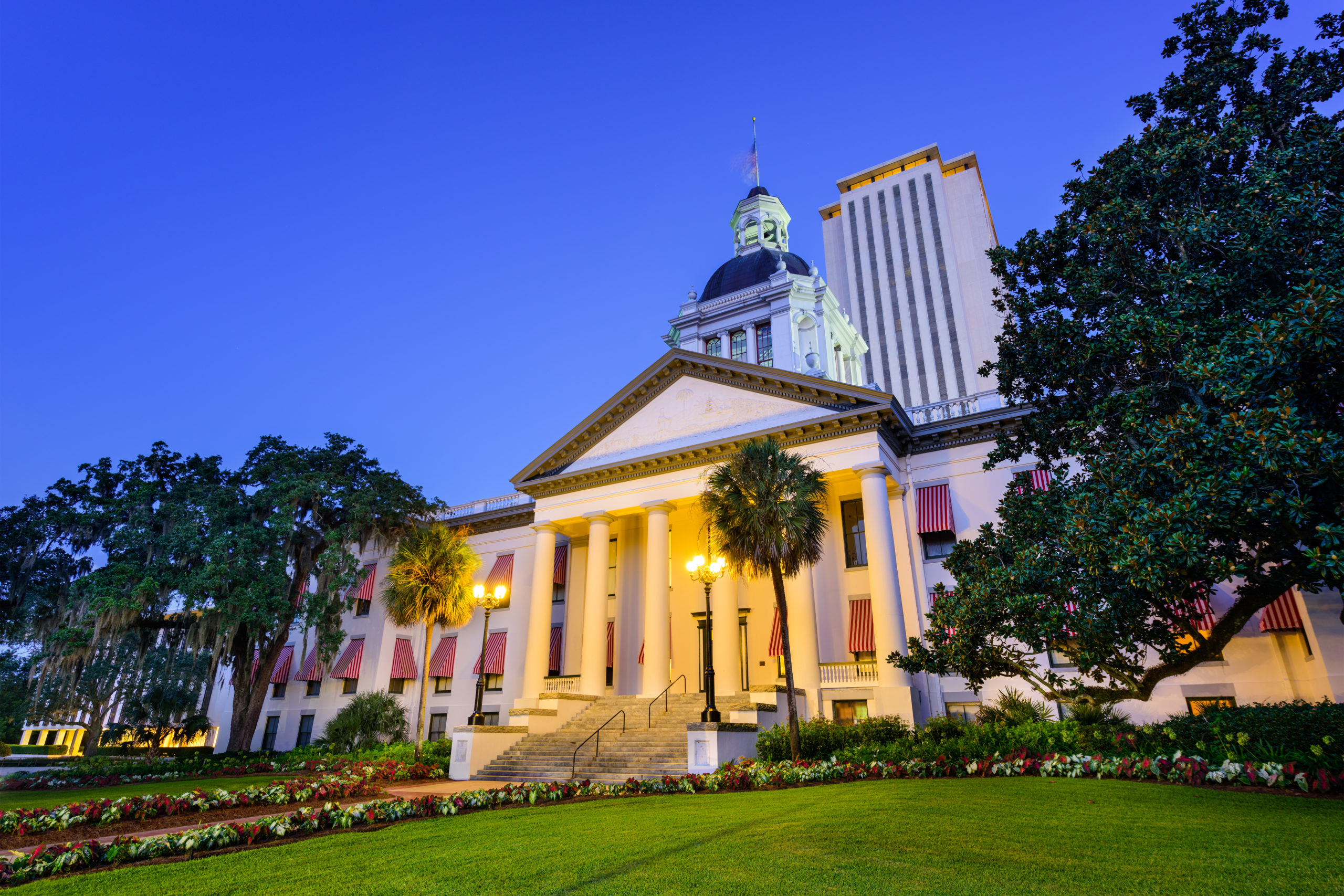
This 2026 Florida legislative session failed to perform its singular function of adopting a state budget. It has, however, managed to pass a slew of “culture war” bills and bills aimed at stripping power from local governments.
At Delray Beach’s Tuesday City Commission meeting, State Sen. Lori Berman (D) provided a legislative update of the bills that passed this session that affect home rule. These include:
- Prohibiting local governments from regulating the use of gas-powered leaf blowers
- Changing the caps for sovereign immunity—payout damages for lawsuits against local and state government have been increased from $200,000 to $350,000 per person, and from $300,000 to $500,000 per incident. In practice, this means taxpayers will be on the hook for more money in lawsuits against the city.
- Prohibiting passing any regulations aimed at reducing greenhouse gases. “You will have to justify that it’s being done for economic reasons and not for carbon reduction reasons,” said Berman. Florida is consistently ranked as one of the states most vulnerable to climate change.
Berman also noted what did not pass, including bills to address unaffordability. Berman put forward 11 insurance-related bills, none of which were heard. “Nothing was done to change your insurance at all here in the state this year. The feeling in Tallahassee is that rates are stabilizing and maybe going down a little bit,” said Berman. Home insurance in Florida is currently twice the national average.
“What we did do is we did a lot of cultural war issues,” said Berman. One of the culture bills that passed prohibits cities from developing programming rooted in diversity, equity and inclusion (DEI). Religion was exempted. The wording of the bill is so vague that Delray Beach allocating funds for its St. Patrick’s Day Parade could be considered a violation, said Berman.
The Florida House and Senate have until July 1 to finalize the budget. On April 20, they will reconvene for congressional redistricting, a priority for the state GOP.
Status of Florida property taxes
A proposal to eliminate property taxes that was passed by the Florida House was killed by the Senate, which cited concerns for municipal funding. The proposal can still make its way onto the November ballot if it gets a 60 percent supermajority vote in the Legislature when it meets on April 20.
Gov. DeSantis’ “anti-terrorism” bill
A new bill signed by Gov. Ron DeSantis gives the governor sweeping authority to designate groups as domestic terrorist organizations.
Under H.B. 1471, the Florida Department of Law Enforcement’s Chief of Domestic Security can recommend terrorist designations for any group, with the governor getting final approval. If an organization wants to contest their designation, they can do so in Leon Circuit Court, which consists heavily of DeSantis appointees.
This bill is particularly relevant for Florida Atlantic University, where students have hosted pro-Palestine demonstrations. Under the Florida definition of antisemitism adopted in 2024, some criticisms of Israel are now considered antisemitic, and proponents of these criticisms could now find themselves designated as terrorists. FAU is also home to various left-wing clubs including Solidarity, a student club focused on “building socialism and anarchy through direct action, mutual aid, and education at FAU,” per its Instagram page.
The bill allows universities to expel students that are part of these “terrorist”-designated groups. It will go into effect on July 1, 2026.
One has to wonder if DeSantis’ definition of terror groups will coincide with that of the Trump Administration.
In September 2025, President Trump issued a National Security Presidential Memorandum (NSPM-7), the broad language of which classifies those with critical views of capitalism, Christianity, immigration, gender, and more as worthy of targeting by law enforcement for investigation of domestic terrorism.
DeSantis has thus far been in lock-step with the Trump Administration, adopting its new SNAP requirements and voting restrictions under the SAVE Act. Will it also adopt the administration’s new policies on domestic terrorism?
Data center opacity
As communities around the country are rallying against proposed data centers, the Florida Legislature left the decision up to local governments whether to allow their construction—with one big caveat. Local governments can now enter into non-disclosure agreements with data center developers. The NDAs are valid for one year, during which time the city does not have to divulge the location of where a data center is being built.
Delray Beach’s successful homeless initiative
During Tuesday’s City Commission meeting, Delray Beach Initiative to End Homelessness Chair Ezra Krieg provided an update on the project’s efforts. The initiative was launched in 2016 and has since prevented more than 50 South Palm Beach County residents from becoming homeless, and has transitioned more than 40 people in homeless shelters into permanent housing.
Pompey Park update

At Tuesday’s city commission meeting, Delray Beach Public Works Director Missie Barletto dispelled rumors that work has stalled on the Pompey Park renovation.
The city is currently working with engineers and contractors on the final price, which is expected to be brought before the commission/Community Redevelopment Agency in mid-May. During Tuesday’s meeting, the commission approved a temporary easement for Florida Power & Light to provide electricity for the construction.
Liebelson dismisses suit against Andy Thomson

A lawsuit filed by Boca Raton mayoral candidate Mike Liebelson against Andy Thomson and his campaign consultant, Rick Asnani, has been voluntarily dismissed by Liebelson.
Liebelson, who lost the mayoral race to Thomson by five votes, sought damages between $50,000 and $75,000 for “false and misleading statements” made against him. On Monday, Liebelson voluntarily dismissed the suit without prejudice, meaning he has the right to refile at a future date.