The term “alternative comedy” was barely in circulation by the time Emo Philips emerged in the 1980s standup scene as one of its most distinctive pioneers. Anyone who has seen Philips even once—live or on one of his many television appearances on Letterman or Conan—is unlikely to forget his signature approach to joke-telling: an androgynous look, defined by a ‘70s-style bob haircut; an undulating falsetto voice that keeps listeners at rapt attention; a wandering performance style heavy on the movement of hands and body; and, most importantly, jokes that land where audiences least expect them. Example: “People ask me how much I weigh. I tell them, 145 pounds, naked. That is, if that scale outside the drugstore is anything to go by.”
Philips is 70 now, having been in the standup game for some 50 years, but his delivery and material continue to have a youthful spirit to them, if not an ageless quality. Penn Jillette recently said of Philips, “there really is no better joke writer”—praise echoed by another alt-comedy stalwart, Patton Oswalt, a few years earlier.
Philips’ longtime fans—“emo-philiacs,” as he calls them—as well as Philips novitiates have an opportunity to catch his latest South Florida tour, at Boca Raton’s intimate Boca Black Box, this coming weekend, where he will perform at 7:30 p.m. March 13-15. He was gracious enough to answer a few of my questions in advance of his appearance.
How long did it take you to develop your signature performing style? Were you a more conventional joke teller in the beginning, or was the lilting delivery always there?
I’ve never tried for any particular joke form or any particular style. I’ve just said or done whatever I could to get a laugh, and I kept and cultivated whatever stuck. My process was like the theory of evolution in that respect, which is ironic because I didn’t believe in evolution until a decade after I was famous; if I had, I might never have succeeded; I am deeply indebted to my Baptist upbringing for that.
I’m guessing you’re not the sort of the comic that carves out certain times each day to sit down and write material, but rather that ideas come to you through everyday life and encounters, perhaps when you least expect it. Is that the case, and do you often carry notepads, etc., to jot down ideas?
That is exactly the case. I’m a 3 X 5 cards and Sharpie man: the cards, because they fit into a shirt pocket, and a Sharpie, because a ballpoint pen requires a flat, hard surface that’s rarely at hand. True, Sharpies and 3 X 5 cards are expensive, but I’ve made my peace with that, as other men my age splurge on sports cars and sailboats.
I’ve noticed that sometimes, audiences have to catch up a beat after your punch lines to “get” the jokes, because they frequently upend our expectations. How do you feel about that gap? Does it mean the bit is working?
I think jokes that take a bit of time to get are the best kind. Of course, it can be carried too far: If people only get a joke on the car ride home, it gains you no love from the club owner.
You’ve been called a “comedian’s comedian.” This could be considered the highest compliment that a cerebral comic can receive, but how do you feel about being labeled as such?
In the old days being a comedian’s comedian did you little good, but these days there are so many comedians that it’s quite a respectable market.
What was it like playing Salvador Dali in “Weird: The Al Yankovic Story?”
As soon as Al offered me the part, I drew on Dali’s signature mustache and was startled at how much I looked like him, even though a DNA test has revealed that I’ve no Mediterranean blood coursing through me, let alone Catalonian. I then studied Dali’s TV interviews (and a chocolate bar commercial he did in France) for six weeks. My portrayal, I fear, may have been a bit too accurate, because in the film I was subtitled.
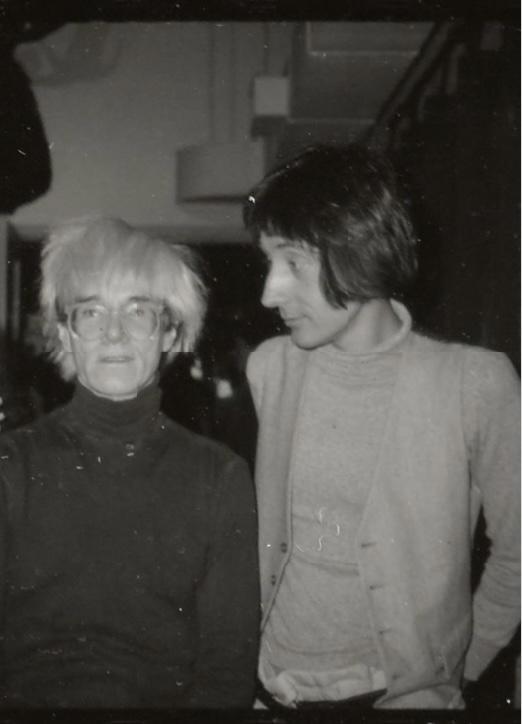
On a personal note, I was ecstatic that my scene was not only with Conan O’Brien, but that Conan played Andy Warhol. His Warhol was eerily accurate: I know because I met Andy Warhol in the ‘80s—I got to visit the Factory. Oh, how I wish I had begged him to paint me! But I suppose we’re all allowed one regret.
See Philips at Boca Black Box’s “Box 2.0,” 8221 Glades Road, Suite 10, Boca Raton, at 7:30 p.m. Fri.-Sun. Tickets cost $28. Call 561/483-9036 or visit bocablackbox.com.
For more of Boca magazine’s arts and entertainment coverage, click here.